
Finance
Fed hits pause on interest rate cuts for now


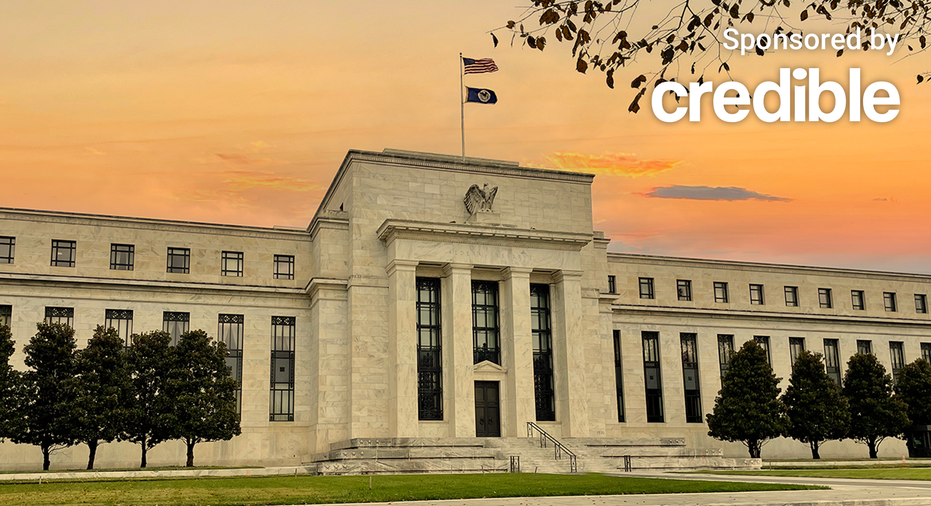
Fed holds on further interest rate cuts. (iStock)
Interest rates will stay higher for longer as the Federal Reserve pauses further interest rate cuts to give inflation room to drop closer to its 2% target rate.
The Federal Reserve held interest rates at 4.5% to 4.75%, prompted by strong economic indicators that gave the central bank more room to wait. Federal Reserve Chair Jerome Powell said at a press conference on Wednesday that the Fed intends to remain cautious about additional rate cuts so long as the job market remains solid and prices continue to climb.
“Over the course of our three previous meetings, we lowered our policy rate by a full percentage point from its peak,” Powell said. “That recalibration of our policy stance was appropriate in light of the progress on inflation and the rebalancing in the labor market. With our policy stance significantly less restrictive than it had been and the economy remaining strong, we do not need to be in a hurry to adjust our policy stance.”
Gross domestic product (GDP) grew at an annual rate of 2.3% in the fourth quarter of 2024, slightly lower than the expected 2.6% growth rate. In December, annual inflation increased to 2.9%, rising modestly above the 2.7% annual inflation rate of the previous month, according to the Consumer Price Index (CPI) released by the Bureau of Labor Statistics (BLS). The labor market is stable, and unemployment is low, at 4.1% in December.
“The nation’s economy continues to be resilient against long-term economic setbacks, which means that the Fed is in no imminent need to continue its rate cuts,” CoreLogic Chief Economist Selma Hepp said. “And with the economic activity expected to remain robust and continue to post a 2%+ growth rate, the case for further monetary loosening in the coming months is increasingly less compelling.”
If you’re worried about the state of the economy, you could consider paying down high-interest debt with a personal loan at a lower interest rate. Visit Credible to speak with a personal loan expert and get your questions answered.
BIDEN CANCELS MORE STUDENT LOANS WITH ONE WEEK LEFT TO HIS TERM
Mortgage rates likely to remain elevated
Interest rates are likely to remain untouched until the second half of the year, which could delay relief for homebuyers, according to David Sober, the SVP of Enterprise Business Development at Voxtur Analytics.
“Interest rate reductions [are] not expected until the second half of the year,” Sober said. “This keeps the housing economy in an extended period of malaise, with affordability at its lowest point in memory. Independent mortgage banks will continue to dominate the mortgage market due to the ability to offer more innovative ways to buy homes. It will be a pleasant surprise if mortgage rates dip to 6% in 2025.”
One bright spot is that the incoming President Donald Trump administration could spur more substantial economic growth and, therefore, higher incomes, giving Americans more buying power. Moreover, lower household tax rates are anticipated to boost disposable household income even if incomes don’t rise, according to the Realtor.com Housing Forecast.
Beyond those scenarios, Hepp said home builders continue to add more new homes to supply and are offering rate buydowns on new construction, keeping those sales strong.
Homebuyers can find competitive mortgage rates by shopping around and comparing options. You can visit an online marketplace like Credible to compare rates with multiple lenders at once.
FHFA ANNOUNCES HIGHER MORTGAGE LOAN LIMITS FOR 2025
What higher rates mean for your wallet
President Donald Trump said in a speech to economic leaders at the World Economic Forum in Davos, Switzerland earlier this month that he would “demand that interest rates drop immediately.” Powell declined to comment on the speech but said the Trump administration had not contacted him.
“As the economy evolves, we will adjust our policy stance in a manner that best promotes our maximum employment and price stability goals,” Powell said. “If the economy remains strong and inflation does not continue to move sustainably toward 2%, we can maintain policy restraint for longer.”
Consumers who may have anticipated a more aggressive rate reduction policy in 2025 will have to wait longer for relief from the high borrowing costs incurred during the rate increases that the Fed implemented in recent years to combat inflation.
“While inflation concerns have significantly abated, they still remain,” Michele Raneri, vice president and head of U.S. research and consulting at TransUnion said in a statement. “As a result, it is quite possible that there will be fewer rate cuts over the course of next year than anticipated only a few months ago. Consumers should continue to monitor their own credit scores and credit reports to make sure they are in the best possible position to act when rates do come down.”
Using a personal loan to pay off high-interest debt at a lower rate could help you reduce your expenses and put money back in your wallet. You can visit Credible to find your personalized interest rate today.
SENIORS TO GET MODERATE COST OF LIVING BUMP IN SOCIAL SECURITY PAYMENTS NEXT YEAR
Have a finance-related question, but don’t know who to ask? Email The Credible Money Expert at [email protected] and your question might be answered by Credible in our Money Expert column.





Nvidia Q2 FY2027 Earnings beats Wall Street Expectation with Record $96.2 Billion Revenue

Treasury Bond Volatility Forces Bessent to Double Debt Buyback Size as Yields Swing

Nvidia Earnings Preview: What Wall Street Expects From the AI Bellwether’s Q2 Report

Armanino adds Strategic Accounting Outsourced Solutions

New 2023 K-1 instructions stir the CAMT pot for partnerships and corporations

Tax Strategy: Employee Retention Credit update
-

 Economics1 week ago
Nvidia’s Potential $3 Billion SB Energy Investment Could Reshape AI Infrastructure
-

 Economics4 days ago
Top 10 Largest Economies by 2030: IMF & World Bank GDP Projections for Global Powerhouses
-
 Stock News4 days ago
How to understand Intel $15B Stock Offering
-

 Technology1 week ago
U.S.-China AI Competition Intensifies as Washington Pushes Allies to Choose Sides
-
 Stock News1 day ago
Nvidia Earnings Preview: What Wall Street Expects From the AI Bellwether’s Q2 Report
-
 Economics4 days ago
Economic Profile of the United States of America (2026–2030 Horizon)
-
 Leaders3 days ago
Jackson Hole 2026: What the First Symposium Under Fed Chair Kevin Warsh Means for Markets
-
 Economics3 days ago
U.S. National Debt Surpasses $40 Trillion for the First Time: What It Means for the Economy