
Finance
Fed holds interest rates steady

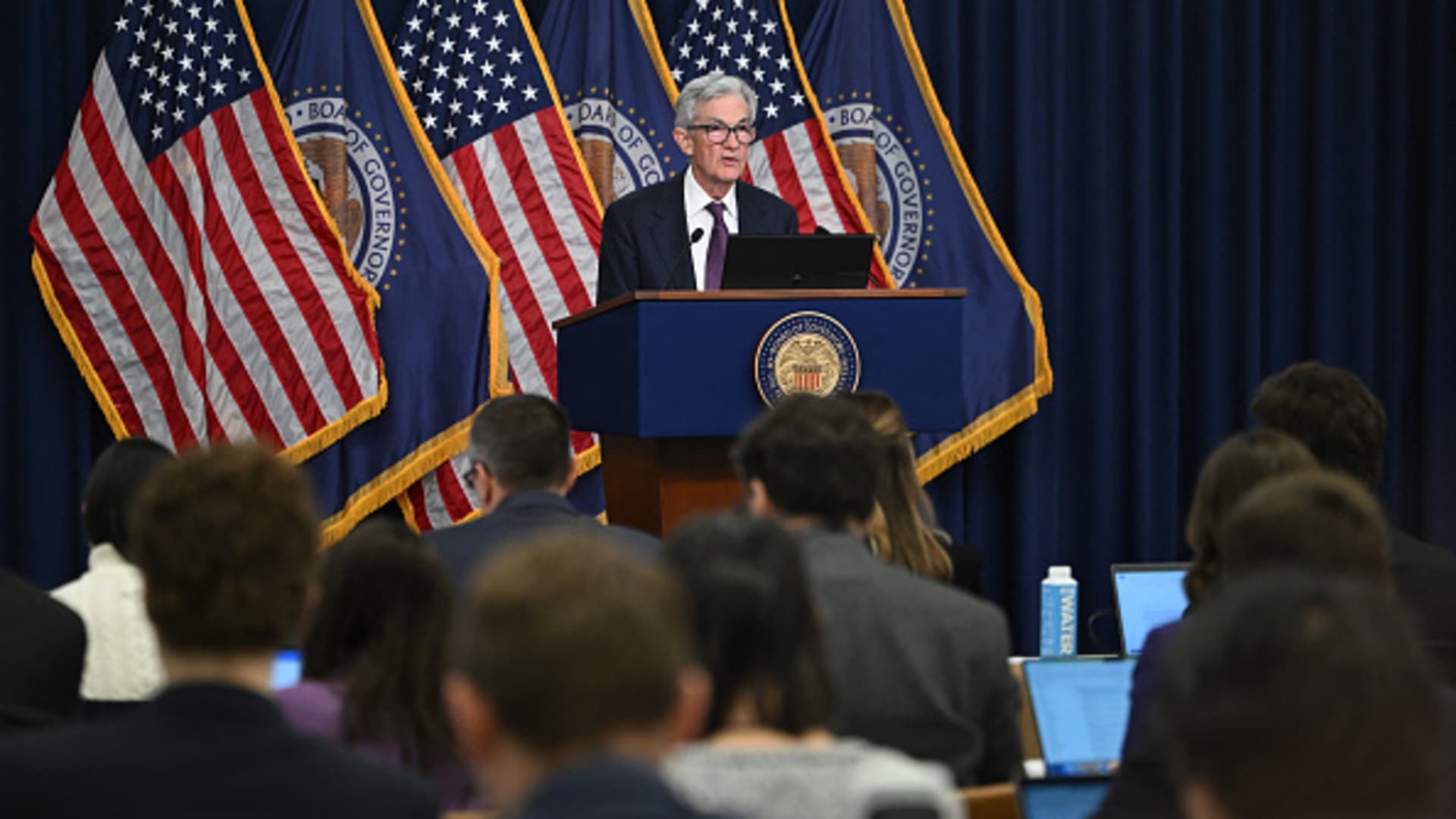

WASHINGTON – The Federal Reserve in a closely watched decision Wednesday held the line on benchmark interest rates though still indicated that reductions are likely later in the year.
Faced with pressing concerns over the impact tariffs will have on a slowing economy, the rate-setting Federal Open Market Committee kept its key borrowing rate targeted in a range between 4.25%-4.5%, where it has been since December. Markets had been pricing in virtually zero chance of a move at this week’s two-day policy meeting.
Along with the decision, officials updated their rate and economic projections for this year and through 2027 and altered the pace at which they are reducing bond holdings.
Despite the uncertain impact of President Donald Trump‘s tariffs as well as an ambitious fiscal policy of tax breaks and deregulation, officials said they still see another half percentage point of rate cuts through 2025. The Fed prefers to move in quarter percentage point increments, so that would mean two cuts this year.
In its post-meeting statement, the FOMC noted an elevated level of ambiguity surrounding the current climate.
“Uncertainty around the economic outlook has increased,” the document stated. “The Committee is attentive to the risks to both sides of its dual mandate.”
The Fed is charged with the twin-goals of maintaining full employment and low prices.
The committee downgraded its collective outlook for economic growth and gave a bump higher to its inflation projection. Officials now see the economy accelerating at just a 1.7% pace this year, down 0.4 percentage point from the last projection in December. On inflation, core prices are expected to grow at a 2.8% annual pace, up 0.3 percentage point from the previous estimate.
According to the “dot plot” of officials’ rate expectations, the view is turning somewhat more hawkish on rates from December. At the previous meeting, just one participant saw no rate changes in 2025, compared to four now.
The grid showed rate expectations unchanged over December for future years, with the equivalent of two cuts expected in 2026 and one more in 2027 before the fed funds rate settles in at a longer-run level around 3%.
In addition to the rate decision, the Fed announced a further scaling back of its “quantitative tightening” program in which it is slowly reducing the bonds it holds on its balance sheet.
The central bank now will allow just $5 billion in maturing proceeds from Treasurys to roll off each month, down from $25 billion. However, it left a $35 billion cap on mortgage-backed securities unchanged, a level it has rarely hit since starting the process.
Fed Governor Christopher Waller was the lone dissenting vote for the Fed’s move. However, the statement noted that Waller favored holding rates steady but wanted to see the QT program go on as before.
The Fed’s actions follow a hectic beginning to President Donald Trump’s second term in office. The Republican has rattled financial markets with tariffs implemented thus far on steel, aluminum and an assortment of other goods against U.S. global trading partners.
In addition, the administration is threatening another round of even more aggressive duties following a review that is scheduled for release April 2.
An uncertain air over what is to come has dimmed the confidence of consumers, who in recent surveys have jacked up inflation expectations because of the tariffs. Retail spending increased in February, albeit less than expected though underlying indicators showed that consumers are still weathering the stormy political climate.
Stocks have been fragile since Trump assumed office, with major averages dipping in and out of correction territory as administration officials cautioned about an economic reset away from government-fueled stimulus and towards a more private sector-oriented approach.
Bank of America CEO Brian Moynihan earlier Wednesday countered much of the gloomy talk recently around Wall Street. The head of the second-largest U.S. bank by assets said card data shows spending is continuing at a solid pace, with BofA’s economists expecting the economy to grow around 2% this year.
However, some cracks have been showing in the labor market.
Nonfarm payrolls grew at a slower-than-expected pace in February and a broad measure of unemployment that includes discouraged and underemployed workers jumped a half percentage point during the month to its highest level since October 2021.




Nvidia Q2 FY2027 Earnings beats Wall Street Expectation with Record $96.2 Billion Revenue

Treasury Bond Volatility Forces Bessent to Double Debt Buyback Size as Yields Swing

Nvidia Earnings Preview: What Wall Street Expects From the AI Bellwether’s Q2 Report

Armanino adds Strategic Accounting Outsourced Solutions

New 2023 K-1 instructions stir the CAMT pot for partnerships and corporations

Tax Strategy: Employee Retention Credit update
-

 Economics1 week ago
Nvidia’s Potential $3 Billion SB Energy Investment Could Reshape AI Infrastructure
-
 Economics4 days ago
Top 10 Largest Economies by 2030: IMF & World Bank GDP Projections for Global Powerhouses
-

 Stock News4 days ago
How to understand Intel $15B Stock Offering
-

 Technology1 week ago
U.S.-China AI Competition Intensifies as Washington Pushes Allies to Choose Sides
-
 Stock News1 day ago
Nvidia Earnings Preview: What Wall Street Expects From the AI Bellwether’s Q2 Report
-
 Economics4 days ago
Economic Profile of the United States of America (2026–2030 Horizon)
-
 Leaders3 days ago
Jackson Hole 2026: What the First Symposium Under Fed Chair Kevin Warsh Means for Markets
-
 Economics3 days ago
U.S. National Debt Surpasses $40 Trillion for the First Time: What It Means for the Economy