
Finance
Fed holds rates steady and notes progress on inflation

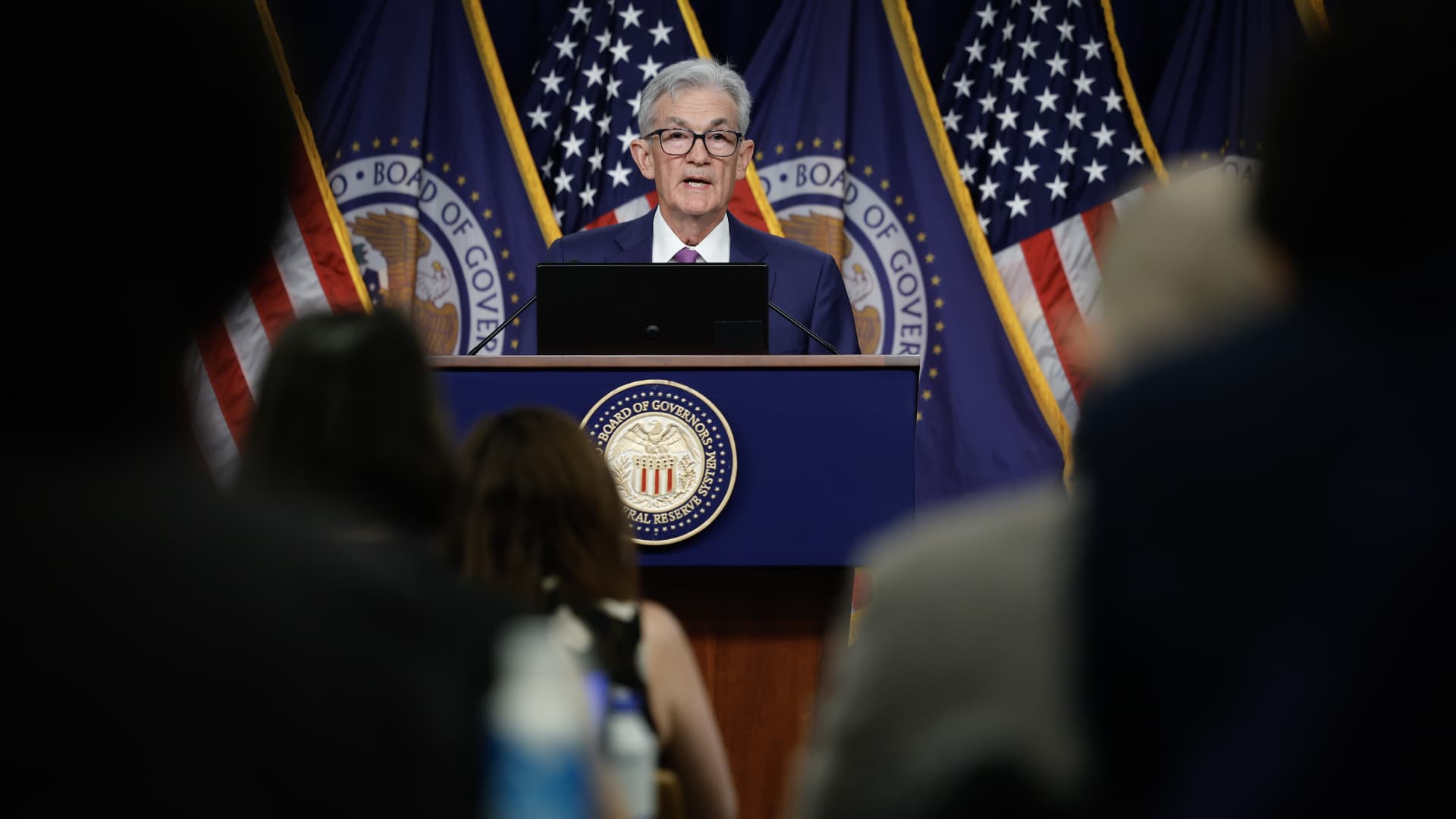

WASHINGTON – Federal Reserve officials on Wednesday held short-term interest rates steady but indicated that inflation is getting closer to its target, which could open the door for future interest rate cuts.
Central bankers made no obvious indications, though, that a reduction is imminent, choosing to maintain language that indicates ongoing concerns about economic conditions, albeit with progress. They also preserved a declaration that more progress is needed before rate reductions can happen.
“The Committee judges that the risks to achieving its employment and inflation goals continue to move into better balance,” the Federal Open Market Committee’s post-meeting statement said, a slight upgrade from previous language.
“Inflation has eased over the past year but remains somewhat elevated,” the statement continued. “In recent months, there has been some further progress toward the Committee’s 2 percent inflation objective.”
However, speaking with the media, Chair Jerome Powell indicated that while no decision has been made about actions at future meetings a cut could come as soon as September if the economic data showed inflation easing.
“If that test is met, a reduction in our policy rate could be on the table as soon as the next meeting in September,” Powell said.
Stocks react to Powell comments
Markets had been looking for signs that the Fed will reduce rates when it next meets in September, with futures pricing pointing to further cuts at the November and December meetings, assuming quarter percentage point moves. Stocks rallied to the highest levels of the day on Powell’s comments.
As for the Fed’s statement, its language also represented an upgrade from the June meeting, when the policy statement indicated only “modest” progress in bringing down price pressures that two years ago had been running at their highest level since the early 1980s. The previous statement also characterized inflation as simply “elevated,” rather than “somewhat elevated.”
There were a few other tweaks as well, as the FOMC voted unanimously to keep its benchmark overnight borrowing rate targeted between 5.25%-5.5%. That rate, the highest in 23 years, has been in place for the past year, the result of 11 increases aimed at bringing down inflation.
One change noted that committee members are “attentive” to the risks on both sides of its mandate for full employment and low inflation, dropping the word “highly” from the June statement.
Still, the statement kept intact one key sentence about the Fed’s intentions: “The Committee does not expect it will be appropriate to reduce the target range until it has gained greater confidence that inflation is moving sustainably toward 2 percent.”
That phrase has underscored the Fed’s data dependence. Officials insist they are not on a predetermined course for rates and won’t be guided by forecasts.
Price pressures off 2022 peak
Economic data of late has indicated that price pressures are well off the boil from their peak in mid-2022, when inflation hit its highest level since the early 1980s.
The Fed’s preferred measure, the personal consumption expenditures price index, shows inflation around 2.5% annually, though other gauges indicate slightly higher readings. The central bank targets inflation at 2% and has been insistent that it will stick with that goal despite pressure from some quarters to tolerate higher levels.
Though the Fed has held to its tightest monetary policy in decades, the economy has continued to expand.
Gross domestic product registered a 2.8% annualized growth rate in the second quarter, well above expectations amid a boost from consumer and government spending and restocking of inventories.
Labor market data has been a little less robust, though the 4.1% unemployment rate is far from what economists consider full employment. The Fed statement noted that unemployment “has moved up but remains low.” A reading Wednesday from payrolls processing firm ADP showed July private sector job growth of just 122,000, indicating that the labor market could be weakening.
However, there was some positive inflation data in the ADP report, with wages increasing at their slowest pace in three years. Also Wednesday, the Labor Department reported that costs of wages, benefits and salaries increased just 0.9% in the second quarter, below expectations and the 1.2% level in the first quarter.
Fed officials have vowed to proceed carefully, despite signs that inflation is weakening and worries that the economy won’t be able to withstand the highest borrowing costs in some 23 years for much longer. Their position got some fortification Wednesday, when yet another economic report showed that pending home sales surged a stunning 4.8% in June, defying expectations for a 1% increase.




S&P 500 September Outlook: Tech Rally Holds Index at 7,600

India Unveils ‘Saptadhara’ Reform Agenda Targeting Technology, Youth Skilling, and Growth

S&P 500 Outperforms Amid Strong Corporate Earnings as Treasury Yields Cap Equity Multiples

Armanino adds Strategic Accounting Outsourced Solutions

New 2023 K-1 instructions stir the CAMT pot for partnerships and corporations

Tax Strategy: Employee Retention Credit update
-

 Stock News1 week ago
Nvidia Q2 FY2027 Earnings beats Wall Street Expectation with Record $96.2 Billion Revenue
-

 Technology6 days ago
AI Infrastructure Boom Hits Physical Limits: Power, Financing, and Supply Chain Strain
-

 Economics4 days ago
U.S.- Canada Trade Talks Collapse; Carney Says Retaliatory Tariffs Begin September 8
-

 Technology4 days ago
Flock Cameras and the Future of Public Security
-
 Stock News1 hour ago
S&P 500 September Outlook: Tech Rally Holds Index at 7,600
-

 Insights2 hours ago
Climate Resilience and Offshore Wind and Land Restoration Milestones
-

 Accounting2 hours ago
Mandatory ESG Reporting Standards Demand Standardized Non-Financial Audit Trails
-
 Finance2 hours ago
S&P 500 Outperforms Amid Strong Corporate Earnings as Treasury Yields Cap Equity Multiples