
Finance
Fed holds rates steady, takes less confident view on inflation

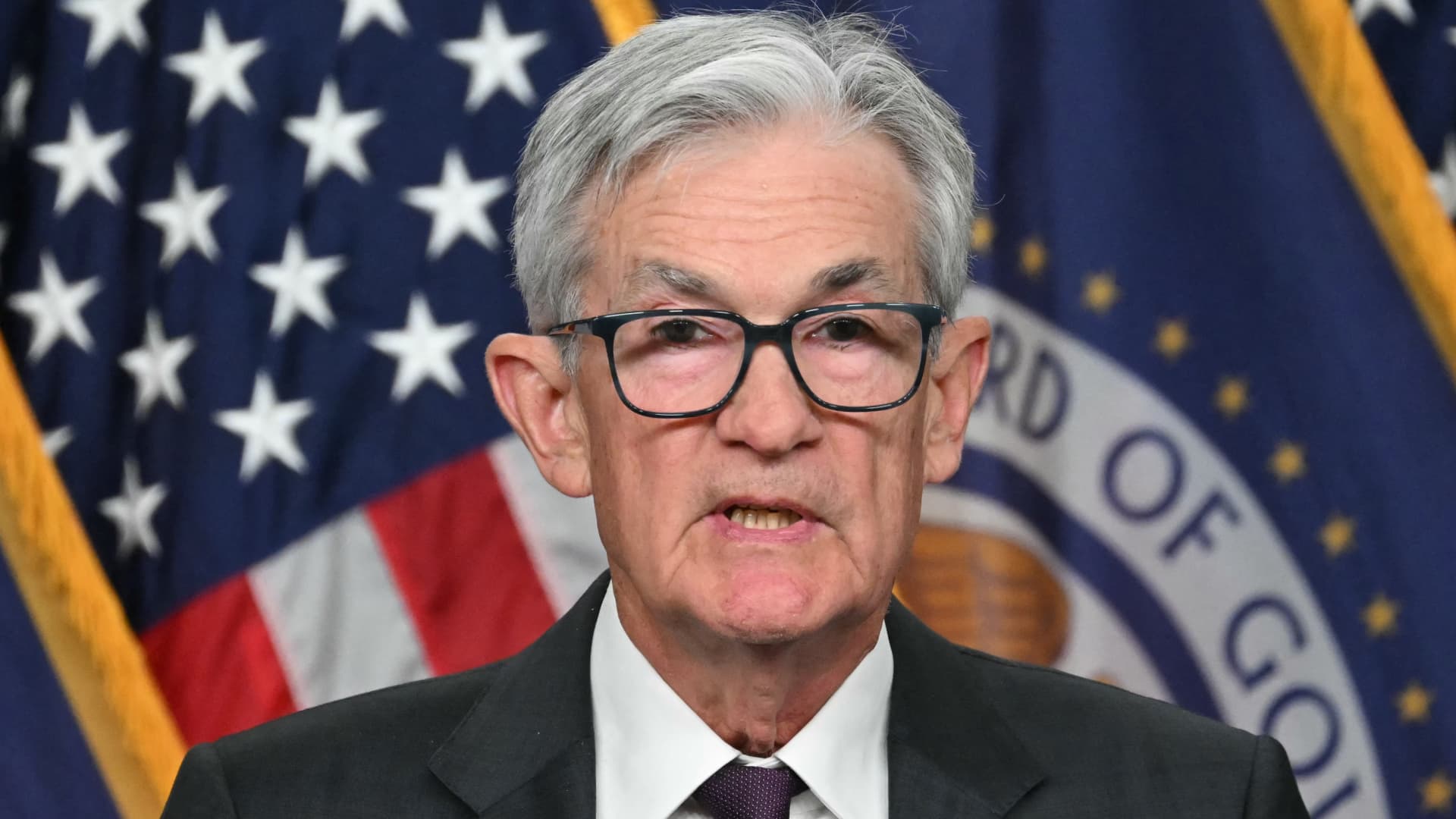

The Federal Reserve held its key interest rate in check Wednesday, reversing a recent trend of easing policy as it examines what is likely to be a bumpy political and economic landscape ahead.
In a widely anticipated move, the central bank’s Federal Open Market Committee left unchanged its overnight borrowing rate in a range between 4.25%-4.5%.
The decision followed three straight cuts since September 2024 worth a full percentage point and marked the first Fed meeting since frequent Fed critic Donald Trump assumed the presidency last week and almost immediately made known his intentions that he wants the central bank to cut rates.
The post-meeting statement dropped a few clues about the reasoning behind the decision to hold rates steady. It offered a somewhat more optimistic view on the labor market while losing a key reference from the December statement that inflation “has made progress toward” the Fed’s 2% inflation goal.
“The unemployment rate has stabilized at a low level in recent months, and labor market conditions remain solid,” the new language read. “Inflation remains somewhat elevated.”
A stronger labor market and stubborn inflation would provide less incentive for the Fed to ease policy. The statement again indicated that the economy “has continued to expand at a solid pace.”
During a news conference, Chair Jerome Powell added that the labor market has not been a significant source of inflationary pressure. He said the central bank would need to see “real progress on inflation or some weakness in the labor market before we consider making adjustments.”
Stocks fell after the decision to leave rates unchanged.
Recent statements from policymakers have shown some apprehension about whether progress in bringing down inflation has stalled. Officials also have said they want to see how the previous cuts are working their way through the economy though most expect rate reductions this year.
No contact with Trump
In addition, the decision comes against a volatile political backdrop.
In a little over a week, Trump has cut a swath through Washington policy and political norms as he has signed hundreds of executive orders that seek to implement an aggressive agenda. The president has backed tariffs as both an economic and foreign policy tool, ordered a wave of deportations against those crossing the border illegally, and has put forth a series of deregulatory measures.
Moreover, Trump last week spoke of his confidence that he will bring down inflation and said he would “demand” that interest rates be lowered “immediately.” Though the president has no authority over the Fed other than to nominate board members, Trump’s statement signaled a potentially contentious relationship with the policymakers much like during his first term.
Powell said he has not had any contact with the president since he made those statements.
Inflation lower but not at target
Inflation has moved down sharply from the 40-year peak it hit in mid-2022, but the Fed’s 2% goal has remained elusive. In fact, the central bank’s preferred pricing gauge showed headline inflation ticked higher to 2.4% in November, the highest since July, while the core measure excluding food and energy held at 2.8%.
Traders had been pricing in a nearly 100% probability of the Fed holding the line at this meeting and in fact don’t see another cut coming until June. Markets are pricing in a funds rate of about 3.9% by the end of 2025, implying a 61% probability of two quarter percentage point cuts this year, according to CME Group data.
Economic growth has been solid and consumer spending held up well during 2024. Gross domestic product is tracking at an annualized growth rate of 2.3% for the fourth quarter, according to the Atlanta Fed, which lowered the estimate Wednesday from the previous outlook for 3.2% as data on private domestic investment weakened.
The meeting also featured a changed voting composition on the FOMC. Powell and the other seven board of governors members are joined this year as voters by regional Presidents Austan Goolsbee of Chicago, Alberto Musalem of St. Louis, Susan Collins of Boston and Jeffrey Schmid from Kansas City. The vote to keep the funds rate unchanged was unanimous.




Nvidia Q2 FY2027 Earnings beats Wall Street Expectation with Record $96.2 Billion Revenue

Treasury Bond Volatility Forces Bessent to Double Debt Buyback Size as Yields Swing

Nvidia Earnings Preview: What Wall Street Expects From the AI Bellwether’s Q2 Report

Armanino adds Strategic Accounting Outsourced Solutions

New 2023 K-1 instructions stir the CAMT pot for partnerships and corporations

Tax Strategy: Employee Retention Credit update
-

 Economics1 week ago
Nvidia’s Potential $3 Billion SB Energy Investment Could Reshape AI Infrastructure
-
 Economics4 days ago
Top 10 Largest Economies by 2030: IMF & World Bank GDP Projections for Global Powerhouses
-
 Stock News4 days ago
How to understand Intel $15B Stock Offering
-

 Technology1 week ago
U.S.-China AI Competition Intensifies as Washington Pushes Allies to Choose Sides
-
 Stock News1 day ago
Nvidia Earnings Preview: What Wall Street Expects From the AI Bellwether’s Q2 Report
-
 Economics4 days ago
Economic Profile of the United States of America (2026–2030 Horizon)
-
 Leaders3 days ago
Jackson Hole 2026: What the First Symposium Under Fed Chair Kevin Warsh Means for Markets
-

 Economics3 days ago
U.S. National Debt Surpasses $40 Trillion for the First Time: What It Means for the Economy