
Finance
Fed meets for first time since Trump’s term started. What to expect

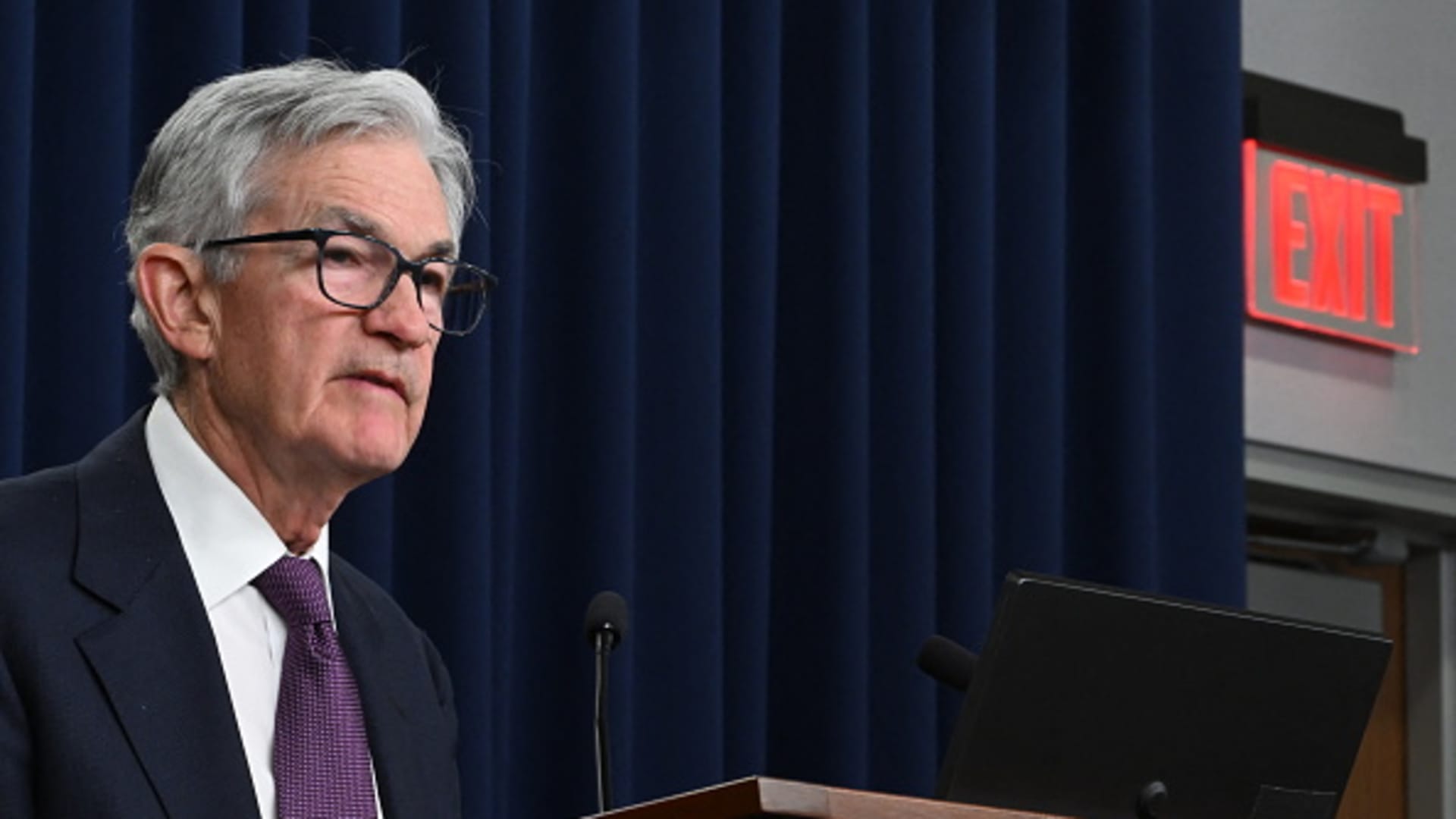
US Federal Reserve Chairman Jerome Powell speaks at a press conference after the Monetary Policy Committee meeting in Washington, DC, on December 18, 2024.
Andrew Caballero-Reynolds | AFP | Getty Images
The Federal Reserve gathers this week for the first time in the second presidential term of Donald Trump, who has already signaled that he wants lower interest rates.
If virtually every indication so far is accurate, the new leader of the free world is unlikely to get what he wants, at least not yet, as officials weigh multiple variables that could make policymaking difficult this year and are likely to keep the Fed on hold.
“They’re probably going to be taking a back seat,” said U.S. Bank chief economist Beth Ann Bovino. “Nobody knows what to expect from the White House. The policy moves are still very unclear, but we do know that a number of those proposals that have been talked about in the White House are a bit inflationary, and I think that’s going to keep the Fed in check.”
Indeed, market pricing is pointing to a near 100% certainty that the rate-setting Federal Open Market Committee will keep the central bank’s policy rate in a target range of 4.25%-4.5%, according to CME Group data.
In fact, traders see the Fed on hold until June, a span during which Trump’s plans for tariffs, regulations and immigration are likely to come more clearly into view. Trump said Thursday he will “demand that interest rates drop immediately,” though he does not have authority over the Fed’s decisions.
The Fed has cut rates at each of its last three meetings, reducing its short-term borrowing rate by a full percentage point. The rate decision will be released Wednesday at 2 p.m. ET.
Despite the White House pressure, central bankers should hold firm and take a break from policy changes, said former Dallas Fed President Robert Kaplan.
“It’s the right call to stay steady. Inflation progress is maybe not stalled but it’s going sideways, and you’ve got four or five big structural changes underway and about to unfold,” Kaplan, now a Goldman Sachs executive, said Monday in a CNBC interview. “The right thing to do is to do nothing in this meeting.”

Kaplan cited three changes that could be disinflationary: government spending cuts, regulatory review from the newly minted advisory panel dubbed the Department of Government Efficiency, and Trump’s “drill baby drill” approach to energy as well as expected efforts to make the sector’s architecture more efficient.
On the inflation side, Kaplan sees the potential for tariffs to boost prices higher, while mass deportations — which began in earnest this week — could drive up labor costs.
“What Trump obviously would love them to do is speed their analysis, speed their assessment of these new policies and act sooner, even than what they’re comfortable,” Kaplan said. “The job of the folks at the Fed, in this case, is to do their analysis and don’t act until you have confidence.”
This meeting will not feature an update of the Fed’s quarterly economic projections, including the “dot plot” of individual members’ estimates for where interest rates are headed. At the December meeting, participants reduced their expected number of rate cuts to two from four previously, assuming each cut is made in increments of a quarter percentage point.
Investors will be left to pore through the post-meeting statement, which is expected to be little changed, then turn to Chair Jerome Powell’s news conference at 2:30 p.m. ET.
Powell had a contentious relationship with Trump during the president’s first go-round in the Oval Office, from 2017 to 2021, and he likely will be asked to respond to the president’s demand for lower rates.
“The Fed must follow its legislative mandate,” former Kansas City Fed President Esther George told CNBC in an interview Friday. “Congress has told us it is to bring prices to a low and stable level. In the long run, this institution has to think about those objectives rather than be swayed by outside commentary and political pressure that will come its way, as it has for its entire existence.”





Nvidia Q2 FY2027 Earnings beats Wall Street Expectation with Record $96.2 Billion Revenue

Treasury Bond Volatility Forces Bessent to Double Debt Buyback Size as Yields Swing

Nvidia Earnings Preview: What Wall Street Expects From the AI Bellwether’s Q2 Report

Armanino adds Strategic Accounting Outsourced Solutions

New 2023 K-1 instructions stir the CAMT pot for partnerships and corporations

Tax Strategy: Employee Retention Credit update
-

 Economics1 week ago
Nvidia’s Potential $3 Billion SB Energy Investment Could Reshape AI Infrastructure
-

 Economics4 days ago
Top 10 Largest Economies by 2030: IMF & World Bank GDP Projections for Global Powerhouses
-

 Stock News4 days ago
How to understand Intel $15B Stock Offering
-

 Technology1 week ago
U.S.-China AI Competition Intensifies as Washington Pushes Allies to Choose Sides
-
 Stock News1 day ago
Nvidia Earnings Preview: What Wall Street Expects From the AI Bellwether’s Q2 Report
-

 Economics4 days ago
Economic Profile of the United States of America (2026–2030 Horizon)
-
 Leaders3 days ago
Jackson Hole 2026: What the First Symposium Under Fed Chair Kevin Warsh Means for Markets
-

 Economics3 days ago
U.S. National Debt Surpasses $40 Trillion for the First Time: What It Means for the Economy