
Finance
Fed rate decision May 2025: Fed holds rates steady

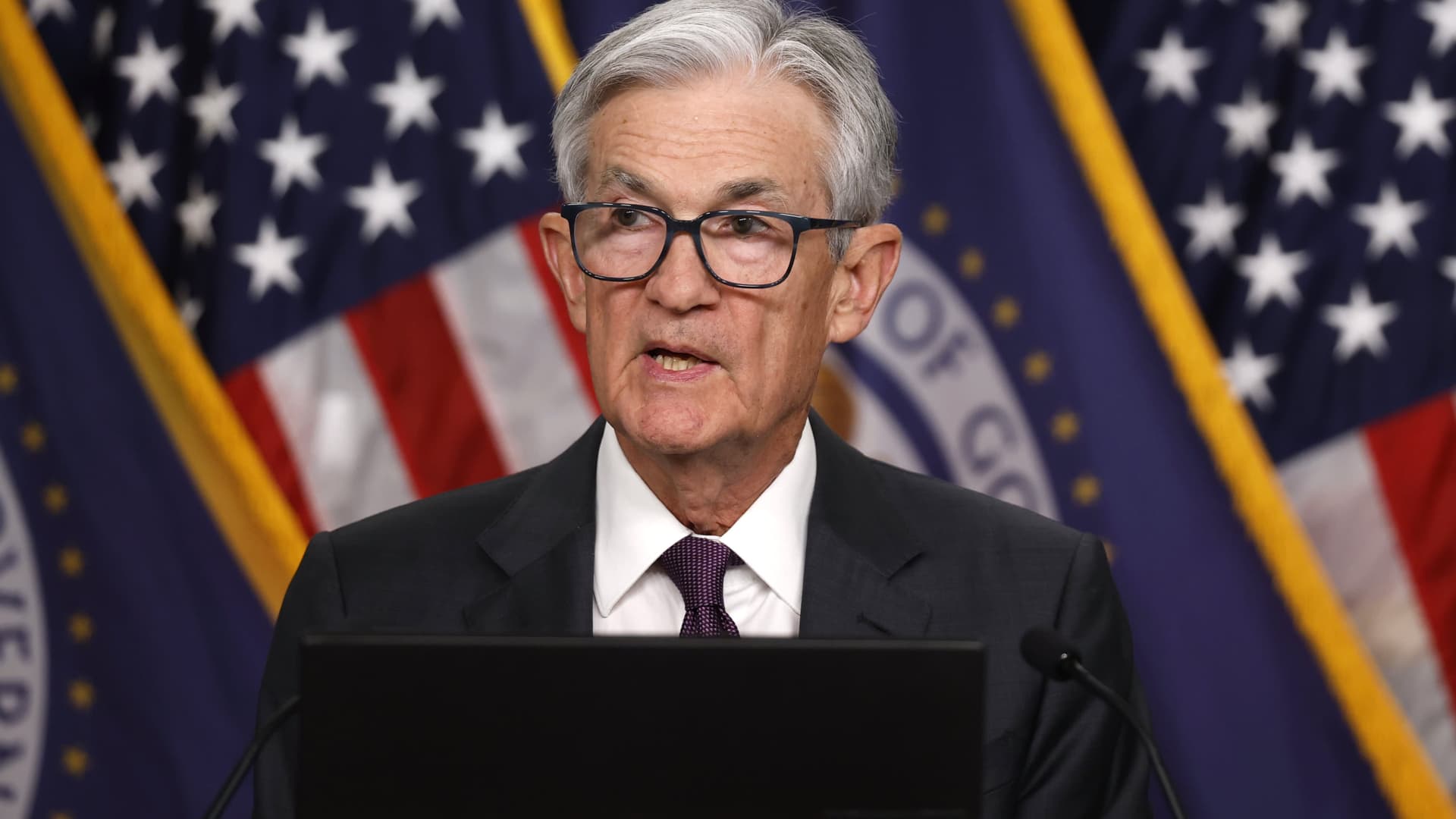

WASHINGTON, D.C. — The Federal Reserve on Wednesday held its key interest rate unchanged as it waits for the Trump administration’s trade policy to take shape and sees its impact on a sputtering economy.
In a move that carried little suspense given the wave of uncertainty sweeping the political and economic landscape, the Federal Open Market Committee held its benchmark overnight borrowing rate in a range between 4.25%-4.5%, where it has been since December.
The post-meeting statement noted the volatility and how that is factoring into policy decisions.
“Uncertainty about the economic outlook has increased further,” the statement said. “The Committee is attentive to the risks to both sides of its dual mandate and judges that the risks of higher unemployment and higher inflation have risen.”
However, the statement did not specifically address the tariffs, though Chair Jerome Powell is sure to be asked about them in his post-meeting news conference at 2 p.m. ET.
Finding the balance between the two elements of the Fed’s so-called dual mandate of full employment and stable prices has been made more difficult lately amid President Donald Trump‘s tariff push.
In noting that tariffs both threaten to aggravate inflation as well as slow economic growth, the statement raises the possibility of a stagflationary scenario largely absent from the U.S. since the early 1980s.
Policymakers have largely been in agreement that the central bank is in a good position, with the economy generally holding up for now, to be patient as it calibrates monetary policy.
The Fed’s deliberations come as the White House is locked on negotiations with top U.S. trading partners during a 90-day negotiating period that began in early April. Trump slapped 10% across-the-board tariffs on U.S. imports and threatened other individual “reciprocal” duties pending ongoing talks.
As near-daily headline changes gauge the trade war, the economy has been flashing conflicting signals on growth, inflation and consumer and business sentiment.
Gross domestic product, the broadest measure of economic performance, fell 0.3% in the first quarter, the product of slower consumer and government spending and a surge in imports ahead of the tariffs. Most Wall Street economists expect the economy will return to positive growth in the second quarter.
The FOMC statement noted that “swings in net exports have affected the data,” and held to its recent characterization that the economy “has continued to expand at a solid pace.”
Indeed, job growth has held up despite Trump’s efforts to pare down the federal work force. Nonfarm payrolls increased by 177,000 in April and the unemployment rate held at 4.2%, giving the Fed room to breathe if it expects a further economic slowdown.
Inflation has been ticking lower and approaching the Fed’s 2% target, but tariffs are expected to result in at least a one-time rise in prices. Trump has pushed the Fed to cut rates as inflation has eased. The central bank’s preferred gauge showed headline inflation at 2.3%, or 2.6% on core that excludes food and energy.
However, as with all aspects of the economy, it all depends on what happens with tariffs.
Recent indications of progress in negotiations along with some softening from the administration has helped reverse a huge stock market sell-off after the April 2 “liberation day” announcement from Trump. However, business surveys show a high degree of anxiety, with most managers reporting concerns about supplies and pricing from the tariffs.
Market pricing regarding Fed action has been volatile as well.
Heading into the meeting, pricing indicated virtually no chance of a cut this week and less than 30% probability of a move in June, with the next cut expected in July. Traders are pricing in a total three cuts this year, though that could change following Wednesday’s decision.
The committee’s decision to hold the benchmark rate steady was unanimous. The fed funds rate is used by banks for overnight lending but also feeds into other consumer debt such as mortgages, auto loans and credit cards.





Treasury Bond Volatility Forces Bessent to Double Debt Buyback Size as Yields Swing

Nvidia Earnings Preview: What Wall Street Expects From the AI Bellwether’s Q2 Report

SEC’s Semiannual Reporting Proposal Faces Investor Pushback: What CFOs Need to Know

Armanino adds Strategic Accounting Outsourced Solutions

New 2023 K-1 instructions stir the CAMT pot for partnerships and corporations

Tax Strategy: Employee Retention Credit update
-

 Economics1 week ago
U.S. Retail Sales Fall for the First Time in Nine Months as Consumer Spending Slows
-

 Economics1 week ago
Nvidia’s Potential $3 Billion SB Energy Investment Could Reshape AI Infrastructure
-

 Economics4 days ago
Top 10 Largest Economies by 2030: IMF & World Bank GDP Projections for Global Powerhouses
-
 Stock News4 days ago
How to understand Intel $15B Stock Offering
-

 Technology1 week ago
U.S.-China AI Competition Intensifies as Washington Pushes Allies to Choose Sides
-
 Stock News22 hours ago
Nvidia Earnings Preview: What Wall Street Expects From the AI Bellwether’s Q2 Report
-
 Economics4 days ago
Economic Profile of the United States of America (2026–2030 Horizon)
-
 Leaders3 days ago
Jackson Hole 2026: What the First Symposium Under Fed Chair Kevin Warsh Means for Markets