
Finance
Fed rate decision November 2024:

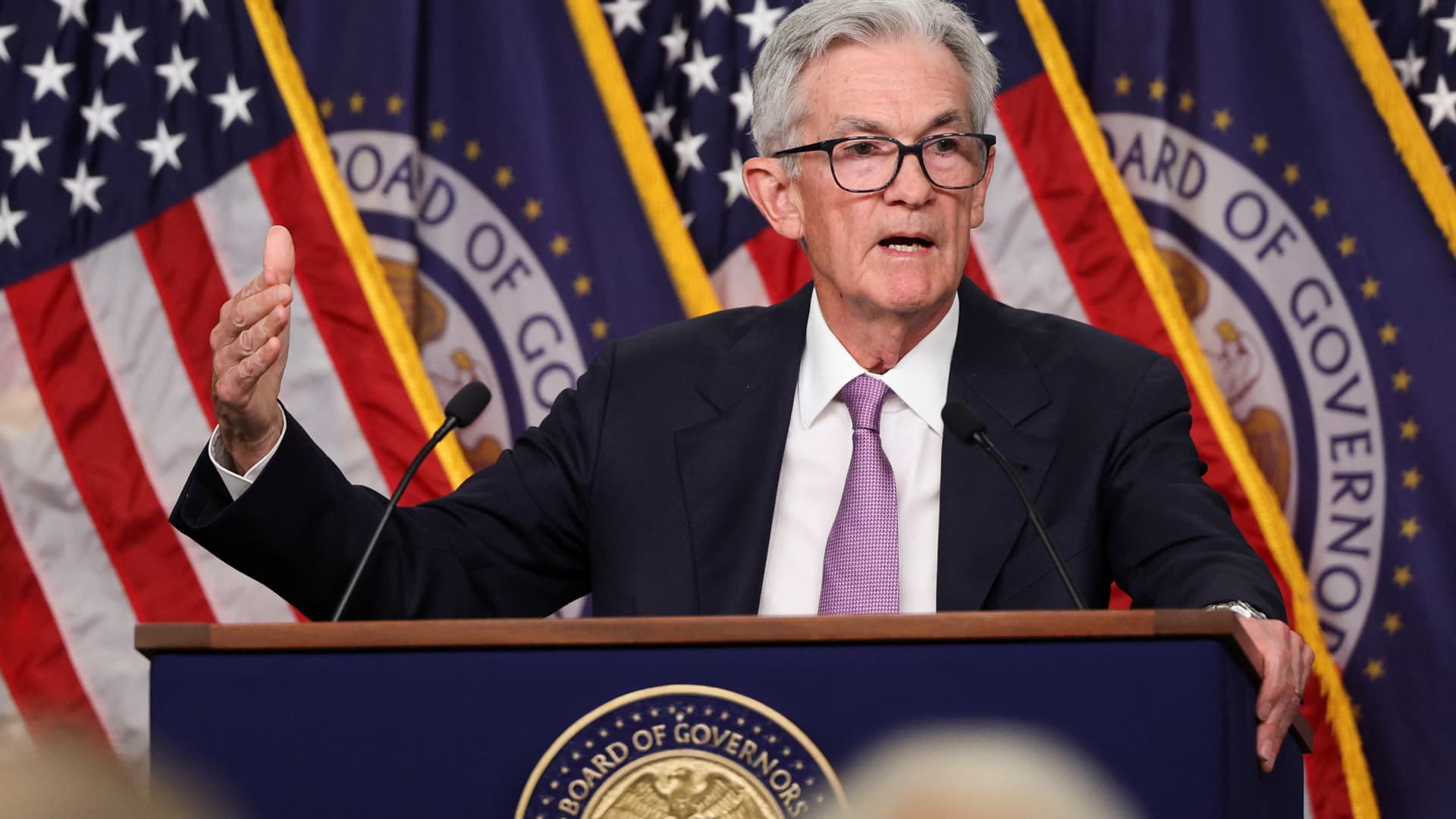

The Federal Reserve approved its second consecutive interest rate cut Thursday, moving at a less aggressive pace than before but continuing its efforts to right-size monetary policy.
In a follow-up to September’s big half percentage point reduction, the Federal Open Market Committee lowered its benchmark overnight borrowing rate by a quarter percentage point, or 25 basis points, to a target range of 4.50%-4.75%. The rate sets what banks charge each other for overnight lending but often influences consumer debt instruments such as mortgages, credit cards and auto loans.
Markets had widely expected the move, which was telegraphed both at the September meeting and in follow-up remarks from policymakers since then. The vote was unanimous, unlike the previous move that saw the first “no” vote from a Fed governor since 2005. This time, Governor Michelle Bowman went along with the decision.
The post-meeting statement reflected a few tweaks in how the Fed views the economy. Among them was an altered view in how it assesses the effort to bring down inflation while supporting the labor market.
“The Committee judges that the risks to achieving its employment and inflation goals are roughly in balance,” the document stated, a change from September when it noted “greater confidence” in the process.
Fed officials have justified the easing mode for policy as they view supporting employment becoming at least as much of a priority as arresting inflation.
On the labor market, the statement said “conditions have generally eased, and the unemployment rate has moved up but remains low.” The committee again said the economy “has continued to expand at a solid pace.”
Officials have largely framed the change in policy as an attempt to get the rate structure back in line with an economy where inflation is drifting back to the central bank’s 2% target while the labor market has shown some indications of softening. Fed Chair Jerome Powell has spoken of “recalibrating” policy back to where it no longer needs to be as restrictive as it was when the central bank focused almost solely on taming inflation.
Powell will answer questions about the decision at his 2:30 p.m. ET news conference. The November meeting was moved back a day due to the U.S. presidential election.
There is uncertainty over how far the Fed will need to go with cuts as the macro economy continues to post solid growth and inflation remains a stifling problem for U.S. households.
Gross domestic product grew at a 2.8% pace in the third quarter, less than expected and slightly below the second-quarter level, but still above the historical trend for the U.S. around 1.8%-2%. Preliminary tracking for the fourth quarter is pointing to growth around 2.4%, according to the Atlanta Fed.
Generally, the labor market has held up well. However, nonfarm payrolls increased by just by 12,000 in October, though the weakness was attributed in part to storms in the Southeast and labor strikes.
The decision comes amid a changing political backdrop.
President-elect Donald Trump scored a stunning victory in Tuesday’s election. Economists largely expect his policies to pose challenges for inflation, with his stated intentions of punitive tariffs and mass deportations for undocumented immigrants. In his first term, however, inflation held low while economic growth, outside of the initial phase of the Covid pandemic, held strong.
Still, Trump was a fierce critic of Powell and his colleagues during his first stint in office, and the chair’s term expires in early 2026. Central bankers assiduously steer clear of commenting on political matters, but the Trump dynamic could be an overhang for the course of policy ahead.
An acceleration in economic activity under Trump could persuade the Fed to cut rates less, depending on how inflation reacts.
Questions have arisen over what the “terminal” point is for the Fed, or the point at which it will decide it has cut enough and has its benchmark rate where it is neither pushing nor holding back growth. Traders expect the Fed likely will approve another quarter-point cut in December then pause in January as it assesses the impact of its tightening moves, according to the CME Group’s FedWatch tool.
The FOMC indicated in September that members expected a half percentage point more in cuts by the of this year and then another full percentage point in 2025.
The September “dot plot” of individual officials’ expectations pointed to a terminal rate of 2.9%, which would imply another half percentage point of cuts in 2026.
Even with the Fed lowering rates, markets have not responded in kind.
Treasury yields have jumped higher since the September cut, as have mortgage rates. The 30-year mortgage, for instance, has climbed about 0.7 percentage point to 6.8%, according to Freddie Mac. The 10-year Treasury yield is up almost as much.
The Fed is seeking to achieve a “soft landing” for the economy in which it can bring down inflation without causing a recession. The Fed’s preferred inflation indicator most recently showed a 2.1% 12-month rate, though the so-called core, which excludes food and energy and is generally considered a better long-run indicator, was at 2.7%.





Treasury Bond Volatility Forces Bessent to Double Debt Buyback Size as Yields Swing

Nvidia Earnings Preview: What Wall Street Expects From the AI Bellwether’s Q2 Report

SEC’s Semiannual Reporting Proposal Faces Investor Pushback: What CFOs Need to Know

Armanino adds Strategic Accounting Outsourced Solutions

New 2023 K-1 instructions stir the CAMT pot for partnerships and corporations

Tax Strategy: Employee Retention Credit update
-

 Economics1 week ago
U.S. Retail Sales Fall for the First Time in Nine Months as Consumer Spending Slows
-

 Economics1 week ago
Nvidia’s Potential $3 Billion SB Energy Investment Could Reshape AI Infrastructure
-

 Economics4 days ago
Top 10 Largest Economies by 2030: IMF & World Bank GDP Projections for Global Powerhouses
-

 Stock News4 days ago
How to understand Intel $15B Stock Offering
-

 Technology1 week ago
U.S.-China AI Competition Intensifies as Washington Pushes Allies to Choose Sides
-
 Economics4 days ago
Economic Profile of the United States of America (2026–2030 Horizon)
-
 Leaders3 days ago
Jackson Hole 2026: What the First Symposium Under Fed Chair Kevin Warsh Means for Markets
-
 Stock News20 hours ago
Nvidia Earnings Preview: What Wall Street Expects From the AI Bellwether’s Q2 Report