
Finance
Fed rate decision September 2025

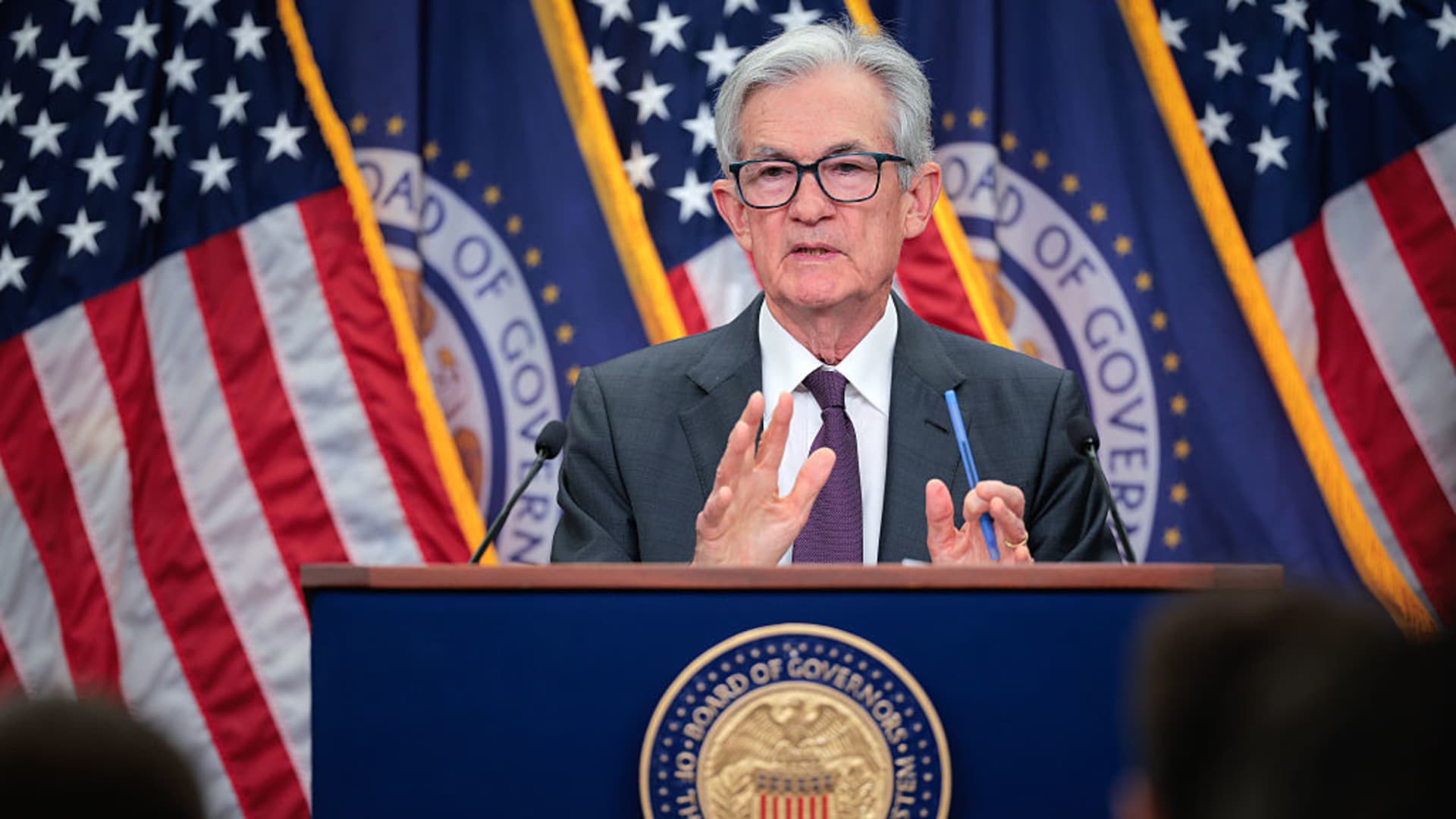

WASHINGTON – The Federal Reserve on Wednesday approved a widely anticipated rate cut and signaled that two more are on the way before the end of the year as concerns intensified over the U.S. labor market.
In an 11-to-1 vote signaling less dissent than Wall Street had anticipated, the Federal Open Market Committee lowered its benchmark overnight lending rate by a quarter percentage point. The decision puts the overnight funds rate in a range between 4.00%-4.25%.
Newly-installed Governor Stephen Miran was the only policymaker voting against the quarter-point move, instead advocating for a half-point cut.
Governors Michelle Bowman and Christopher Waller, looked at for possible additional dissents, both voted for the 25-basis point reduction. All were appointed by President Donald Trump, who has badgered the Fed all summer to cut not merely in its traditional quarter-point moves but to lower the fed funds rate quickly and aggressively.
In the post-meeting statement, the committee again characterized economic activity as having “moderated” but added language saying that “job gains have slowed” and noted that inflation “has moved up and remains somewhat elevated.” Lower job growth and higher inflation are in conflict with the Fed’s twin goals of stable prices and full employment.
“Uncertainty about the economic outlook remains elevated” the Fed statement said. “The Committee is attentive to the risks to both sides of its dual mandate and judges that downside risks to employment have risen.”
Along with the rate decision, officials in their closely watched “dot plot” of individual expectations pointed to two more cuts before the end of the year. The grid, however, showed a wide level of disparity, with one dot, possibly Miran’s, pointing to a total of 1.25 percentage points in additional reductions this year.
The plot is done anonymously, with one dot for each meeting participant, but Miran has been an advocate for much lower rates. Nine of the 19 participants indicated just one more reduction this year, while 10 saw two, which would indicate moves at the October and December meetings. One official did not want any cuts, including Wednesday’s.
The plot indicated one cut in 2026, significantly slower than current market pricing of three. Traders had fully priced in this week’s move. Officials also indicated another reduction in 2027, as the Fed approaches a long-run neutral rate of 3%. A half-dozen officials saw the long-run rate below the median neutral level.
Projections released following the meeting on general economic conditions saw slightly faster economic growth than was projected in June, while the outlooks for unemployment and inflation were unchanged.
A stunning level of political drama preceded the meeting, especially for an institution that generally does its business quietly and with few dissenting voices.
A year ago, against similar worries that a gradual rise in the unemployment rate could be signaling broader weakness, the FOMC approved a jumbo half-point reduction that Trump has said was politically motivated to influence the presidential election in favor of his Democratic opponent, Kamala Harris.
Trump’s hectoring of the Fed and Miran’s appointment have raised questions over the traditional independence the central bank has had from political influence. Miran also has openly criticized Chair Jerome Powell and his colleagues and is generally seen as a loyalist vote for the president and his desire for significantly lower rates.
The president has said lower rates are needed to bolster the moribund housing market and to lower financing costs for government debt.
There was an additional layer of political intrigue this week as a court blocked Trump from removing Governor Lisa Cook, an appointee under former President Joe Biden. The White House has accused Cook of mortgage fraud involving federally backed loans she received for homes she purchased, though no charges have been brought.
Cook was among those who joined the majority in voting for the quarter-point move.
Recent signals have shown that economic growth remains solid and consumer spending topping forecasts, though the labor market has been a point of contention.
On the jobs front, the unemployment rate hit 4.3% in August, still relatively tame by historical standards but the highest since October 2021. Job creation has been stagnant this year, and a recent update from the Bureau of Labor Statistics showed that the economy created nearly a million fewer jobs than initially reported in the 12-month period prior to March 2025.
Governor Waller in particular has expressed concern that the Fed should ease policy now to head off future issues in the labor market. His name also has been in the mix as a potential replacement for Powell, whose term expires in May 2026.




S&P 500 September Outlook: Tech Rally Holds Index at 7,600

India Unveils ‘Saptadhara’ Reform Agenda Targeting Technology, Youth Skilling, and Growth

S&P 500 Outperforms Amid Strong Corporate Earnings as Treasury Yields Cap Equity Multiples

Armanino adds Strategic Accounting Outsourced Solutions

New 2023 K-1 instructions stir the CAMT pot for partnerships and corporations

Tax Strategy: Employee Retention Credit update
-

 Stock News1 week ago
Nvidia Q2 FY2027 Earnings beats Wall Street Expectation with Record $96.2 Billion Revenue
-

 Technology6 days ago
AI Infrastructure Boom Hits Physical Limits: Power, Financing, and Supply Chain Strain
-

 Economics4 days ago
U.S.- Canada Trade Talks Collapse; Carney Says Retaliatory Tariffs Begin September 8
-

 Technology4 days ago
Flock Cameras and the Future of Public Security
-

 Insights1 hour ago
Climate Resilience and Offshore Wind and Land Restoration Milestones
-

 Accounting1 hour ago
Mandatory ESG Reporting Standards Demand Standardized Non-Financial Audit Trails
-
 Stock News35 seconds ago
S&P 500 September Outlook: Tech Rally Holds Index at 7,600
-
 Finance37 minutes ago
S&P 500 Outperforms Amid Strong Corporate Earnings as Treasury Yields Cap Equity Multiples