Connect with us

Accounting

FloQast, Fieldguide launch agentic AI solutions

Published

on

Agentic AI continues its advance this year with simultaneous announcements by FloQast and Fieldguide of new solutions resting on this technology. 

While the precise definition can vary depending on who is asked, very broadly agentic AI could be described as software that is capable of at least some degree of autonomy to make decisions and interact with tools outside itself in order to achieve some sort of goal—whether booking a flight, sending a bill or buying a gift—without constant human guidance. Agents are not necessarily new, but the rise of generative AI has made them much easier to make and use, as doing so no longer requires specialized coding skills. However, while they may use generative AI, they should generally not be confused with generative AI bots unto themselves.

FloQast’s new AI Agents solution as well as Fieldguide’s Field Agents solution both tout the potential for these new bots to improve efficiency and productivity at accounting firms that are facing increasing staffing pressure amid a major talent shortage. 

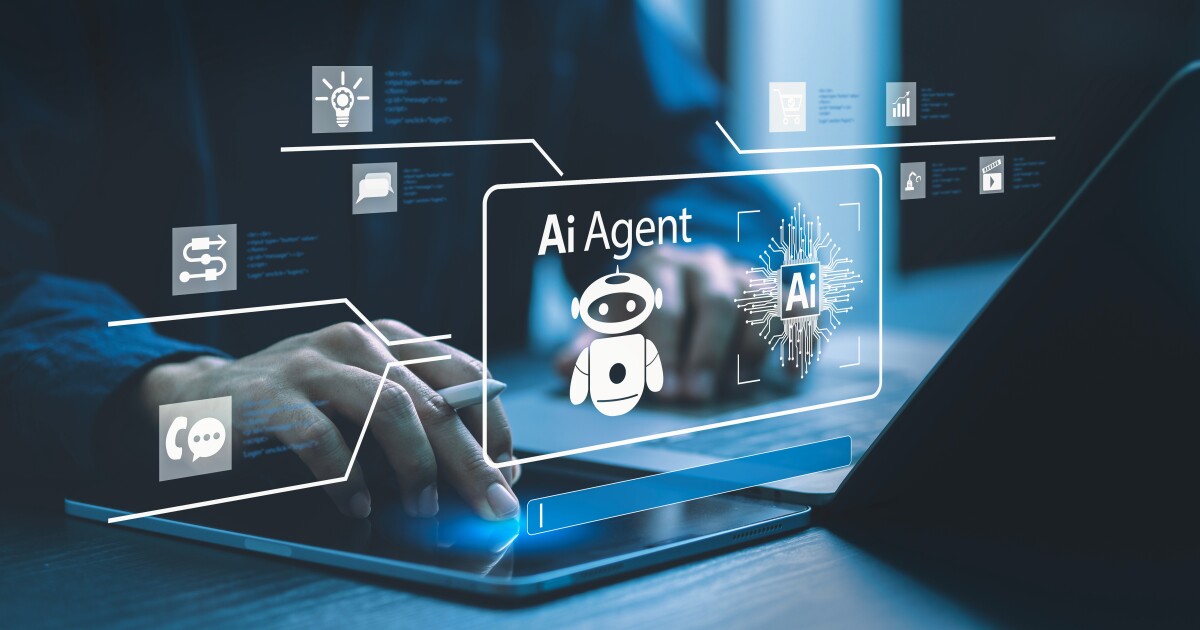
AI agent

FloQuast AI Agents

Accounting solutions provider FloQast announced the launch of a new agentic AI solution compliant with the new ISO standards pertaining to the technology. FloQast AI Agents enables the automation of complex recurring workflows across close management, compliance, and reporting functions using natural language versus extensive code.

The solution so far includes three AI agents: 

  • A Journal Entry Agent which automates the creation of journal entries, such as Coupa Accruals, which  automates the complex process of creating and posting accrual entries from Coupa data; 
  • A Data Transformation Agent which standardizes unstructured data using natural language, not  extensive code, allowing accounting teams to automate the preparation of work related to key  tasks, reconciliations, compliance, or reporting activities; and a 
  • Custom Agent, which enables customers to create their own Agents to automate workflows of their choice. 

“The accounting profession is under more pressure than ever, with shrinking talent pools, heavier  workloads, and growing demands for strategic insights,” said Mike Whitmire, CEO of FloQast.  “FloQast AI Agents put accountants in the driver’s seat, shifting them from preparers to reviewers with  AI automation built for their processes—fully auditable and designed for trust. And, as CFOs struggle to  fill open roles on their teams, FloQast AI agents are poised to be an invaluable resource to help plug that  gap and help teams work smarter, stay in control, and deliver the insights that move businesses  forward.” 
FloQast said its custom AI agent capabilities will soon expand, allowing users to create their own agents for key categories such as Journal Entry, Tasks, Reconciliations, Financial Insights, and Compliance. These agents are joined by the FloQast Transform platform, a product within the company’s larger Accounting Transformation Platform; the FloQast Transform platform serves as a centralized hub where customers can easily  create, test, deploy, and manage FloQast AI Agents. With FloQast Transform, accounting teams can create  bespoke automation for their specific needs without waiting for vendor-built solutions or an extensive demand from IT. 

FloQast noted that it has obtained ISO 42001 certification, released towards the end of last year, which specifies requirements for establishing, implementing, maintaining, and continually improving AI management systems within an organization. 

Fieldguide releases agents

Advisory and audit solutions provider Fieldguide announced the release of its agentic AI solution, FieldAgents, which is touted as being able to autonomously execute entire engagement workflows. 

The product is conceived of as an evolution of this Field Assist solution, which leverages generative AI and LLMs to automating individual tasks, such as writing test procedures, quickly finding insights from complex documents, and documenting test results. 

Field Agents link individual automated tasks into complete, end-to-end workflows that an agent executes with professional input and oversight. For example, an agent can leverage a firm’s methodology and procedures to request the right documents, run the appropriate test procedures, document evidence, and flag important issues for review.

These semi-autonomous bots are intended to function as an extension of the engagement team, automating time-intensive, multi-step processes and empowering professionals to refocus on higher-impact work while unlocking new capacity. Fieldguide says that it is meant to be seamlessly integrated into a firm’s methodology, allowing for process automations particular to the user’s needs. 

“The future of audit and advisory is promising with the benefits that AI already brings today. We envision the winning firms of tomorrow being those who integrate AI to elevate their practitioners,” said Jin Chang, CEO and co-founder of Fieldguide. “Field Agents brings professional-grade AI agents to the industry, fundamentally transforming how audit and advisory firms grow and operate through the next decade. By orchestrating complex, multi-step processes, Field Agents free professionals to focus on what matters: Applying their expertise and strengthening client relationships.”

The solution, which had been named one of Accounting Today’s Top New Products of 2025, had previously been in limited release. Today’s announcement marks the solution’s general availability. 

Continue Reading

Accounting

FASB Standardizes Carbon Offsets Accounting Rules

Published

on

FASB Standardizes Carbon Offsets Accounting Rules

In a decisive move toward standardized environmental financial reporting, accounting standards boards issued updated implementation guidance during the week ending July 25, 2026, regarding the formal recognition and valuation of corporate carbon offsets and environmental credits. The revised frameworks establish precise rules for how enterprises must measure, record, and disclose carbon credits on balance sheets, eliminating years of inconsistent reporting practices across public capital markets.

Under the finalized accounting standard, purchased carbon offsets can no longer be categorized under vague administrative expenses or unstandardized intangible asset accounts. Instead, organizations must classify environmental credits based on underlying operational intent—distinguishing between credits held for immediate compliance compliance obligations, long-term offset obligations, or active market trading. Furthermore, companies are required to evaluate carbon holdings for fair value impairment at the end of each reporting period, ensuring that depreciated or low-quality environmental credits do not distort corporate asset values.

The standardized rules carry significant implications for corporate audit committees and chief accounting officers. External audit firms are implementing rigorous verification protocols to validate the physical legitimacy, legal ownership, and scientific permanence of carbon credits claimed on balance sheets. Inaccurate or overstated carbon accounting claims now carry substantial financial litigation risk, alongside potential regulatory enforcement for misleading ESG disclosures.

To remain fully compliant, corporate accounting departments must establish centralized carbon tracking systems integrated into primary standard ERP ledgers. Accounting teams that proactively adopt standardized environmental reporting protocols will build investor credibility, streamline annual audit processes, and insulate their organizations against evolving regulatory scrutiny.

Continue Reading

Accounting

Automated Tax Compliance Tools Reduce Risk

Published

on

Automated Tax Compliance Tools Reduce Risk

Corporate tax departments reached a critical juncture in automated operational management. With nations worldwide rapidly enacting digital service taxes, localized value-added tax (VAT) mandates, and real-time electronic invoicing requirements, manual tax calculations have become obsolete. Modern corporate tax divisions are aggressively deploying AI-driven tax engine software to automate complex cross-border indirect tax calculations in real time.

The imperative for automated tax compliance stems from the sheer complexity of current trade policies and multi-jurisdictional commerce. E-commerce platforms, software vendors, and global manufacturers face constantly changing regional tax rates, statutory exemption rules, and cross-border tariff structures. Automated tax engines embed directly into enterprise enterprise resource planning (ERP) architectures, automatically applying correct tax codes at the point of sale, calculating real-time withholding amounts, and generating compliant e-invoices.

Automated audit trail generation represents another key advantage of modern tax tech integration. Advanced compliance platforms log every transactional tax determination on immutable digital ledgers, providing tax authorities with transparent, self-verifying audit trails. This capability drastically reduces the operational duration and administrative cost of corporate tax audits, protecting enterprises against severe penalties resulting from calculation errors or missed reporting deadlines.

For chief financial officers and tax directors, investing in automated tax compliance is a vital operational risk mitigation strategy. Automating routine tax calculations frees high-level accounting professionals to focus on strategic tax planning, transfer pricing optimization, and risk management in an increasingly complex global economic environment.

Continue Reading

Accounting

Continuous Auditing Transforms Corporate ERPs

Published

on

continuous auditing transforms corporate erps

As corporate accounting departments cross the threshold into late July 2026, the adoption of continuous, automated auditing systems has reached a definitive turning point. Driven by advances in artificial intelligence and deep integration with modern Enterprise Resource Planning (ERP) platforms, leading finance organizations are moving away from traditional, periodic post-hoc audits in favor of real-time, 100% transactional verification. This technological transition is redefining internal control environments, reducing compliance costs, and eliminating the structural delays inherent in legacy quarterly closing processes.

Unlike traditional auditing frameworks that rely on statistical sampling—a process that inevitably leaves operational blind spots—continuous auditing software monitors operational data feeds continuously. Every purchase order, electronic invoice, payroll disbursement, and cross-border wire transfer is automatically cross-referenced against established corporate governance parameters, regulatory tax schedules, and anti-fraud algorithms in real time. Anomalies or unauthorized ledger entries are flagged instantly, allowing internal audit teams to investigate and remediate compliance gaps immediately rather than months after the close of a financial period.

The implications for executive financial management are far-reaching. By embedding continuous verification directly into daily transaction workflows, chief financial officers gain uninterrupted visibility into the organization’s true financial standing. Real-time balance sheet auditing eliminates the severe operational bottlenecks associated with month-end and quarter-end financial reconciliations, freeing accounting professionals to focus on strategic financial modeling, tax planning, and capital allocation rather than manual data entry and spreadsheet consolidation.

However, implementing continuous auditing requires accounting leadership to invest heavily in data governance and technical upskilling. Internal audit teams must evolve from manual ledger reviewers into system architects capable of auditing complex algorithms and validating automated data pipelines. Accounting firms and corporate controllers that master continuous auditing will establish a resilient compliance framework capable of meeting stringent international regulatory standards with total transparency.

Continue Reading

Trending