
Finance
Google backs Distance, startup bringing mixed reality to cars, planes

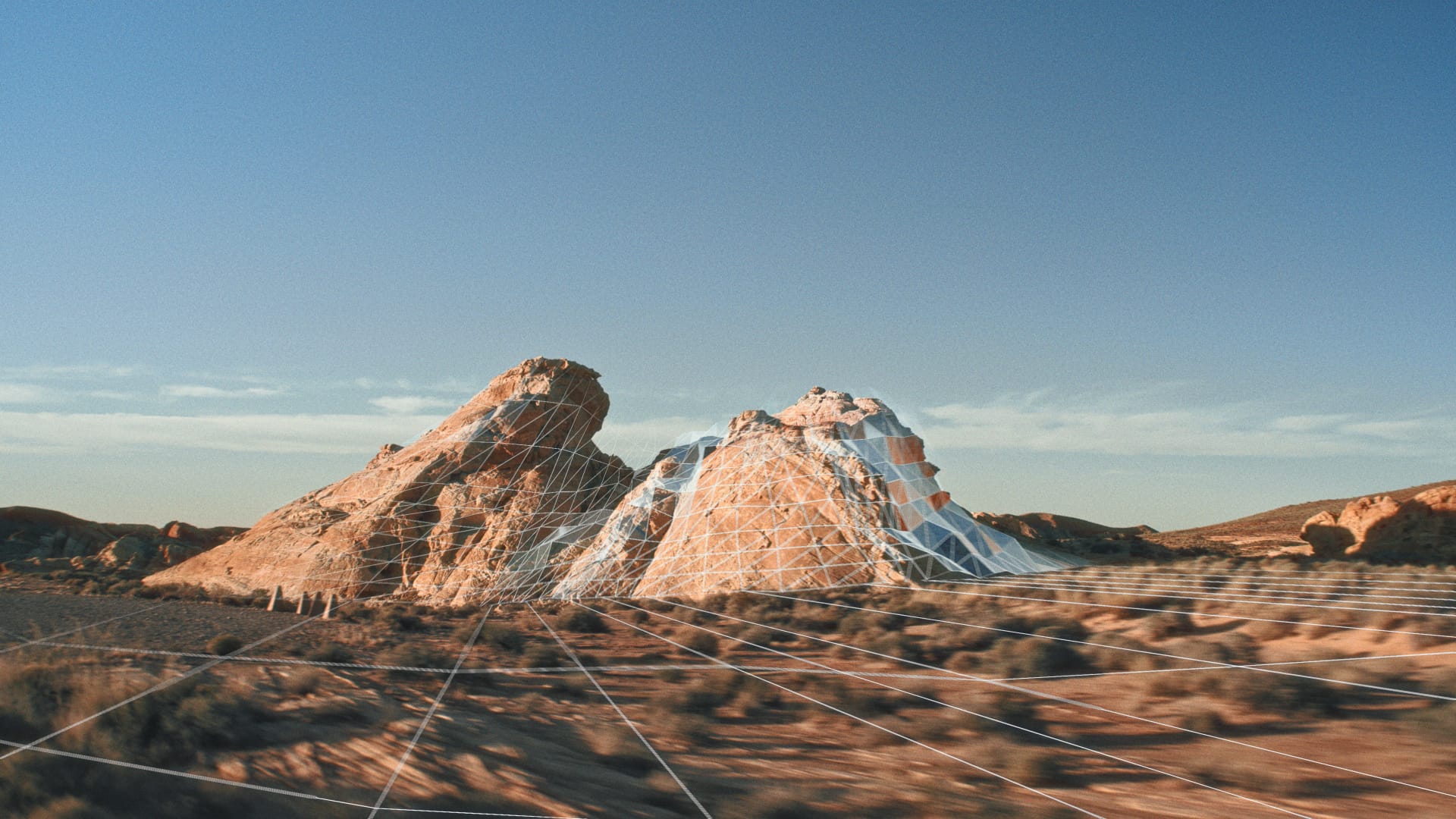
Distance Technologies develops a product that it says can turn any transparent surface into an augmented-reality display.
Distance Technologies
Distance Technologies, a Finnish startup that aims to bring mixed-reality technology to any car windshield or plane cockpit, has raised 10 million euros ($11.1 million) of funding from GV, the venture capital arm of Alphabet and other investors.
Distance raised the cash injection in a seed round led by GV, with existing investors FOV Ventures and Maki.vc also stumping up more cash for the startup, the company told CNBC on Thursday.
Helsinki-headquartered Distance develops technology that it says can turn any transparent surface into an augmented-reality display, enabling the user to see 3D digital objects overlayed on top of the panel they’re viewing.
This avoids the need for any clunky hardware, like a mixed reality headset or augmented reality glasses, both of which require a user to pull an actual device over their eyes to immerse themselves in the experience.
“One of the great barriers for mixed-reality is that, as long as you need to put something on your head, it will never be effortless or elegant as a solution,” Urho Konttori, CEO and co-founder of Distance, told CNBC in an interview earlier this week. Konttori was formerly chief technology officer of Varjo, another Helsinki-based mixed-reality firm.
Distance is primarily focused on selling into the auto, aerospace and defense markets.
The way Distance works is by using tracking technology to identify where you are looking and then compute the correct light field to match the exact positions of your eyes, according to Konttori.
Distance’s solution adds a set of optics layers on top of most liquid crystal displays (LCDs), which allow its tech to beam an image onto the places where your eyes are focusing.
Using this technique, Distance can separate the light fields into your left and right eyes, while also creating an additional optical layer underneath that creates a high brightness.
Distance says its system is capable of “infinite” pixel depth, meaning it can create a life-size field of view in any setting — whether behind the wheel of a car or flying an F-18 fighter jet.
GV, which was formerly known as Google Ventures and counts the internet search giant’s holding company Alphabet as its sole limited partner, told CNBC that it was attracted to invest in Distance due to the “potential to build the next-generation of user interfaces.”
“We are particularly excited about how some of the nearer-term pathways to bring this to market in automotive and aerospace allow the potential for users to get their hands on this technology,” Roni Hiranand, principal at GV, told CNBC.
Commercializing mixed reality isn’t an easy feat. For one, mixed-reality devices are still expensive. Apple’s Vision Pro and Microsoft’s HoloLens 2 devices both start at $3,500 — and they’re not cheap to make, either. A new AR glasses concept device Meta unveiled Wednesday reportedly cost the firm $10,000 per unit to make, according to The Verge.
Meta was not immediately available for comment when contacted by CNBC.

Augmented reality heads-up displays, or HUDs, aren’t a new phenomenon in the automotive industry. Companies have been working to add AR features to cars for several years, with tech giant Huawei among the early movers to pioneer the tech in China.
A slew of other display technology firms are developing their own AR HUDs for cars, including First International Computer, Spectralics, Envisics, Futurus, CY Vision, Raythink, Denso, Bosch, Continental, and Panasonic.
According to Distance Technologies Chief Marketing Officer Jussi Mäkinen, the company’s system can cover the entire surface of any transparent surface, not just a specific corner or the bottom half of a display — a limitation that most automotive AR HUDs are facing today.
“The main difference here is that we are driven by the software,” Mäkinen told CNBC.
The company previously showcased a proof-of-concept version of its technology at the Augmented World Expo USA 2024 mixed-reality industry trade show in June.
For now, Distance has had to use simple optics and normal LCD displays to demonstrate its technology to prospective partners and investors. Going forward, Konttori said he’s getting ready to push a “very expensive” button: advancing Distance’s optics technology into what he calls the next generation early next year.
“I would say that we have been in the research cycle now,” Distance’s CEO said. “Now, we are switching into the product cycle. And the key thing to do is work with somebody who will become your customer … one or two to work very closely with, and then a finalized product specification.”





Nvidia Q2 FY2027 Earnings beats Wall Street Expectation with Record $96.2 Billion Revenue

Treasury Bond Volatility Forces Bessent to Double Debt Buyback Size as Yields Swing

Nvidia Earnings Preview: What Wall Street Expects From the AI Bellwether’s Q2 Report

Armanino adds Strategic Accounting Outsourced Solutions

New 2023 K-1 instructions stir the CAMT pot for partnerships and corporations

Tax Strategy: Employee Retention Credit update
-

 Economics1 week ago
Nvidia’s Potential $3 Billion SB Energy Investment Could Reshape AI Infrastructure
-

 Economics5 days ago
Top 10 Largest Economies by 2030: IMF & World Bank GDP Projections for Global Powerhouses
-

 Stock News5 days ago
How to understand Intel $15B Stock Offering
-
 Stock News2 days ago
Nvidia Earnings Preview: What Wall Street Expects From the AI Bellwether’s Q2 Report
-

 Technology1 week ago
U.S.-China AI Competition Intensifies as Washington Pushes Allies to Choose Sides
-

 Economics5 days ago
Economic Profile of the United States of America (2026–2030 Horizon)
-

 Leaders4 days ago
Jackson Hole 2026: What the First Symposium Under Fed Chair Kevin Warsh Means for Markets
-

 Economics4 days ago
U.S. National Debt Surpasses $40 Trillion for the First Time: What It Means for the Economy