Accounting
GOP tax bill prioritizes Trump campaign vows, increases SALT
Published
1 year agoon

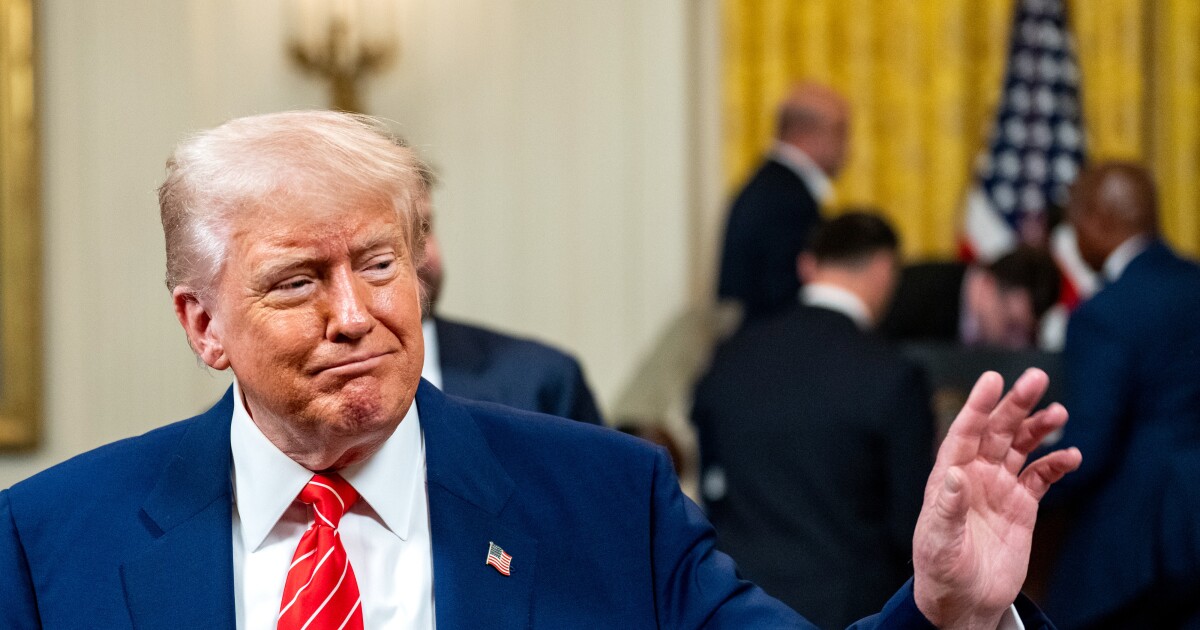
President Donald Trump’s campaign tax pledges — no taxes on tips and overtime pay, plus new tax breaks for car buyers and seniors — are the centerpiece of a multitrillion dollar package that will serve as Republicans’ signature legislative effort.
In a draft version of the tax bill released on Monday, House Republicans highlighted the president’s populist priorities in a package that would enact those cuts through 2028. The bill would also make the lower individual tax rates Trump signed in 2017 permanent.
The bill addressed a tax issue that has been dividing lawmakers since it was first restricted by Trump in 2017: the $10,000 cap on the state and local tax deduction. The plan raises the SALT limit to $30,000, but with limits for individuals earning more than $200,000 or couples making twice that.
The proposal, notably, doesn’t include a tax hike on the wealthiest Americans, after weeks of debate among Republicans about whether to raise levies on millionaires. The bill would permanently extend the 37% top rate for individuals that was set in Trump’s 2017 tax law. That’s despite Trump telling House Speaker Mike Johnson as recently as last week that he wanted a
“The president loves the bill. He met with Jason Smith on Friday and it’s a great first step,” top Trump economic adviser Kevin Hassett told reporters Monday, referring to the House Ways and Means Committee Chair who led the effort to craft the tax bill.
The package — which Trump has dubbed his “one big, beautiful bill” — is the totality of his legislative agenda. The bill is officially scored as losing $3.7 trillion in revenue over 10 years, within the $4.5 trillion limit lawmakers set for themselves.
The cost of the bill was constrained by phasing out many renewable energy subsidies and by the SALT limit itself. Without congressional action, SALT would be uncapped after this year, so putting a $30,000 limit on the write-off creates a $900 billion revenue stream to offset some of the cuts. Additionally, many of the new tax breaks — such as no taxes on tips — are only proposed to last for four years, further tamping down costs.
Narrow Republican margins in the House mean that the president needs nearly unanimous support from his party to pass the bill.
The plan will take a big step toward advancing through the House as soon as this week, with the House Ways and Means Committee scheduled to begin debate on it on Tuesday.
Johnson told reporters Monday that the House is on track to pass the legislation by Memorial Day. It would then go to the Senate where it could be subject to major revisions.
Among provisions up for debate: the amount to increase the nation’s borrowing authority. The House bill calls for a $4 trillion increase, smaller than the Senate’s preferred $5 trillion level. Lawmakers are hoping to push any additional votes on raising the debt ceiling until after the 2026 midterm elections.
Promises made
The draft language includes several of the unorthodox proposals that were central to Trump’s campaign message: no taxes on tipped wages — an idea he said came from a waitress — and eliminating levies on overtime pay. The plan also calls making the interest on car loans deductible, similar to how mortgage interest can be written off. But the car buyers can only claim the break on American-made vehicles, underscoring Trump’s desire to boost U.S. manufacturing.
Trump had also campaigned on ending taxes on Social Security benefits, but that runs afoul of the budget rules Republicans are using to pass the bill. Instead, the bill provides a $4,000 bonus for seniors on top of the regular standard deduction.
One of the thorniest issues — the contentious standoff over increasing the SALT deduction — may still be up for debate. Some lawmakers representing high-tax areas want an even
The package lays out new levies. It would impose a new tax on private foundations of up to 10% and a new tax on foreign remittance of 5%, subject to exemptions. Also on the hook for tax increases: wealthy private universities, which could see an increase in the levy on endowments from 1.4% to as high as 21% on investment income.
Multinational companies would get an extension of current lower rates on foreign profits, marking a win for corporate America.
Tax breaks benefiting the renewable energy sector are also set to be scaled back. Popular production and investment tax credits for clean electricity would be phased out by the end of 2031, and new requirements against using materials from certain foreign nations would be added. The $7,500 consumer tax credit for the purchase of an electric vehicle would be fully eliminated by the end of 2026.
Monday’s draft bill came after the tax-writing committee released some initial provisions late Friday. Those included raising the maximum child tax credit to $2,500 from $2,000 and increasing the standard deduction, both retroactive to 2025 to put more money in voters’ pockets before the 2026 elections.
The bill also raises the estate tax exemption to $15 million and increases the 20% deduction for closely held businesses to 23%.
While the bill would include roughly $1.5 trillion in spending cuts over the next decade, that wouldn’t come close to covering the roughly $4 trillion in tax cuts outlined in the plan, meaning it would likely add to deficits in the coming years.
Republicans have pointed to tariffs as a key source of revenue to help offset the deficit impact from the tax bill, and data out Monday showed customs duties jumped to a record $16 billion in April. The revenue won’t be officially scored as paying for the bill since the text doesn’t enact the emergency Trump tariffs into law.
Following Monday’s
You may like
Accounting
Are you ready for it? 4 steps to successfully integrate AI into your operations
Published
1 month agoon
May 7, 2026

Over the last few years, AI has gone from being a novelty to a mission-critical business strategy for many accountants. Innovative, forward-thinking firms are using these tools to streamline manual tasks, ensure compliance and provide the best possible service to their clients. According to the 2025 Intuit QuickBooks
Processing Content
However, AI adoption is at varying levels across the industry. While nearly every firm has begun experimenting with basic AI tools, many remain in a sandbox phase, hesitant to move toward full-scale integration due to perceived complexity or costs.No matter where you may fall on the integration spectrum, the fact remains: AI is rapidly reshaping the accounting industry. If you’ve delayed AI adoption in your business, you’ll want to create a focused plan to catch up.
Time is of the essence, but don’t sacrifice strategy for speed
Firms that are ready to take the leap from casual use to deep integration may find themselves in need of accelerated adoption, but speed should not come at the cost of strategy. Identify tangible, practical ways that easy-to-use tools can impact your business through automation. Having a strong strategic focus allows firms to implement workflow changes to streamline manual tasks, ensure compliance and provide excellent service to your clients.
To begin your AI journey, here is a four-step plan that firms can use to transition from experimentation to execution, in a safe, practical manner:
Step 1: Kick off your first AI project
As is the case with many things, getting started is often the most challenging step. While enthusiasm is high, uncertainty with implementation risks can cause hesitation. The key is to lower risk by embracing AI and implementing an intentional, phased approach. Begin by weaving AI tools into high-impact, low-risk tasks, such as summarizing meeting notes, drafting client or firm-wide memos, or translating complex concepts into easy-to-understand ideas. Monitor results carefully and, if these initial attempts need adjustment, be prepared to pivot to the next use case until you can clearly demonstrate that AI systems are delivering a measurable impact on your operations. From there, you can learn from early experiences, adapt strategy, and scale appropriately to complete more complex projects.
Step 2: Dig into your AI toolkit
The marketplace is crowded with AI-powered tools that promise to do everything from enhancing your workflows to improving the customer experience. It can be hard to know which ones are worth investing your time and money. Find a trusted source like a respected peer, or leverage your professional network to help discuss the tools that may be the best fit for achieving your business goals. You can also look within the tools you’re already using to see if they offer AI-powered features, which can help ease into the transition. Additionally, look for free high-quality education to upskill your team. For example, Anthropic offers a Claude AI University that provides excellent foundational resources for moving beyond basic prompts.
Step 3: Review an AI security checklist
An important element in AI implementation is security. With AI tools needing access to firm and client data to function, it leads to questions of how the data will be protected. This makes the right AI and cybersecurity strategy critical. Firms must proactively ensure that client data remains protected from today’s increasingly sophisticated threats by embracing an established cybersecurity framework such as
Step 4: Openly discuss AI usage with your clients
Once you’ve established the best way to use AI tools that meet your firm’s needs, you’ll want to communicate all of the advantages afforded by these tools to your clients. Make sure you highlight the benefits and simultaneously ensure you are addressing any potential concerns. It’s also important to get explicit consent from all clients if you’re sharing their information with the third-party tools you may use. While this might seem like an extra step, it will go a long way toward fostering a greater level of transparency and deepen trust between you and your clients.
Don’t get left behind
Adopting AI does not have to be intimidating, expensive or overly complex. Think of it as a strategic business move that will not only keep you competitive, but will potentially free you up to focus on keeping clients happy and growing your practice. By strategically focusing on these best practices, identifying AI use cases in a phased approach, evaluating the right tools for your business, ensuring client information is secure and clearly communicating your AI strategy, you’ll be AI-ready in no time.

The Financial Accounting Standards Board met this week to discuss its projects on accounting for transfers of cryptocurrency assets and enhancing the disclosures around certain digital assets, such as stablecoins.
Processing Content
During Wednesday’s meeting, FASB’s board made certain tentative decisions, according to a
At a future meeting, the board plans to consider clarifying the derecognition guidance for crypto transfer arrangements to assess whether the control of a crypto asset has been transferred.
FASB also began deliberations on the
The board decided to provide illustrative examples in Topic 230, Statement of Cash Flows, to clarify whether certain digital assets such as stablecoins can meet the definition of cash equivalents. It also decided to include the following concepts in the illustrative examples:
- Interpretive explanations that link to the current cash equivalents definition;
- The amount and composition of reserve assets; and,
- The nature of qualifying on-demand, contractual cash redemption rights directly with the issuer.
FASB plans to clarify that an entity should consider compliance with relevant laws and regulations when it’s creating a policy concerning which assets that satisfy the Master Glossary definition of the term “cash equivalents“ will be treated as cash equivalents.
“I agree with the staff suggestion to look at examples,” said FASB vice chair Hillary Salo. “From my perspective, I think that is going to help level the playing field. People have been making reasonable judgments. I agree with that. And I think that this is really going to help show those goalposts or guardrails of what types of stablecoins would be in the scope of cash equivalents, and which ones would not be in the scope of cash equivalents. I certainly appreciate that approach, and I think it has the least potential impact of unintended consequences, because I do agree with my fellow board members that we shouldn’t be changing the definition of cash equivalents, and it’s a high bar to get into the cash equivalent definition.”
“I’m definitely supportive of not changing the definition of cash equivalents,” said FASB chair Richard Jones. “I believe that’s settled GAAP in a way, and we’re not really seeing a call to change it for broader issues. I am supportive of the example-based approach. The challenge with examples, though, is everybody’s going to want their exact pattern, but that’s not what we’re doing.”
The examples will explain the rationale for how digital assets such as stablecoins do or do not qualify as cash equivalents and give a roadmap for other types of digital assets with varying fact patterns to be able to apply.
“We really don’t want to be as a board facing a situation where something was a cash equivalent and then no longer is at a later date,” said Jones. “That’s not good for anyone, so keeping it as a high bar with certain rigid criteria, I think, is fine.”
Stablecoins are supposed to be pegged to fiat currencies such as U.S. dollars and thus provide more stability to investors. “In my view, while a stablecoin may meet the accounting definition established for cash equivalents, not every one of those stablecoins in the cash equivalent classification represents the same level of risk,” said FASB member Joyce Joseph.
She noted that the capital markets recognize the distinctions and have established a Stablecoin Stability Assessment Framework to evaluate a stablecoin’s ability to maintain its peg to a fiat currency. Such assessments look at the legal and regulatory framework associated with the stablecoin, and provide investors with information that could enable them to do forward-looking assessments about the stability of the stablecoin.
“However, for an investor to consider and utilize such information for a company analysis the financial statement disclosures would need to include information about the stablecoin itself,” Joseph added. “In outreach, the staff learned that investors supported classifying certain stablecoins as cash equivalents when transparent information is available about the entities at which the reserve assets are held. Therefore, in my view, taking all of this into consideration a relevant and informative company disclosure would include providing investors with the name of the stablecoin and the amount of the stablecoin that is classified as a cash equivalent, so investors can independently assess the liquidity risks more meaningfully and more comprehensively by utilizing broader information that is available in the capital markets and its emerging information.”
Such information could include the issuer, reserves, governance and management, she noted, so investors would get a more holistic look at the risks that holding the stablecoin would entail for a given company.
The board decided to require all entities to disclose the significant classes and related amounts of cash equivalents on an annual basis for each period that a statement of financial position is presented.
Entities should apply the amendments related to the classification of certain digital assets as cash equivalents on a modified prospective basis as of the beginning of the annual reporting period in the year of adoption.
FASB decided that entities should apply the amendments related to the disclosure of the significant classes and amounts of cash equivalents on a prospective basis as of the date of the most recent statement of financial position presented in the period of adoption.
The board will allow early adoption in both interim and annual reporting periods in which financial statements have not been issued or made available for issuance.
FASB also decided to permit entities to adopt the amendments to be illustrated in the examples related to the classification of certain digital assets as cash equivalents without the need to perform a preferability assessment as described in Topic 250, Accounting Changes and Error Corrections.
The board directed the staff to draft a proposed accounting standards update to be voted on by written ballot. The proposed update will have a 90-day comment period.
Accounting
Lawmakers propose tax and IRS bills as filing season ends
Published
2 months agoon
April 17, 2026

Senators introduced several pieces of tax-related legislation this week, including measures aimed at improving customer service at the Internal Revenue Service, cracking down on tax evasion and curbing the carried interest tax break, in addition to efforts in the House to repeal the Corporate Transparency Act.
Processing Content
Senators Bill Cassidy, R-Louisiana, and Mark Warner, D-Virginia, teamed up on introducing a bipartisan bill, the
The bill would establish a dashboard to inform taxpayers of backlogs and wait times; expand electronic access to information and refunds; expand callback technology and online accounts; and inform individuals facing economic hardship about collection alternatives.
“Taxpayers deserve a simple, stress-free experience when dealing with the IRS,” Cassidy said in a statement Wednesday. “This bill makes the process quicker and easier for taxpayers to get the information they need.”
He also mentioned the bill during a
“I’m happy to meet with the team … and do all I can to make it as good as you want it to be,” said Bisignano.
“My bill would equip the IRS with the legislative mandate to create an online dashboard so that taxpayers can monitor average call wait time and budget time accordingly,” said Cassidy. He noted that the bill would allow a callback for taxpayers that might need to wait longer than five minutes to speak to a representative, and establish a program to identify and support taxpayers struggling to make ends meet by providing information about alternative payment methods, such as installments, partial payments and offers in compromise.
“I know people are kind of desperate and don’t know where to turn for cash, so I think this could really ease anxiety,” he added. “This legislation is bipartisan and is likely to pass this Congress.”
Cassidy and Warner
“Taxpayers shouldn’t have to jump through hoops to get basic answers from the IRS — and in the last year, those challenges have only gotten worse,” Warner said in a statement. “I am glad to reintroduce this bipartisan legislation on Tax Day to ease some of this frustration by increasing clear communication and making IRS resources more readily available.”
Stop CHEATERS Act
Also on Tax Day, a group of Senate Democrats and an independent who usually caucuses with Democrats teamed up to introduce the Stop Corporations and High Earners from Avoiding Taxes and Enforce the Rules Strictly (Stop CHEATERS) Act.
Senate Finance Committee ranking member Ron Wyden, D-Oregon, joined with Senators Angus King, I-Maine, Elizabeth Warren, D-Massachusetts, Tim Kaine, D-Virginia, and Sheldon Whitehouse, D-Rhode Island. The bill would provide additional funding for the IRS to strengthen and expand tax collection services and systems and crack down on tax cheating by the wealthy.
“Wealthy tax cheats and scofflaw corporations are stealing billions and billions from the American people by refusing to pay what they legally owe, and far too many of them are getting a free pass because Republicans gutted the enforcement capacity of the IRS,” Wyden said in a statement. “A rich tax cheat who shelters mountains of cash among a web of shell companies and passthroughs is likelier to be struck by lightning than face an IRS audit, and Republicans want to keep it that way. This bill is about making sure the IRS has the resources it needs to go after wealthy tax cheats while improving customer service for the vast majority of American taxpayers who follow the law every year.”
Earlier this week. Wyden also
The Stop CHEATERS Act would provide the IRS with additional funding for tax enforcement focused upon high-income tax evasion, technology operations support, systems modernization, and taxpayer services like free tax-payer assistance.
“As Congress seeks ways to fund much-needed policy priorities and address our growing national debt, there is one common sense solution that should have unanimous bipartisan support: let’s enforce the tax laws already on the books,” said King in a statement. “Our legislation will make sure the IRS has the resources it needs to confront the gap between taxes owed and taxes paid – while ensuring that our tax enforcement professionals are focused on the high-income earners who account for the most tax evasion. This is a serious problem with an easy solution; let’s pass this legislation and make sure every American pays what they owe in taxes.”
Carried interest
Wyden, King and Whitehouse also teamed up on another bill Thursday to close the carried interest tax break for hedge fund managers that
Carried interest is a form of compensation received by a fund manager in exchange for investment management services, according to a
Under the bill, the
“Our tax code is rigged to favor ultra-wealthy investors who know how to game the system to dodge paying a fair share, and there is no better example of how it works in practice than the carried interest loophole,” Wyden said in a statement. “For several decades now we’ve had a tax system that rewards the accumulation of wealth by the rich while punishing middle-class wage earners, and the effect of that system has been the strangulation of prosperity and opportunity for everybody but the ultra-wealthy. There are a lot of problems to fix to restore fairness and common sense to our tax code, and closing the carried interest loophole is a great place to start.”
Repealing Corporate Transparency Act
The House Financial Services Committee is also planning to markup a bill next Tuesday that would fully repeal the Corporate Transparency Act, which has already been significantly
If enacted, the repeal would eliminate beneficial ownership reporting requirements, removing a transparency measure designed to help law enforcement and national security officials identify who is behind U.S. companies.
“This repeal would turn the United States back into one of the easiest places in the world to set up anonymous shell companies, something Congress worked for years to fix,” said Erica Hanichak, deputy director of the FACT Coalition, in a statement. “These entities are routinely used to facilitate corruption, financial crime, and abuse. Rolling back the CTA doesn’t just weaken transparency, it signals to bad actors around the world that the U.S. is once again open for illicit business.”
Gen X can’t retire on time as inflation outpaces wages, survey finds
Are you ready for it? 4 steps to successfully integrate AI into your operations
What that means for consumer loans
Armanino adds Strategic Accounting Outsourced Solutions
New 2023 K-1 instructions stir the CAMT pot for partnerships and corporations