
Accounting
Harris has Trump on defense in sharp-elbowed presidential debate

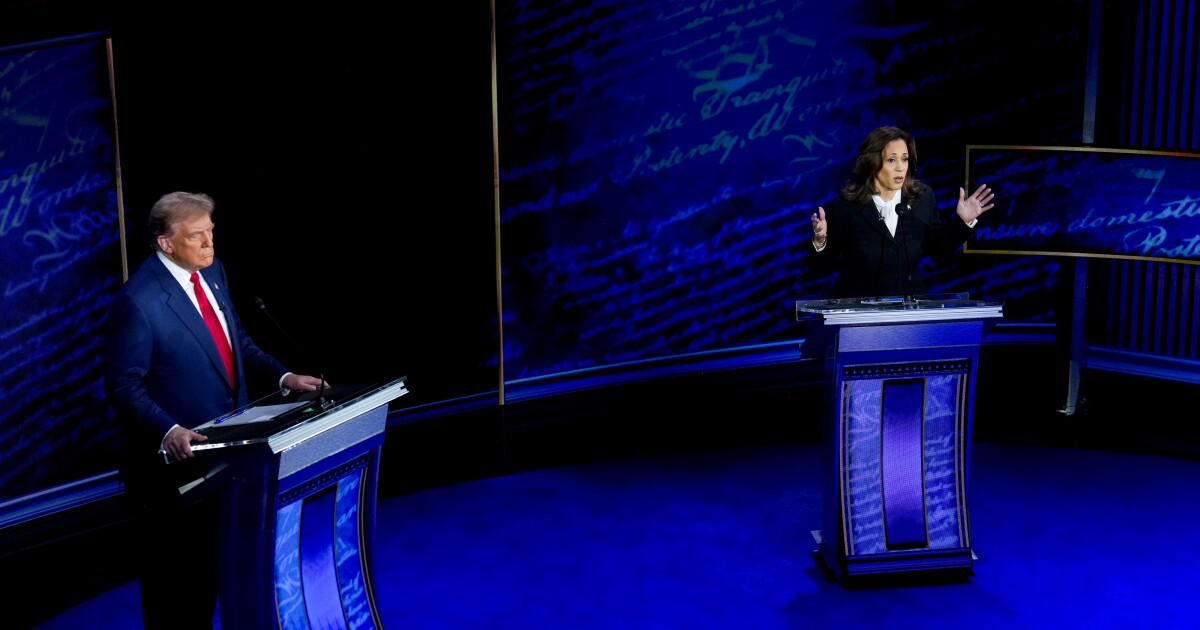
Democrat Kamala Harris and Republican Donald Trump sparred through their first debate, with the former president often on the defensive over abortion rights, the January 6 insurrection and on foreign policy.
The debate saw Harris draw from her past as a prosecutor, peppering in lines that appeared designed to needle Trump, including by taunting him over the size of his rally crowds. Trump, meanwhile, moved to tie Harris to more liberal policy positions from her past, hammering her for saying she no longer backs a fracking ban and flatly calling her a Marxist.
Broadly, the debate unfolded in stark contrast to the previous one in June, when President Joe Biden’s stumbles spurred calls that ultimately drove him to bow out of the race and endorse Harris as Democrats’ new nominee.

Doug Mills/The New York Times/Bloomberg
Trump allies criticized the moderators, while betting markets shifted in Harris’ favor, a signal that many expect her candidacy to earn a boost from Tuesday’s proceedings. Harris’ campaign called for a second debate shortly after the forum concluded.
“It’s time to turn the page,” Harris said at the debate in Philadelphia hosted by ABC News, at one point appealing to disaffected Republicans to back her candidacy.
The initial exchanges in the debate focused on the economy and immigration, with Trump attacking Harris over a porous border and warning that migrants will overrun towns across the U.S.
Harris, in turn, said her agenda was about “lifting up the middle class and working people of America,” addressing one of her biggest electoral vulnerabilities: the high prices and costs that have hammered U.S. households and left voters skeptical of Biden’s economic agenda.
The vice president noted her plans for expanding the child tax credit, offering mortgage assistance to new homebuyers, and a deduction for small businesses — while attacking Trump over proposed tariffs. She defended the administration’s efforts on the economy saying she and Biden had to “clean up Donald Trump’s mess.”
“I had tariffs yet I had no inflation,” Trump countered. “Look, we’ve had a terrible economy because inflation — which is really known as a country buster, it breaks up countries — we have inflation like very few people have ever seen before.”
Trump in his opening remarks criticized Harris over the border, pointing to Springfield, Ohio, a town where an influx of Haitian immigrants has spurred widespread coverage, particularly in conservative outlets.
Migrants “are taking over the towns. They’re taking over buildings. They’re going in violently,” he said, seeking to focus the conversation on immigration policy, another issue where polls show voters disapprove of the Biden administration’s response.
Later in the debate, Trump returned to the town — floating an unsubstantiated conspiracy theory that migrants were eating pets, and earning a laugh from Harris.
“The people on television say ‘my dog was taken and used for food,'” Trump said. “The people on television are saying my dog was eaten by the people that went there.”
“Talk about extreme,” Harris responded.
Across global financial markets, the response an hour into the debate was relatively muted. Riskier assets slipped, with stocks in Hong Kong down in early trading. The dollar edged lower, while havens such as the yen and Swiss franc advanced.
Bitcoin fell as much as 1.5% before paring some of the drop to trade at $56,983 as of 10:10 p.m. on Tuesday in New York. US equity futures and a dollar gauge edged down, while Treasuries were steady.
Harris’ odds of winning the election increased on the betting website PredictIt to 56%, from 53% before the debate.
The former president also found himself on the defensive over Project 2025, a conservative blueprint for his second term written by some of his closest allies — but which he has disavowed in the face of Democratic attacks.
“I haven’t read it. I don’t want to read it,” Trump said after Harris jabbed him over the initiative. “This was a group of people that got together, they came up with some ideas, I guess. Some good, some bad. But it makes no difference.”
Abortion rights
Trump and Harris clashed at length over abortion — an issue which Democrats believe will mobilize suburban women and independents in the wake of the Supreme Court’s decision to overturn Roe v. Wade — a ruling that spurred restrictions on the procedure in states across the country.
Harris labeled abortion restrictions adopted by states in the aftermath of the ruling “Trump abortion bans” and said the former president was responsible for situations where women were denied abortion care or access to in vitro fertilization. She repeatedly pressed Trump on whether he would veto a bill imposing a national restriction on abortion.
“Trump abortion bans make no exception, even for rape and incest,” Harris said, prompting Trump to call her a liar.
Trump said that while he is not in favor of abortion, the issue is now up to the states. Asked by the moderators if he would veto a national abortion ban, Trump deflected, stating, “I wouldn’t have to.”
“They wanted to get it out of Congress and out of the federal government, and we did something that everybody said couldn’t be done,” Trump said, praising the high court’s ruling.
Trump, for his part, claimed Harris would allow late-term or even post-birth abortion, earning a rebuke from the moderator, who noted no state allowed the killing of a baby post-birth.
“Nowhere in America is a woman carrying a pregnancy to term and in asking for an abortion, that is not happening,” Harris said. “It’s insulting to the women of America and understand what has been happening under Donald Trump’s abortion ban.”
Trump nominated three of the justices who voted to overturn Roe and has used that ruling to cement his grip on evangelical voters and the Republican party. But he’s also tried to neutralize abortion as an election issue in a bid to expand his electoral appeal.
The two both backtracked from previous positions on healthcare, with Trump stopping short of an explicit pledge to kill Obamacare, which he’s often promised to do. He said his team is looking at alternatives that are cheaper and offer better coverage.
“Until then, I’d run it as good as it can be run,” he said. Pressed on if he has a plan, Trump said “I have concepts of a plan.”
Harris was pressed on her past calls to support plans to extend government-funded healthcare to all Americans, or a version of it. “What we need to do is maintain and grow the Affordable Care Act,” she said, using the formal name for Obamacare, and adding that she supports private insurance.
Exchanging jabs
Trump spoke at length about the violent Jan. 6, 2021 attack on the US Capitol by supporters seeking to block the certification of Biden’s 2020 election victory. Trump cast the shooting death of protester Ashli Babbitt as “a disgrace” and blamed former House Speaker Nancy Pelosi for not doing more to secure the situation, but sidestepped repeated questions about whether he regretted anything about his actions on that day.
Trump also attacked Harris for backtracking on some of her past policies. The vice president has distanced herself from some policies she supported in the 2020 presidential cycle when she sought her party’s nomination.
“Everything she believed three years ago or four years ago is out the window,” Trump said. “She’s a Marxist. Everybody knows she’s a Marxist.”
As Trump delivered his jab, Harris brought a hand to her chin and stared at the former president quizzically.
Harris baited Trump by suggesting his iconic political rallies no longer have the same pull — even among his supporters.
“I’m going to invite you to attend one of Donald Trump’s rallies,” she said, noting that he regularly talks about fictional characters like Hannibal Lecter. “You will also notice is people start leaving his rallies early, out of exhaustion and boredom. And I will tell you, the one thing you will not hear him talk about is you.”not supported.
Trump, who was asked about the border, instead veered back to the rallies in his response. “People don’t go to her rallies; there’s no reason to go,” he said.
Trump peppered in his own attacks to get under Harris’s skin — claiming Biden “hates” Harris, whom he endorsed; saying Biden “doesn’t know he’s alive”; and borrowing one of Harris’ own notorious lines.
“I’m talking now, if you don’t mind please. Does that sound familiar?” he said. Trump’s remark referred to a viral moment in Harris’ 2020 vice presidential debate with Republican Mike Pence, where she told him “I’m speaking.”
Harris was also asked about Trump’s repeated comments calling into question her racial identity as Black and Asian-American and sought to shift the focus away from herself.
The vice president described Trump as someone who has “consistently, over the course of his career, attempted to use race to divide the American people,” including by calling into question former President Barack Obama’s birth and citizenship.
“I don’t care what she is,” Trump said during the debate, adding, without evidence, that he had “read” an instance of the biracial vice president claiming she wasn’t Black. “Either one was okay with me,” he added.
Pivotal debate
During one exchange, Trump said Harris “hates Israel” and added that she also “hates the Arab population” because of her suggestion that Israel needed to take greater care in the war in Gaza.
“That is absolutely not true,” Harris responded. “He is trying again to divide and distract from the reality.”
Harris said Trump supported dictators and that he was easily swayed by their “flattery and favors.”
Harris sidestepped a question of whether she bore any responsibility for the chaotic withdrawal from Afghanistan, which happened during the Biden-Harris administration under a timeline set in motion by the Trump administration.
“Four presidents said they would, and Joe Biden did,” Harris said of pulling U.S. troops from the country.
The debate, potentially the only face-to-face showdown between Harris and Trump this cycle, comes with early voting poised to begin in some states within days and as polls show the two candidates locked in a tight contest.
Hanging over Tuesday’s event was the shadow of one of the most consequential debates of modern U.S. history, a June forum where Biden delivered a calamitous performance against Trump, leading to his replacement by Harris atop the Democratic ticket.
During one exchange, Trump assailed Democrats for pushing Biden out of the race. “They threw him out of the campaign like a dog,” Trump said.
“You’re not running against Joe Biden, you’re running against me,” Harris responded, looking Trump in the eyes.





U.S. Inflation Outlook for 2027

S&P 500 September Outlook: Tech Rally Holds Index at 7,600

India Unveils ‘Saptadhara’ Reform Agenda Targeting Technology, Youth Skilling, and Growth

Armanino adds Strategic Accounting Outsourced Solutions

New 2023 K-1 instructions stir the CAMT pot for partnerships and corporations

Tax Strategy: Employee Retention Credit update
-

 Technology1 week ago
AI Infrastructure Boom Hits Physical Limits: Power, Financing, and Supply Chain Strain
-
 Stock News4 days ago
S&P 500 September Outlook: Tech Rally Holds Index at 7,600
-

 Economics1 week ago
U.S.- Canada Trade Talks Collapse; Carney Says Retaliatory Tariffs Begin September 8
-

 Finance4 days ago
S&P 500 Outperforms Amid Strong Corporate Earnings as Treasury Yields Cap Equity Multiples
-

 Technology1 week ago
Flock Cameras and the Future of Public Security
-

 Insights4 days ago
Climate Resilience and Offshore Wind and Land Restoration Milestones
-

 Accounting4 days ago
Mandatory ESG Reporting Standards Demand Standardized Non-Financial Audit Trails
-
 Leaders4 days ago
India Unveils ‘Saptadhara’ Reform Agenda Targeting Technology, Youth Skilling, and Growth