
Personal Finance
Here’s the inflation breakdown for April 2025 — in one chart

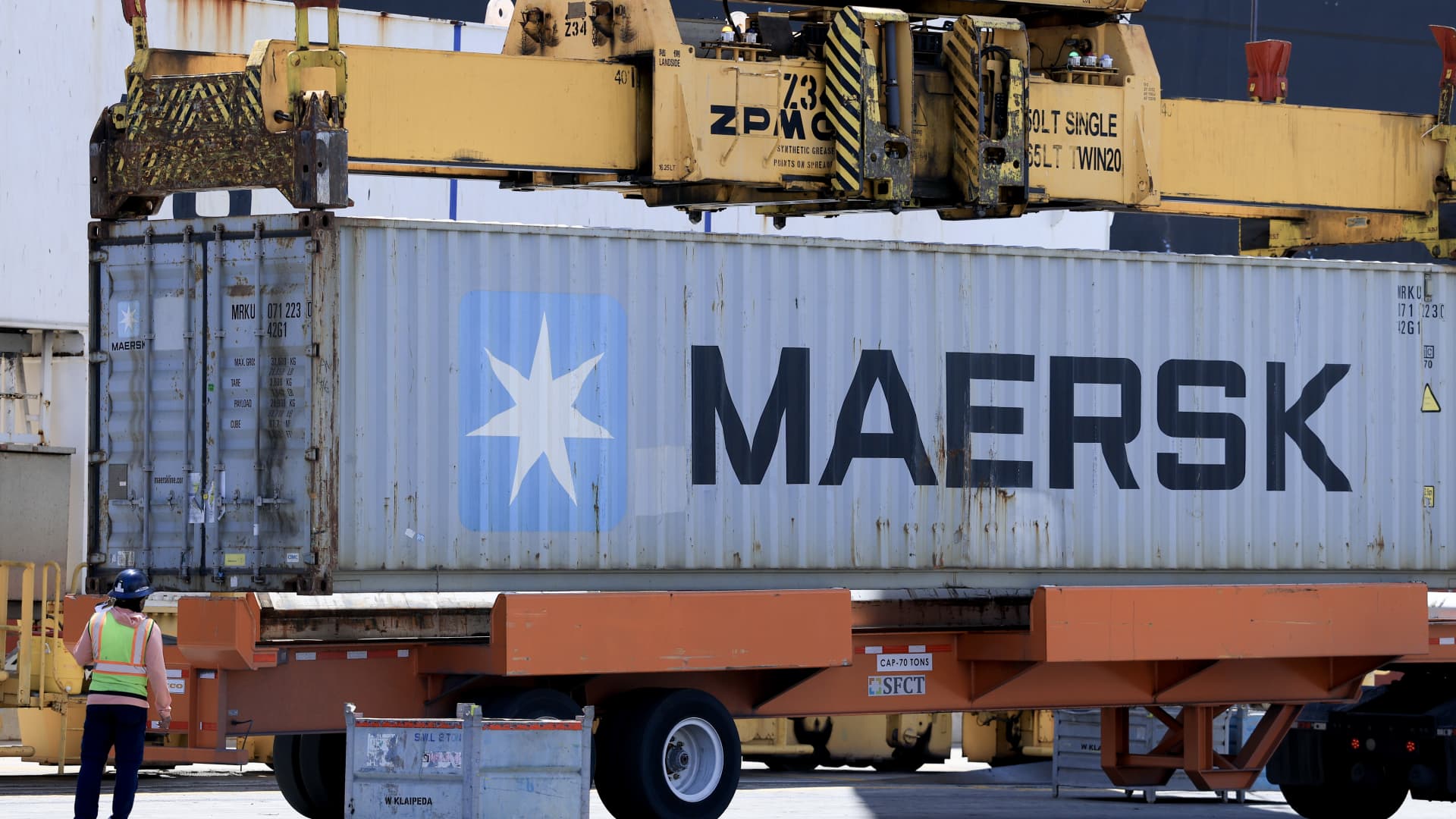
Shipping containers are offloaded from a cargo ship at PortMiami on April 15, 2025 in Miami.
Joe Raedle | Getty Images
Inflation retreated again in April on the back of lower prices for consumer staples like groceries and gasoline, and other items such as used cars and clothing.
The consumer price index, a key inflation gauge, rose 2.3% in April from 12 months earlier, down from 2.4% in March, the Bureau of Labor Statistics reported Tuesday.
It was the smallest annual increase since February 2021, just before pandemic-era inflation started to pop.
However, economists warn it’s not a matter of if, but when, tariffs levied by President Donald Trump start to re-ignite inflation, at a time at a time when it has nearly been tamed from pandemic-era highs.
“It felt like we could just about declare victory on putting inflation back in the bottle, and it’s back out again,” said Mark Zandi, chief economist at Moody’s.
He expects tariffs to start noticeably impacting inflation in the May CPI report issued next month.
“Soak this report in,” Zandi said. “It’ll be a while before we get another good one.”
How tariffs may affect inflation
Tariffs are a tax on imports from foreign nations, paid by U.S. companies that import the good or service. Businesses negatively affected are expected to pass on at least some of that additional cost to consumers via higher prices.
Trump has imposed — and removed or delayed — tariffs in several tranches during his second term.
Tariff policies currently in effect would cost the average U.S. household an extra $2,800 over the “short run,” according to a Yale Budget Lab report issued Monday. (It doesn’t specify a time frame.)
The speed at which companies raise prices will vary, economists said.
Some may not want to raise them immediately, to avoid alienating consumers. Others may have ample inventory, and can avoid raising prices until their non-tariffed inventory runs low. Some may try to raise prices prematurely, in anticipation of higher costs.
A 10% average tariff rate would add as much as 1 percentage point to the consumer price index after about six to nine months, said Joseph Gagnon, senior fellow at the Peterson Institute for International Economics.
That average rate is a “reasonable” guess, given current policy, he said.
Currently, there’s a 10% baseline tariff on most U.S. trading partners, and a higher rate on China of at least 30%. There are also 25% duties on specific products like steel, aluminum and some automobiles and auto parts, and on certain goods from Canada and Mexico.
Of course, it’s unclear where policy will ultimately land.
Even after a temporary trade deal with China announced Monday, “core” CPI inflation will still rise to 3.5% by the end of 2025, Stephen Brown, deputy chief North America economist at Capital Economics, wrote in a note Tuesday.
Core inflation — which strips out energy and food prices, which can be volatile categories — was at 2.8% in April.
“I think tariffs are the biggest question mark over the inflation outlook,” said Sarah House, a senior economist at Wells Fargo Economics.
“There’s all this tremendous trade uncertainty and we have higher tariffs pretty much across everything we import,” she added.
‘Signs of tariff effects’ in the CPI
There may have been “some signs of tariff effects” in the CPI report, Brown of Capital Economics wrote.
For example, there was a nearly 9% jump in audio equipment prices and a 2.2% increase in photographic equipment prices just in the month from March to April, according to Brown’s note.
However, “the overall tariff impact was muted,” signaled by a relatively low 0.1% increase in goods prices for the month, he wrote.

Meanwhile, gasoline prices fell slightly — by 0.1% from March to April — on a seasonally adjusted basis, according to CPI data. They’re down 12% for the year.
Gasoline prices have fallen (or, deflated) in recent months alongside those of oil, from which gasoline is refined. Oil prices have declined amid fear of recession, which would mean lower demand for oil, and greater supply.
More from Personal Finance:
How to save on your grocery bill
Stagflation is a looming economic risk
After UK and China trade deals, tariff rate still highest since 1934
Grocery prices also declined for the month, by 0.4%. Lower fuel costs can translate to reduced costs for transportation of food from farm to store shelves, economists said. A “sharp” monthly fall in egg prices — a 13% decline — also contributed, Brown wrote.
Prices for used cars and trucks also declined, by 0.5% for the month, as did those for apparel (-0.2%) and airline fares (-2.8%).
Inflation for housing, the largest CPI component, has also tamed though remains elevated, at 4% annually.
Broadly, CPI inflation for “services” has gradually declined due to a combination of housing; a weaker labor market in which workers aren’t quitting their jobs as frequently and businesses don’t have to raise wages rapidly; and a lagged effect of “calmer” goods inflation, House said.


Personal Finance
Next-Generation Retirement Planning: Managing Longevity Risk and Variable Income Streams


U.S.- Canada Trade Talks Collapse; Carney Says Retaliatory Tariffs Begin September 8

Flock Cameras and the Future of Public Security

AI Infrastructure Boom Hits Physical Limits: Power, Financing, and Supply Chain Strain

Armanino adds Strategic Accounting Outsourced Solutions

New 2023 K-1 instructions stir the CAMT pot for partnerships and corporations

Tax Strategy: Employee Retention Credit update
-

 Stock News1 week ago
Nvidia Earnings Preview: What Wall Street Expects From the AI Bellwether’s Q2 Report
-

 Accounting1 week ago
SEC’s Semiannual Reporting Proposal Faces Investor Pushback: What CFOs Need to Know
-

 Stock News1 week ago
Nvidia Q2 FY2027 Earnings beats Wall Street Expectation with Record $96.2 Billion Revenue
-

 Finance1 week ago
Treasury Bond Volatility Forces Bessent to Double Debt Buyback Size as Yields Swing
-
 Technology5 days ago
AI Infrastructure Boom Hits Physical Limits: Power, Financing, and Supply Chain Strain
-
 Technology3 days ago
Flock Cameras and the Future of Public Security
-
 Economics3 days ago
U.S.- Canada Trade Talks Collapse; Carney Says Retaliatory Tariffs Begin September 8