
Finance
Here’s the inflation breakdown for March 2025 — in one chart

David Paul Morris/Bloomberg via Getty Images
Inflation throttled back in March, largely on the back of lower gasoline prices — but tariffs threaten to reverse that downward trend in coming months while trouble also lurks in certain categories like groceries, economists said.
The consumer price index rose 2.4% for the 12 months ended in March, down from 2.8% in February, the U.S. Bureau of Labor Statistics reported Thursday, indicating that inflation decelerated.
Additionally, “core” CPI — a measure that strips out food and energy prices, which can be volatile — fell from 3.1% to 2.8%, the lowest level since March 2021. Economists prefer to look at core inflation to determine underlying inflation trends.
However, there are trouble spots like grocery prices and the Trump administration’s economic policy poses a significant headwind, economists said.
“It would have been a really good day,” Mark Zandi, chief economist at Moody’s, said of the CPI report. “But because of the tariffs, the trade war, it means nothing.”
He added that “it doesn’t reflect any of the tariffs being slapped on products around the world, particularly those coming from China.”
The consumer price index is a widely used measure of inflation that tracks how quickly prices rise or fall for a basket of goods and services, from haircuts to coffee, clothing and concert tickets.
CPI inflation has declined significantly from its pandemic-era high of 9.1% in June 2022.
However, it remains above the Federal Reserve’s target. The central bank aims for an annual rate around 2% over the long term.
Why tariffs raise prices
Tariffs, a tax paid by U.S. importers, add costs for businesses that ultimately get passed to consumers, economists said. Steel tariffs, for example, could make steel-intensive items like cars, homes and machinery more expensive, they said.
Tariffs “are going to be the main driver of inflation surging this year,” said Thomas Ryan, an economist at Capital Economics.
President Donald Trump on Wednesday backed down from imposing steep tariffs on dozens of trading partners, following a stock-market rout and surging U.S. government bond yields, which push down bond prices.
While Trump delayed so-called “reciprocal tariffs” for 90 days, all U.S. trading partners still face a 10% universal tariff on all imports. The exceptions — Canada, China and Mexico — face separate levies, however.
More from Personal Finance:
Why the stock market hates tariffs and trade wars
Why Fed chair wears purple ties — ‘we are nonpolitical’
Don’t miss these tax strategies during the tariff sell-off
Imports from China are subject to a 125% tariff, for example. In response, China put 84% retaliatory tariffs on U.S. exports. Trump has also imposed product-specific tariffs on aluminum, steel, and automobiles and car parts.
“Many products that the U.S. imports are predominantly from China. Smartphones [73%], laptops [78%], video game consoles [87%], toys [77%], and also antibiotics for U.S. livestock production,” Wendong Zhang, professor of applied economics and policy at Cornell University, wrote in an e-mail to CNBC. “Resourcing from other countries will take time and result in much higher costs.”
Trump’s tariff policy will push the U.S. inflation rate to a peak around 4% by the end of 2025, Capital Economics estimates. That’s roughly double the Fed’s long-term target.
Vanguard Group projects a similar rise in inflation, particularly for goods prices. The money manager forecasts a 4% full-year 2025 inflation rate due to U.S. tariffs and retaliation by other nations.
Economists question whether the inflation impact will be short-lived (akin to a one-time price shock) or something more persistent.
Housing disinflation ‘set in stone’
Inflation was expected to continue its gradual decline in 2025 absent Trump’s economic policy, said Preston Caldwell, chief U.S. economist at Morningstar.
The trajectory of housing inflation is a major driver of that disinflationary trend, he said.

Shelter is the largest component of the consumer price index, and therefore has an outsized impact on the direction of inflation. Annual shelter inflation eased to 4% in March, the smallest 12-month increase since November 2021, according to the BLS.
Housing disinflation is “something that’s sort of set in stone, at this point,” Caldwell said.
Gasoline prices tumble
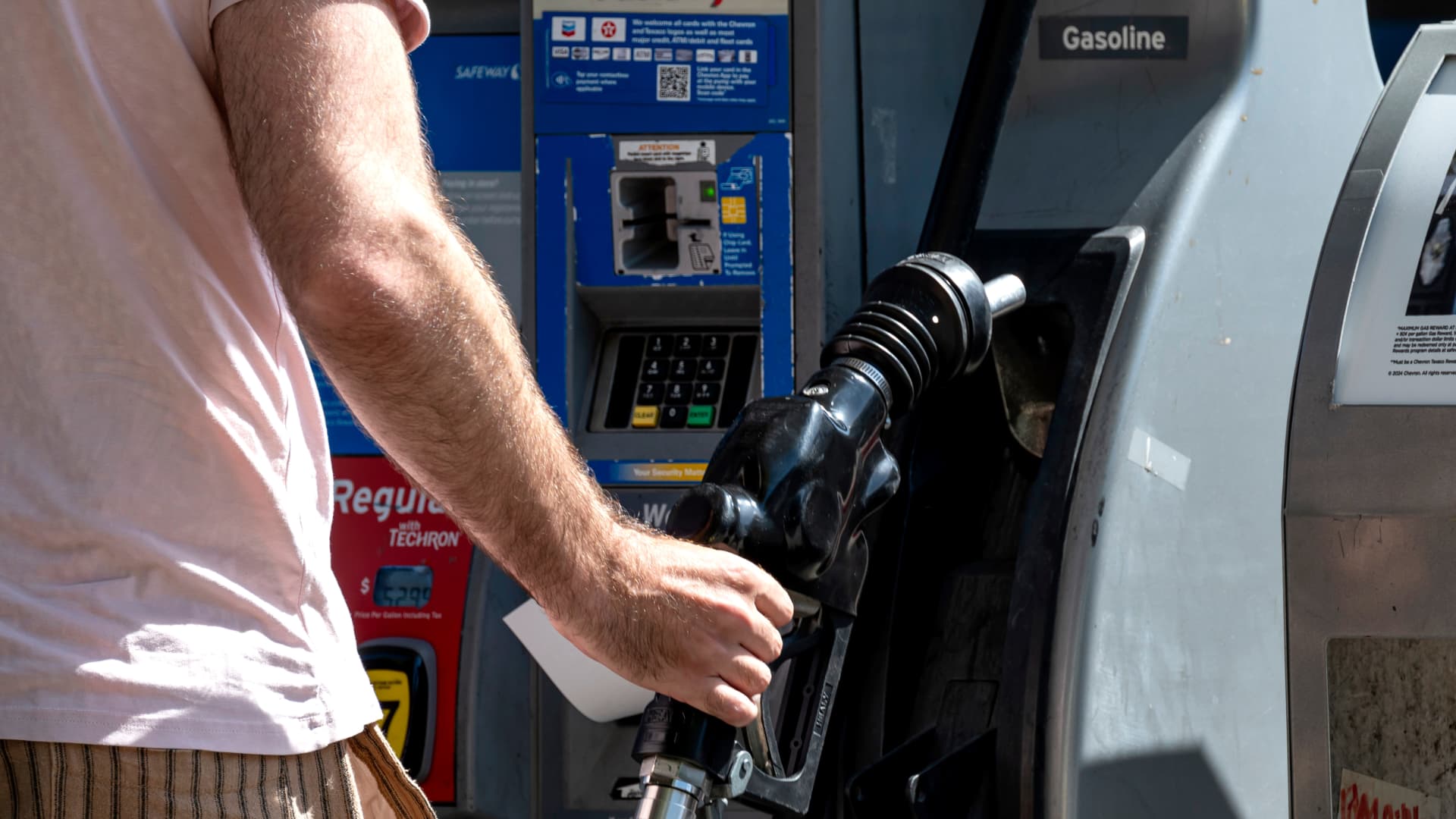
Gasoline prices also tumbled in March. Prices at the pump declined 6.3% from February to March, after an adjustment for seasonal factors, according to the BLS.
Seasonally adjusted prices are down about 10% over the past year.
Oil prices plunged in early April, tied to fears of a global recession crimping demand, and gasoline prices are expected to throttle back further if the trend continues, economists said.
Groceries are a trouble spot
Trouble spots do remain, however.
Food prices were “the significant blemish” in the CPI report, particularly those for groceries, Zandi said.
According to BLS data, grocery prices rose 0.5% in the month from February to March, up from 0% the prior month, which is higher than the roughly 0.2% monthly move that economists say is needed to reach the Fed’s annual inflation target.
Egg prices jumped about 6% for the month and are up 60% in the past year, according to BLS data. That jump is largely attributable to a U.S. outbreak of bird flu, which has killed millions of egg-laying chickens and crimped egg supply.

Prices for instant coffee have also surged, about 13%. Weather patterns like droughts fueled by climate change have disrupted major coffee growers like Brazil, reducing supplies of coffee beans.
However, the broad increase in grocery prices isn’t attributable to one factor or agricultural product, Zandi said.
It’s “worrisome” that food inflation has picked up even as diesel prices have fallen, a dynamic that would generally serve to hold down inflation due to lower transportation costs to grocery shelves, Zandi said.
“This inflation report had some highlights, and continues to have problem areas in food prices and energy components like electricity and natural gas,” Greg McBride, chief financial analyst at Bankrate, wrote Thursday morning. “But all this is looking in the rear-view mirror. With both inflation and the overall economy, uncertainty abounds about what might be lurking around the bend.”





Nvidia Q2 FY2027 Earnings beats Wall Street Expectation with Record $96.2 Billion Revenue

Treasury Bond Volatility Forces Bessent to Double Debt Buyback Size as Yields Swing

Nvidia Earnings Preview: What Wall Street Expects From the AI Bellwether’s Q2 Report

Armanino adds Strategic Accounting Outsourced Solutions

New 2023 K-1 instructions stir the CAMT pot for partnerships and corporations

Tax Strategy: Employee Retention Credit update
-

 Economics1 week ago
Nvidia’s Potential $3 Billion SB Energy Investment Could Reshape AI Infrastructure
-

 Economics4 days ago
Top 10 Largest Economies by 2030: IMF & World Bank GDP Projections for Global Powerhouses
-
 Stock News4 days ago
How to understand Intel $15B Stock Offering
-

 Technology1 week ago
U.S.-China AI Competition Intensifies as Washington Pushes Allies to Choose Sides
-
 Stock News1 day ago
Nvidia Earnings Preview: What Wall Street Expects From the AI Bellwether’s Q2 Report
-

 Economics4 days ago
Economic Profile of the United States of America (2026–2030 Horizon)
-
 Leaders3 days ago
Jackson Hole 2026: What the First Symposium Under Fed Chair Kevin Warsh Means for Markets
-
 Economics3 days ago
U.S. National Debt Surpasses $40 Trillion for the First Time: What It Means for the Economy