
Personal Finance
Here’s the inflation breakdown for October 2024 — in one chart

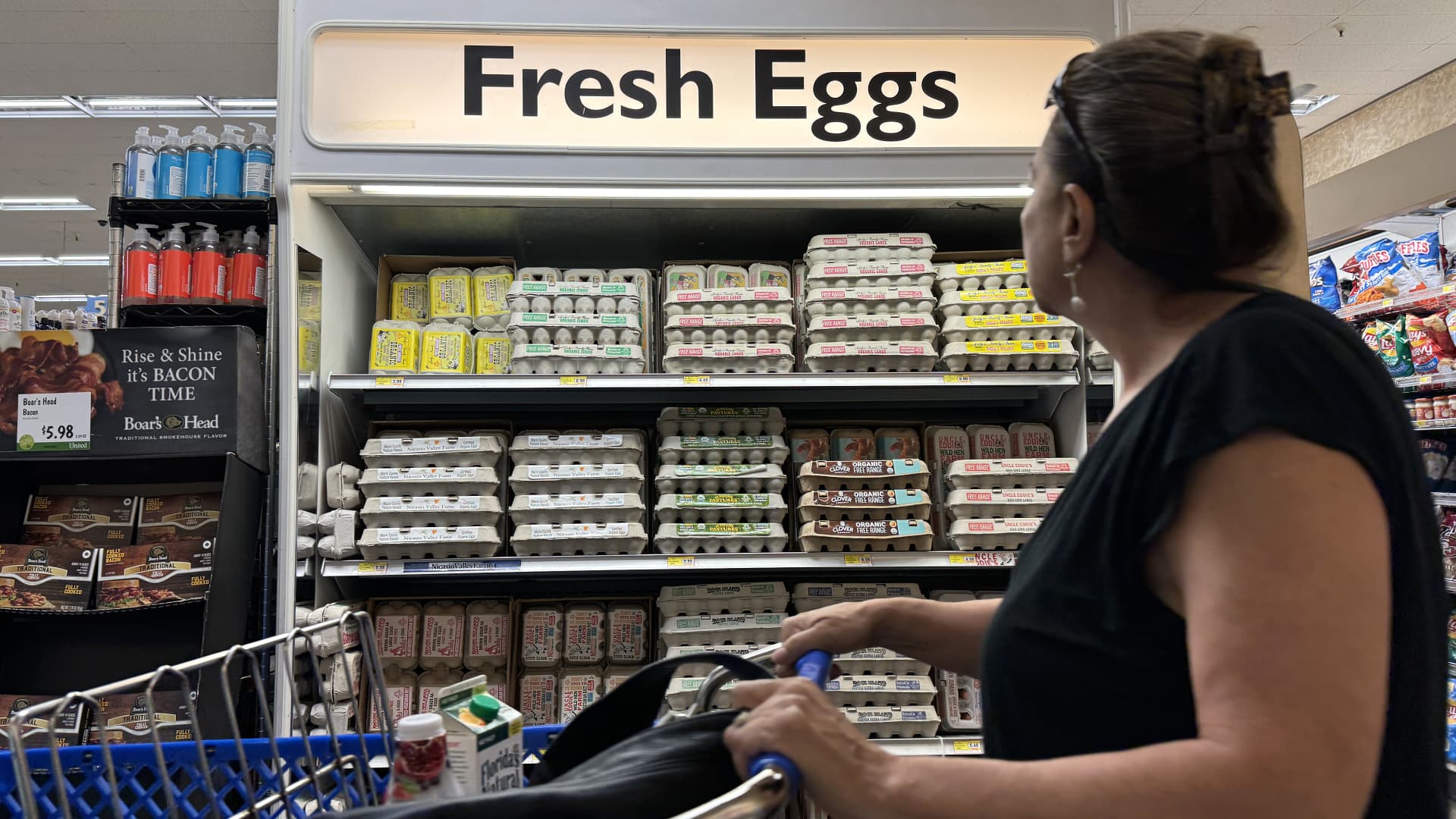
A customer walks by a display of fresh eggs at a grocery store on Sept. 25, 2024 in San Anselmo, California.
Justin Sullivan | Getty Images
Progress in the fight to tame pandemic-era inflation appears to have stalled out in October, despite lower prices at the gasoline pump and a moderation in other consumer staples such as groceries.
Meanwhile, economists think policies such as import tariffs floated by President-elect Donald Trump would likely — if enacted — exacerbate the inflation rate, which hasn’t yet declined to policymakers’ long-term target.
The consumer price index, a key inflation gauge, was up 2.6% in October versus a year ago — an increase from 2.4% in September, the Bureau of Labor Statistics reported Wednesday. The reading was in line with economists’ expectations.
While that October uptick may seem like a setback, consumers can take solace that broad price pressures are continuing to ease, economists and policymakers said.
Federal Reserve Chair Jerome Powell on Thursday said economic data points to inflation “continuing to come down on a bumpy path.”
“One or two really good data months or bad data months aren’t going to really change the pattern at this point,” Powell said during a press conference.

Stephen Brown, deputy chief North American economist at Capital Economics, echoed that sentiment: “The overall [inflation] trend is positive,” he said.
In fact, the pickup in the annual inflation rate is at least partly due to a statistical quirk: The monthly inflation rate in October 2023 was unusually low, making the October 2024 reading look relatively high by comparison, economists said.
‘Lagged impacts’ create trouble spots
Inflation has pulled back significantly from its pandemic-era peak of 9.1% in June 2022.
However, there are still some trouble spots.
Auto insurance prices, for example, are up 14% since October 2023, according to CPI data.
More from Personal Finance:
Credit card debt among retirees jumps
What the Trump presidency could mean for housing
The best ways to save money this holiday season
Vehicle insurance premiums face “upward pressure” largely due to a lag effect from earlier inflationary dynamics, Brown said.
For example, new and used vehicle prices began to surge in 2021 amid a shortage of semiconductor chips used to manufacture cars; because of that sticker shock, insurers’ cost to replace vehicles after a car accident is much higher, Brown said. Insurers also typically need approval from regulators to raise consumer premiums, a process that takes time, he said.
“Lagged impacts” are affecting other categories, too, making for overall slow progress on reining in inflation, Brown said.
Housing is the ‘major impediment’
Homes in Discovery Bay, California.
David Paul Morri | Bloomberg | Getty Images
Housing, the largest CPI category, is a key example of that lag.
Shelter inflation has throttled back painfully slowly, even as inflation in the national rental market has declined considerably, economists said.
“Market rents, newly signed leases, are experiencing very low inflation,” Powell said during the press conference.
Shelter inflation has taken a long time to adjust to that housing backdrop due to how federal statisticians compile the CPI index. In short, its slow adjustment up or down is by design.
“So that’s just a catch-up problem,” Powell said. “It’s not really reflecting current inflationary pressures.”
CPI shelter inflation heated up on a monthly basis in October, rising to 0.4% from 0.2% in September. Its annual inflation rate has declined to less than 5% from a peak of more than 8% in early 2023.
Shelter is “the continued major impediment to getting inflation all the way back,” said Mark Zandi, chief economist at Moody’s.
The Federal Reserve has a long-term annual inflation target of around 2%.
Where consumers saw some relief in October
Brandon Bell | Getty Images News | Getty Images
Consumers saw some relief at the grocery store and at the gas pump in October.
Inflation for groceries cooled on a monthly basis, to 0.1% from September to October, down from 0.4% the prior month. Grocery prices are up about 1% since October 2023.
They’re “very, very tame,” Zandi said.
That’s despite various supply-and-demand idiosyncrasies that are raising prices for certain food items, he said. For example, avian flu, which is lethal for chickens and other birds, has negatively affected egg supply and led prices to swell 30% in the past year; similarly, a poor orange crop has pushed up orange prices 7% annually.
The price for a gallon of gasoline fell 1% during the month, according to CPI data. Prices are down more than 12% in the past year.
“Gasoline prices are way down,” Zandi said. Average prices could fall further, to below $3 a gallon, he said. They were at $3.05 a gallon, on average, as of Nov. 11, according to the U.S. Energy Information Administration.
“We could get more relief there because global oil prices are soft,” Zandi said.
That weakness may be in anticipation of President-elect Donald Trump’s proposed policies around China, said Zandi. Those may include tariffs of at least 60% on goods imported from China, which has a huge appetite for oil. If Trump’s policies were to negatively affect the Chinese economy, they’d also likely dampen China’s oil demand.
Trump policies thought to be inflationary
Trump has proposed broader tariffs, of perhaps 10% or 20% on all goods imported to the U.S. Additionally, he has announced plans to deport millions of undocumented immigrants and enact a package of tax cuts.
If put in place, such policies would likely stoke U.S. inflation, economists said.
“While we believe that inflation remains on a disinflationary trajectory, we now see the risks as clearly tilted to the upside,” Bank of America economists wrote in a note Monday. “These risks stem from potential policy changes rather than economic fundamentals.”
Placing an import tax on goods would likely lead U.S. companies to raise prices for those goods, for example, economists said. Fewer immigrants in the labor pool may push businesses to raise wages to attract applicants and retain workers, while tax cuts could put more money in consumers’ pockets and boost their spending.
“Indeed, we see pro-growth fiscal policy, tariffs, and tighter immigration as potential sources of upside inflation risk over the coming years if they are implemented,” Bank of America economists wrote.
The annual inflation would likely be around 2.1% by the end of 2025 absent Trump’s policies, said Brown of Capital Economics. If enacted, that figure would likely be around 3%, he said, as a “ballpark estimate.”
“The return of inflation to the 2% target may prove short-lived,” Brown wrote in a research note Wednesday.
However, much depends on how, when and if those policies are enacted, economists said.


Personal Finance
Next-Generation Retirement Planning: Managing Longevity Risk and Variable Income Streams


U.S.- Canada Trade Talks Collapse; Carney Says Retaliatory Tariffs Begin September 8

Flock Cameras and the Future of Public Security

AI Infrastructure Boom Hits Physical Limits: Power, Financing, and Supply Chain Strain

Armanino adds Strategic Accounting Outsourced Solutions

New 2023 K-1 instructions stir the CAMT pot for partnerships and corporations

Tax Strategy: Employee Retention Credit update
-

 Stock News1 week ago
Nvidia Q2 FY2027 Earnings beats Wall Street Expectation with Record $96.2 Billion Revenue
-
 Technology6 days ago
AI Infrastructure Boom Hits Physical Limits: Power, Financing, and Supply Chain Strain
-
 Technology4 days ago
Flock Cameras and the Future of Public Security
-
 Economics4 days ago
U.S.- Canada Trade Talks Collapse; Carney Says Retaliatory Tariffs Begin September 8