
Personal Finance
How investors can prepare for lower interest rates

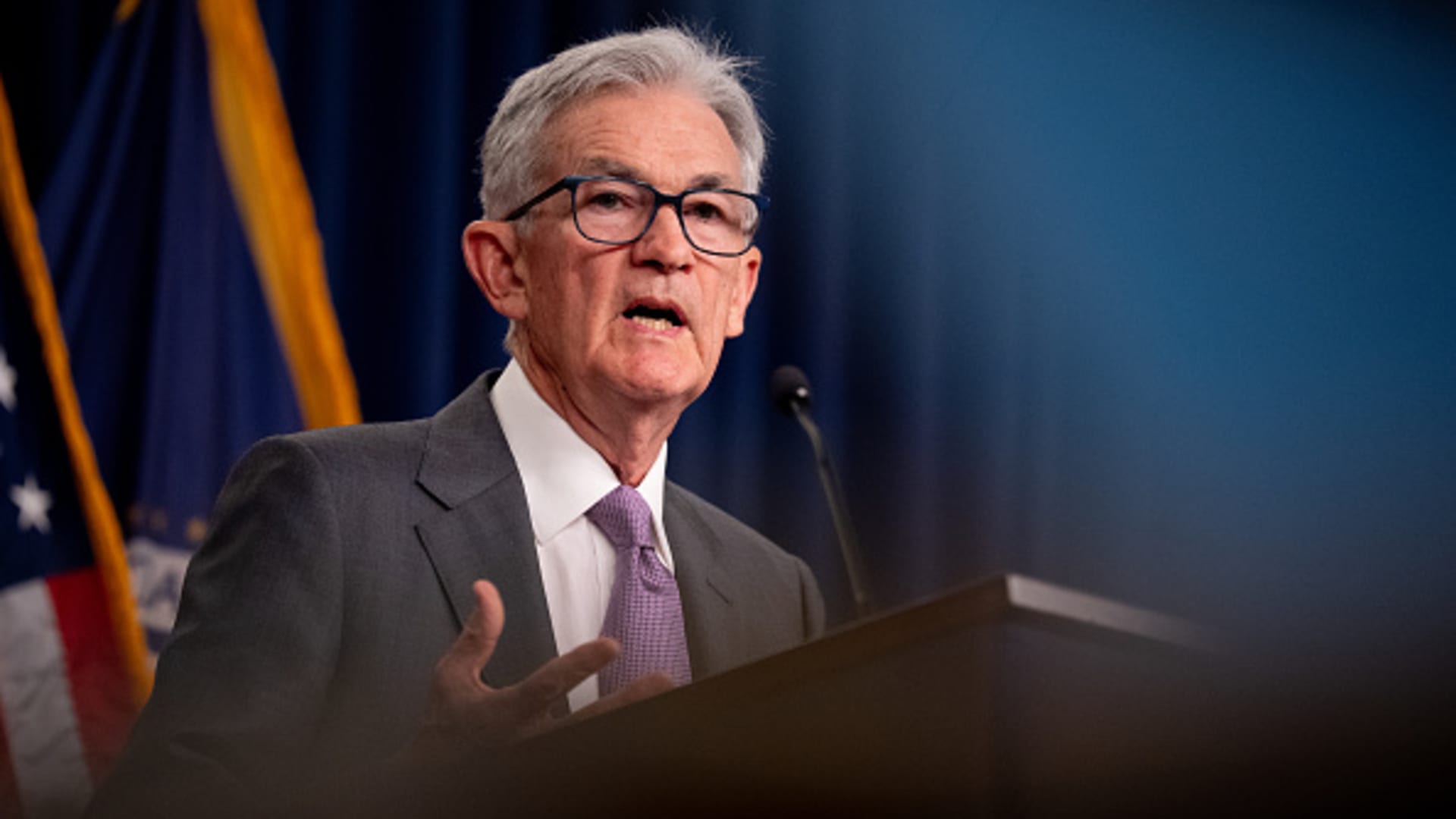
Federal Reserve Chairman Jerome Powell.
Andrew Harnik | Getty Images
Federal Reserve chair Jerome Powell on Friday gave the clearest indication yet that the central bank is likely to start cutting interest rates, which are currently at their highest level in two decades.
If a rate cut comes in September, as experts expect, it would be the first time officials have trimmed rates in over four years, when they slashed them to near zero at the beginning of the Covid-19 pandemic.
Investors may be wondering what to do at the precipice of this policy shift.
Those who are already well diversified likely don’t need to do much right now, according to financial advisors on CNBC’s Advisor Council.
“For most people, this is welcome news, but it doesn’t mean we make big changes,” said Winnie Sun, co-founder and managing director of Sun Group Wealth Partners, based in Irvine, California.
“It’s kind of like getting a haircut: We’re doing small trims here and there,” she said.

Many long-term investors may not need to do anything at all — like those holding most or all of their assets in a target-date fund via their 401(k) plan, for example, advisors said.
Such funds are overseen by professional asset managers equipped to make the necessary tweaks for you.
“They’re doing it behind the scenes on your behalf,” said Lee Baker, a certified financial planner and founder of Claris Financial Advisors, based in Atlanta.
More from Personal Finance:
Why remote work has staying power
This RMD strategy can help avoid IRS penalties
Some colleges is now cost nearly $100,000 a year
That said, there are some adjustments that more-hands-on investors can consider.
Largely, those tweaks would apply to cash and fixed income holdings, and perhaps to the types of stocks in one’s portfolio, advisors said.
Lower rates are ‘positive’ for stocks
In his keynote address on Friday at the Fed’s annual retreat in Jackson Hole, Wyoming, Powell said that “the time has come” for interest-rate policy to adjust.
That proclamation comes as inflation has fallen significantly from its pandemic-era peak in mid-2022. And the labor market, though still relatively healthy, has hinted at signs of weakness. Lowering rates would take some pressure off the U.S. economy.
The Fed will likely be choosing between a 0.25 and 0.50 percentage-point cut at its next policy meeting in September, Stephen Brown, deputy chief North America economist at Capital Economics wrote in a note Friday.
Lower interest rates are “generally positive for stocks,” said Marguerita Cheng, a CFP and chief executive of Blue Ocean Global Wealth, based in Gaithersburg, Maryland. Businesses may feel more comfortable expanding if borrowing costs are lower, for example, she said.
But uncertainty around the number of future rate cuts, as well as their size and pace, mean investors shouldn’t make wholesale changes to their portfolios as a knee-jerk reaction to Powell’s proclamation, advisors said.
“Things can change,” Sun said.
Importantly, Powell didn’t commit to lowering rates, saying the trajectory depends on “incoming data, the evolving outlook, and the balance of risks.”
Considerations for cash, bonds and stocks
Falling interest rates generally means investors can expect lower returns on their “safer” money, advisors said.
This would include holdings with relatively low risk, like cash held in savings accounts, money market funds or certificates of deposit, and money in shorter-term bonds.
High interest rates have meant investors enjoyed fairly lofty returns on these lower-risk holdings.
It’s kind of like getting a haircut: We’re doing small trims here and there.
Winnie Sun
co-founder and managing director of Sun Group Wealth Partners
However, such returns are expected to fall alongside declining interest rates, advisors said. They generally recommend locking in high guaranteed rates on cash now while they’re still available.
“It’s probably a good time for people who are thinking about buying CDs at the bank to lock in the higher rates for the next 12 months,” said Ted Jenkin, a CFP and the CEO and founder of oXYGen Financial, based in Atlanta.
“A year from now you probably won’t be able to renew at those same rates,” he said.
Others may wish to park excess cash — sums that investors don’t need for short-term spending — in higher-paying fixed-income investments like longer-duration bonds, said Carolyn McClanahan, a CFP and founder of Life Planning Partners in Jacksonville, Florida.

“We’re really being aggressive about making sure clients understand the interest-rate risk they’re taking by staying in cash,” she said. “Too many people aren’t thinking about it.”
“They’ll be crying in six months when interest rates are a lot lower,” she said.
Bond duration is a measure of a bond’s sensitivity to interest rate changes. Duration is expressed in years, and factors in the coupon, time to maturity and yield paid through the term.
Short-duration bonds — with a term of perhaps a few years or less — generally pay lower returns but carry less risk.
Investors may need to raise their duration (and risk) to keep yield in the same ballpark as it has been for the past two or so years, advisors said. Duration of five to 10 years is probably OK for many investors right now, Sun said.
Advisors generally don’t recommend tweaking stock-bond allocations, however.
But investors may wish to allocate more future contributions to different types of stocks, Sun said.
For example, stocks of utility and home-improvement companies tend to perform better when interest rates fall, she said.
Asset categories like real estate investment trusts, preferred stock and small-cap stocks also tend to do well in such an environment, Jenkin said.


Personal Finance
Next-Generation Retirement Planning: Managing Longevity Risk and Variable Income Streams


U.S.- Canada Trade Talks Collapse; Carney Says Retaliatory Tariffs Begin September 8

Flock Cameras and the Future of Public Security

AI Infrastructure Boom Hits Physical Limits: Power, Financing, and Supply Chain Strain

Armanino adds Strategic Accounting Outsourced Solutions

New 2023 K-1 instructions stir the CAMT pot for partnerships and corporations

Tax Strategy: Employee Retention Credit update
-

 Stock News1 week ago
Nvidia Q2 FY2027 Earnings beats Wall Street Expectation with Record $96.2 Billion Revenue
-
 Technology6 days ago
AI Infrastructure Boom Hits Physical Limits: Power, Financing, and Supply Chain Strain
-
 Economics4 days ago
U.S.- Canada Trade Talks Collapse; Carney Says Retaliatory Tariffs Begin September 8
-
 Technology4 days ago
Flock Cameras and the Future of Public Security