
Personal Finance
How ‘loss of use coverage’ can help with costs after a natural disaster

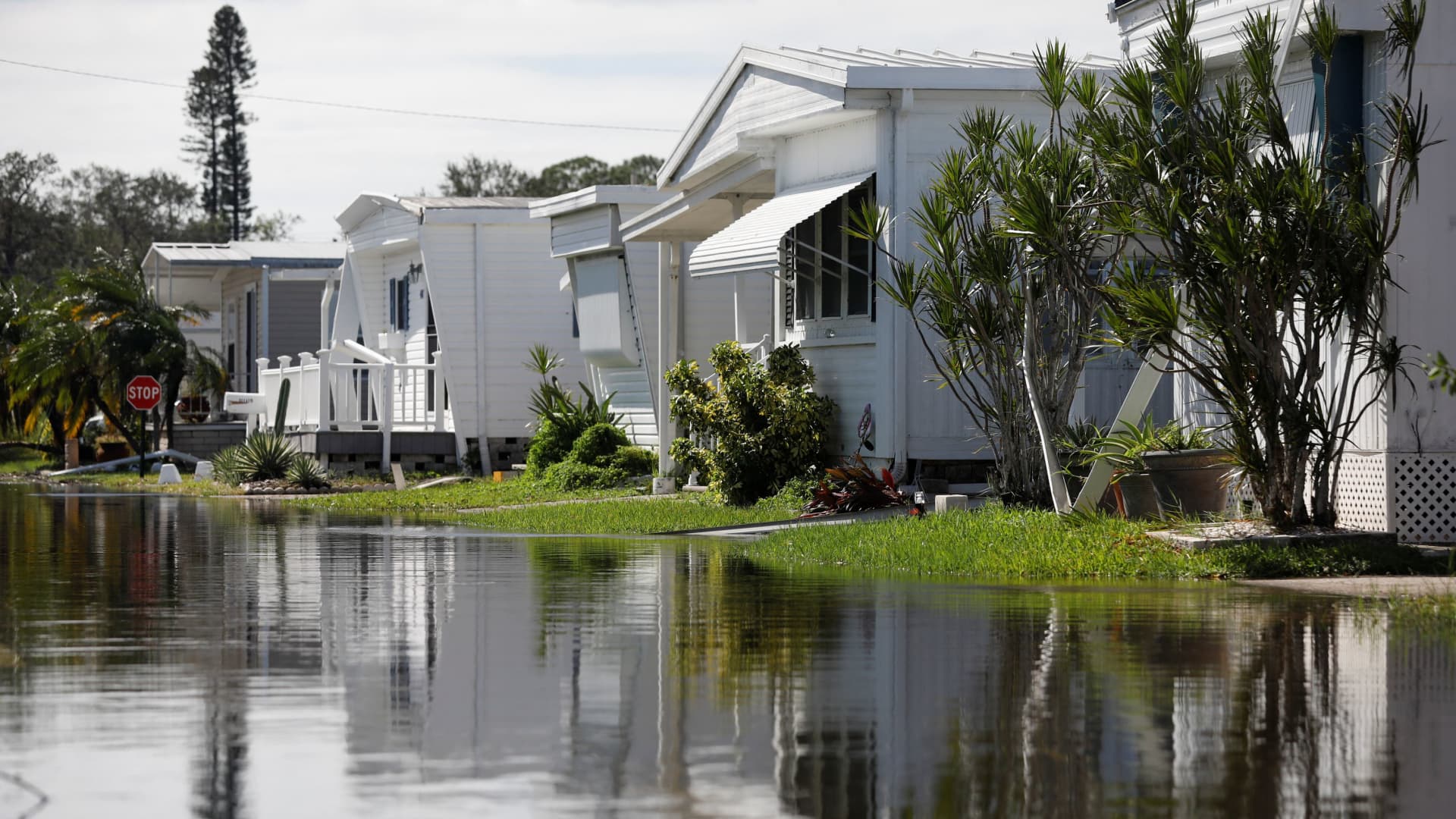
Mobile homes surrounded by flood water after Hurricane Milton made landfall, in St. Petersburg, Florida, U.S. October 10, 2024.
Octavio Jones | Reuters
If your home is temporarily uninhabitable after a natural disaster, a provision in your homeowners or renters insurance policy may help you with new lodging and other living expenses.
Insured wind and flood damage from Hurricane Helene is estimated to be up to $17.5 billion, according to CoreLogic, a real estate data site. Insured losses from Hurricane Milton could range from $30 billion to $60 billion, per Morningstar DBRS.
Homeowners and renters affected by a natural disaster can ask about so-called “loss of use” or “additional living expenses” coverage from their insurance providers, experts say.
The provision is meant to help cover reasonable living expenses if your home is not suitable to live in as a result of a covered peril such as a hurricane, fire or burst pipe.
“I don’t know of any homeowners policy that doesn’t have it already there,” said Karl Susman, president and principal insurance agent of Susman Insurance Services, Inc. in Los Angeles.
More from Personal Finance:
Key steps to file a claim after a natural disaster
What to know before your hire a ‘questionable’ contractor
Climate change could cost nearly $500,000
As you file a claim, it will be important to ask your insurance company about the loss of use coverage and how quickly can it kick in, said Shannon Martin, a licensed insurance agent and analyst at Bankrate.com.
“If you call your carrier, they might be able to expedite the loss of use claim filing for you and issue a check early so that you’re not stuck trying to figure out how to pay for separate housing,” she said.
Here’s what the coverage is and what to consider before you use it, according to experts.
How loss of use coverage works
Loss of use coverage is a provision that is typically included in your homeowners insurance policy. It’s usually about 20% of the dwelling coverage and is paid out in the event that the home becomes uninhabitable and a policyholder needs funds for living expenses while the home is repaired or rebuilt, experts say. Eligible expenses might include a hotel or rental home, food, pet boarding or storage fees, among others.
For example, if you’re ensuring a house for $100,000, and that’s what it costs to rebuild the house, that is considered the dwelling coverage, Susman said.
“Then the policy would automatically come with $20,000 in coverage for loss of use,” he said.

“That way you and your family can pay for your hotel and pay for food, because you might be separated from your home for an extended period of time,” Martin said.
Renters insurance typically has a similar provision, as would condominium policies, Susman said.
For renters and condo insurance, the primary coverage is not dwelling because you’re insuring personal property rather than the building, he said. You’ll typically get 20% of the personal property coverage for loss of use, he said.
Ask your insurer about any policy restrictions. There may be expense-specific dollar caps or time limits to claim loss of use coverage.
‘It’s not intended to be a long-term solution’
Loss of use coverage can help homeowners cover living expenses after a natural disaster. However, the money is meant to be a short-term solution, not a long-term fix, experts say.
“It’s generally not intended to be a long-term solution,” said Jeremy Porter, head of climate implications research at First Street Foundation, an organization focused on climate risk financial modeling in New York City. “It’s generally not enough money to carry people through an extended period of time.”
That can be a problem because what it would cost to move out would be very different after a major disaster than during more typical times, Susman said, as there’s often less housing available and hotels may raise their prices amid demand.
While the coverage is meant to be temporary, repairs and broader financial recovery take a long time after major disasters, experts say.
“It takes a long time to recoup and recover,” said Loretta Worters, a spokeswoman for the Insurance Information Institute.
Remember you can make a claim on your policy and get assistance from the Federal Emergency Management Agency at the same time, said Susman.
You might be able to use funds from the government to help you stay in a hotel for a month, then get a place closer to your home and use your loss of use coverage to pay for the difference, Martin said.

Personal Finance
Next-Generation Retirement Planning: Managing Longevity Risk and Variable Income Streams


U.S.- Canada Trade Talks Collapse; Carney Says Retaliatory Tariffs Begin September 8

Flock Cameras and the Future of Public Security

AI Infrastructure Boom Hits Physical Limits: Power, Financing, and Supply Chain Strain

Armanino adds Strategic Accounting Outsourced Solutions

New 2023 K-1 instructions stir the CAMT pot for partnerships and corporations

Tax Strategy: Employee Retention Credit update
-

 Stock News1 week ago
Nvidia Earnings Preview: What Wall Street Expects From the AI Bellwether’s Q2 Report
-

 Accounting1 week ago
SEC’s Semiannual Reporting Proposal Faces Investor Pushback: What CFOs Need to Know
-

 Stock News1 week ago
Nvidia Q2 FY2027 Earnings beats Wall Street Expectation with Record $96.2 Billion Revenue
-

 Finance1 week ago
Treasury Bond Volatility Forces Bessent to Double Debt Buyback Size as Yields Swing
-
 Technology5 days ago
AI Infrastructure Boom Hits Physical Limits: Power, Financing, and Supply Chain Strain
-
 Technology3 days ago
Flock Cameras and the Future of Public Security
-
 Economics3 days ago
U.S.- Canada Trade Talks Collapse; Carney Says Retaliatory Tariffs Begin September 8