
Personal Finance
How to pay college tuition bills with your 529 plan


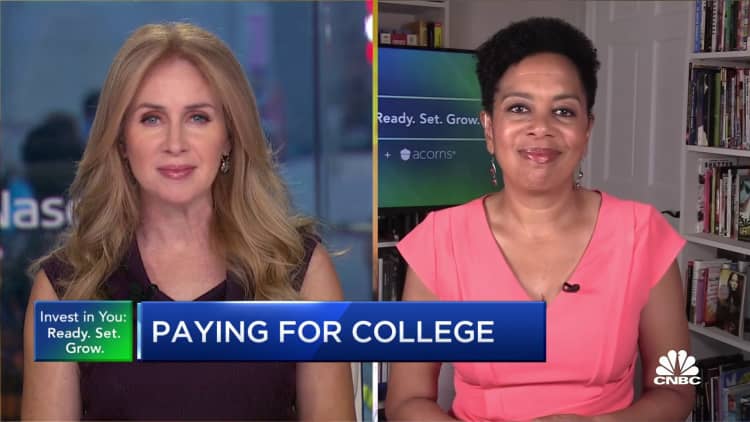
Largely due to President Donald Trump‘s changing tariff policies, markets have been on a rollercoaster ride since April. Although the S&P 500 has largely rebounded from last month’s lows, some families who have been diligently saving for future college costs may still see their 529 college savings plan balance hasn’t fully recovered.
For those with tuition bills now coming due, there are a few key considerations before tapping those accounts.
“With a little planning, making withdrawals can be something to celebrate, not just something to fear,” said Smitha Walling, Head of Vanguard’s Education Savings Group.
Managing 529 allocations in a volatile market
For parents worried about their 529 account’s recent performance, Mary Morris, CEO of Commonwealth Savers, advises starting with a look at the asset allocation. “What you need to think about is assessing your risk appetite,” she said.
Generally, 529 plans offer age-based portfolios, which start off with more equity exposure early on in a child’s life and then become more conservative as college nears. By the time high school graduation is around the corner, families likely have very little invested in stocks and more in investments like bonds and cash. That can help blunt their losses but also mute gains.
Pay attention to your fund’s approach toward shifting from stocks to bonds, Morris said.
“If you are in a total stock portfolio, you may not want that ride,” she said: “You don’t want to get seasick.”
If the market volatility is still too much to bear, consider adjusting your allocation.
“One strategy is to start de-risking a portion of their portfolio and reallocate a portion into cash equivalent, which will provide a protection of principle while also proving a competitive return and peace of mind,” said Richard Polimeni, head of education savings at Merrill Lynch.
Still, financial experts strongly caution against shifting your entire 529 balance to cash. “The worst thing an investor can do in a down market is panic and sell investments prematurely and lock in losses,” Polimeni said.
Often that is the last resort. In the wake of the 2008 financial crisis, only 10% of investors liquidated their entire 529 accounts, and 20% switched to less risky assets, according to an earlier survey by higher education expert Mark Kantrowitz.
How to make a 529 withdrawal plan
For those who must make a hefty withdrawal for tuition payments now due, “consider whether it’s better to use the funds now or let the funds continue to grow and those returns compound,” said Vanguard’s Walling.
Polimeni suggests using income or savings outside the 529 to cover immediate college expenses, and requesting a reimbursement later to give the account a chance to recover from the recent market rout.
You can get reimbursed from your 529 plan for any eligible out-of-pocket expenses within the same calendar year. “Using that strategy gives another six to seven months for the market to recover,” Polimeni said.
Another option is to tap a federal student loan and take a qualified distribution from the 529 plan to pay off the debt down the road. However, if you’re thinking of taking out private student loans or a personal loan that starts incurring significant interest immediately, you may want to spend 529 funds first in that case, and defer that borrowing until later.
Once you have a withdrawal plan, you can — and should — keep contributing to your 529, experts say. Not only can you get a tax deduction or credit for contributions, but earnings will grow on a tax-advantaged basis, whether over 18 years or just a few.
“The major advantage is the tax-deferred growth, so the longer you are invested, the more tax-deferred growth you will have,” Polimeni said.
Benefits of a college savings account
“Markets go up and down, but students’ goals remain the same,” said Chris McGee, chair of the College Savings Foundation.
Even as concerns over college costs are driving more would-be college students to rethink their plans, college savings accounts are still as vital as ever.
Roughly 42% of students are pivoting to technical and career training or credentialing, or are opting to enroll in a local and less-expensive community college or in-state public school, according to a recent survey of 1,000 high schoolers by the College Savings Foundation. That’s up from 37% last year.
As a result of those shifting education choices, 69% of students are expecting to live at home during their studies, the highest percentage in three years.

Despite those adjustments, some recent changes have helped make 529 plans even more worthwhile: As of 2024, families can roll over unused 529 funds to the account beneficiary’s Roth individual retirement account, without triggering income taxes or penalties, so long as they meet certain requirements.
Restrictions have also loosened to allow 529 plan funds to be used for continuing education classes, apprenticeship programs and student loan payments. For grandparents, there is also a new “loophole,” which allows them to fund a grandchild’s college without impacting that student’s financial aid eligibility.
529 plan popularity has soared
In part because of the new changes, more parents are utilizing a 529 college savings plan.
In 2024, the number of 529 plan accounts increased to 17 million, up more than 3% percent from the year before, according to Investment Company Institute.
Total investments in 529s rose to $525 billion as of December, up 11% from a year earlier, while the average 529 plan account balance hit a record of $30,961, data from the College Savings Plans Network, a network of state-administered college savings programs, also showed.
“The industry is coming off its best year ever in terms of new inflows,” said Polimeni.


Personal Finance
Next-Generation Retirement Planning: Managing Longevity Risk and Variable Income Streams


U.S.- Canada Trade Talks Collapse; Carney Says Retaliatory Tariffs Begin September 8

Flock Cameras and the Future of Public Security

AI Infrastructure Boom Hits Physical Limits: Power, Financing, and Supply Chain Strain

Armanino adds Strategic Accounting Outsourced Solutions

New 2023 K-1 instructions stir the CAMT pot for partnerships and corporations

Tax Strategy: Employee Retention Credit update
-

 Stock News1 week ago
Nvidia Earnings Preview: What Wall Street Expects From the AI Bellwether’s Q2 Report
-

 Accounting1 week ago
SEC’s Semiannual Reporting Proposal Faces Investor Pushback: What CFOs Need to Know
-

 Stock News1 week ago
Nvidia Q2 FY2027 Earnings beats Wall Street Expectation with Record $96.2 Billion Revenue
-

 Finance1 week ago
Treasury Bond Volatility Forces Bessent to Double Debt Buyback Size as Yields Swing
-
 Technology5 days ago
AI Infrastructure Boom Hits Physical Limits: Power, Financing, and Supply Chain Strain
-
 Technology3 days ago
Flock Cameras and the Future of Public Security
-
 Economics3 days ago
U.S.- Canada Trade Talks Collapse; Carney Says Retaliatory Tariffs Begin September 8