
Personal Finance
How Trump’s second term could mean the downfall of the FDIC, CFPB

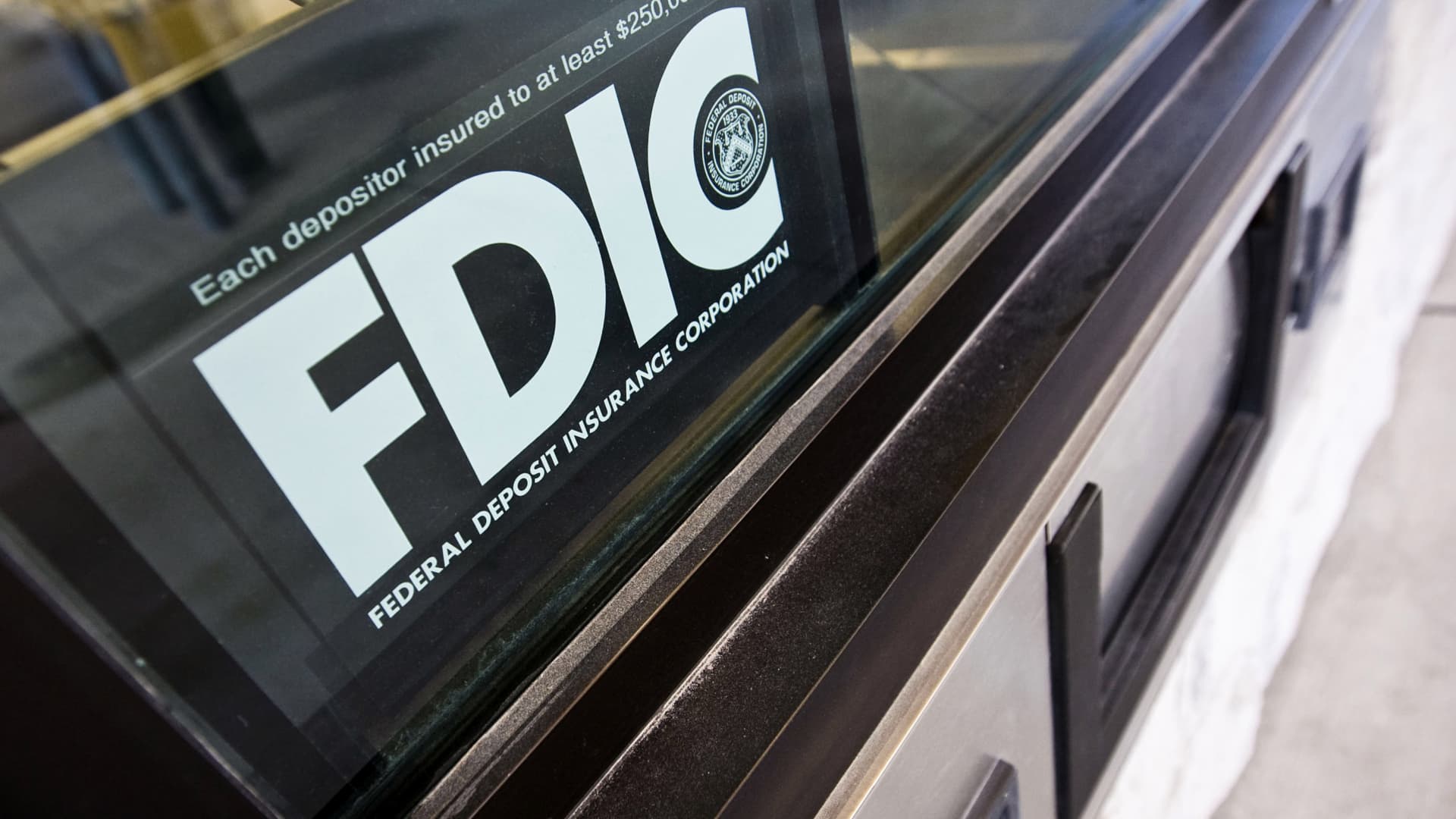

Sweeping changes may be in store once President-elect Donald Trump takes office. Among them could be the closure of numerous federal agencies and regulators.
Trump will be sworn in for a second nonconsecutive term in the White House on Jan. 20. Already, he has suggested major cuts to federal spending.
To that end, Trump named Elon Musk and Vivek Ramaswamy co-chairs of a new outside advisory board dubbed the Department of Government Efficiency, or DOGE.
As part of its agenda, advisors to the government-efficiency group reportedly inquired about the possibility of shrinking or dismantling the Federal Deposit Insurance Corporation, or FDIC, according to a December report in The Wall Street Journal. In a Nov. 27 post on X, Musk also suggested the White House should “delete” the Consumer Financial Protection Bureau, another independent agency. “There are too many duplicative regulatory agencies,” he wrote in the post.
Trump’s transition team did not respond to a request for comment.
The future of the FDIC
Most bank account holders take for granted the fact that their deposits are insured.
Since its creation during the Great Depression, the FDIC has secured up to $250,000 per depositor, per bank, in each account ownership category. And over nearly a century, no depositor has lost FDIC-insured funds due to a bank failure.
“That’s one of its legacies,” said William Isaac, who was named chairman of the FDIC by former President Ronald Reagan and headed the agency during the banking crisis of the 1980s.

In place of the independent agency, the Trump administration could task the Treasury Department with overseeing deposit insurance, according to reports.
“There may be great value in downsizing or eliminating overlapping agencies while still keeping key underlying functions they serve,” said Tomas Philipson, a professor of public policy studies at the University of Chicago and former acting chair of the White House Council of Economic Advisers. “For example, one proposal is to have Treasury insure bank-deposits rather than an additional agency such as FDIC.”
“It’s important to separate what government activities are being performed from who or how many agencies are in charge,” Philipson said. “Holding constant the activities being regulated, the fewer agencies the better.”
More from Personal Finance:
30 million people may qualify for IRS free Direct File program
Biden forgives student loans for 150,000 more borrowers
How much you can save by not drinking during ‘dry January’
“I think it’s a terrible idea,” Isaac said of abolishing the agency. “The FDIC has brought about stability like we’ve never seen before.”
Others also argue that eliminating the FDIC would undermine the consumer lending system and leave some savers vulnerable.
“Getting rid of the FDIC would be a disaster for the U.S. economy and its preeminent status as a financial center,” said Brett House, economics professor at Columbia Business School. “Deposits are an abundant, cheap source of capital for American financial institutions.”
“Large banks may do fine without FDIC protections on their clients. But an end to federal insurance on them would be a serious drag on regional financial institutions that provide a major source of consumer lending and small-business financing,” House said.
Ultimately, because Congress controls the appropriation of federal funds, any proposal to eliminate the FDIC or any other agency would require congressional action.
The future of the CFPB
The Consumer Financial Protection Bureau has a much shorter track record than the FDIC. The watchdog group was created by Congress on the heels of the 2008 financial crisis to enforce consumer protection laws.
Since then, the CFPB has issued roughly 35 regulatory reports, including a 2024 effort to insulate Americans from credit card late fees.
“The CFPB is a recent creation and U.S. markets clearly functioned well for decades without it,” said Columbia’s House. “But recent increases in market concentration and power for a handful of firms in several major economic sectors makes the CFPB a critical force in balancing business and consumer interests.”
Unlike the FDIC, the CFPB draws its funding from the Federal Reserve system. Because it does not rely on an annual appropriation from Congress, it is somewhat insulated from political pressure.
However, the Consumer Bankers Association says the agency has increasingly “advanced ideologically-driven policies,” particularly over the last four years.
“The incoming administration and Congress have a unique and important opportunity to institute meaningful reforms to the CFPB, in both the immediate and long-term, that can help transform the agency into the credible and durable regulator Americans deserve,” CBA President and CEO Lindsey Johnson said in an email.
The CBA also released a white paper Tuesday outlining recommended changes to the CFPB, which include repealing or rescinding recent rules and guidance.
Consumers, however, are largely in favor of the CFPB’s actions, according to advocates. The agency protects “hard-working people from predatory practices and discrimination in financial services,” Richard Dubois, executive director of the National Consumer Law Center, said in a statement.
If the CFPB is dismantled, that could mean consumers would see some of those protections overturned — and it’s unclear what government entity, if any, might pick up the agency’s efforts for new or emerging issues. The CFPB has been investigating digital payment apps and buy now, pay later services, for example.
But there may still be room for streamlining, Isaac said.
“Surely we are wasting a lot of money. Anything we can cut out that’s not necessary — that’s fat — needs to be cut,” he said.


Personal Finance
Next-Generation Retirement Planning: Managing Longevity Risk and Variable Income Streams


U.S.- Canada Trade Talks Collapse; Carney Says Retaliatory Tariffs Begin September 8

Flock Cameras and the Future of Public Security

AI Infrastructure Boom Hits Physical Limits: Power, Financing, and Supply Chain Strain

Armanino adds Strategic Accounting Outsourced Solutions

New 2023 K-1 instructions stir the CAMT pot for partnerships and corporations

Tax Strategy: Employee Retention Credit update
-

 Stock News1 week ago
Nvidia Q2 FY2027 Earnings beats Wall Street Expectation with Record $96.2 Billion Revenue
-
 Technology5 days ago
AI Infrastructure Boom Hits Physical Limits: Power, Financing, and Supply Chain Strain
-
 Technology3 days ago
Flock Cameras and the Future of Public Security
-
 Economics3 days ago
U.S.- Canada Trade Talks Collapse; Carney Says Retaliatory Tariffs Begin September 8