Connect with us

Finance

H&R Block’s Tax Day Outage Frustrates Last-Minute Filers

Published

on

H&R Block said it experienced technology outages on Monday, temporarily preventing thousands of last-minute tax filers from sending in their returns.

Some people who bought and downloaded the H&R Block software on their computers were unable to electronically file their returns. Those who use the company’s software through a web browser or who work directly with its tax professionals weren’t affected, H&R Block said.
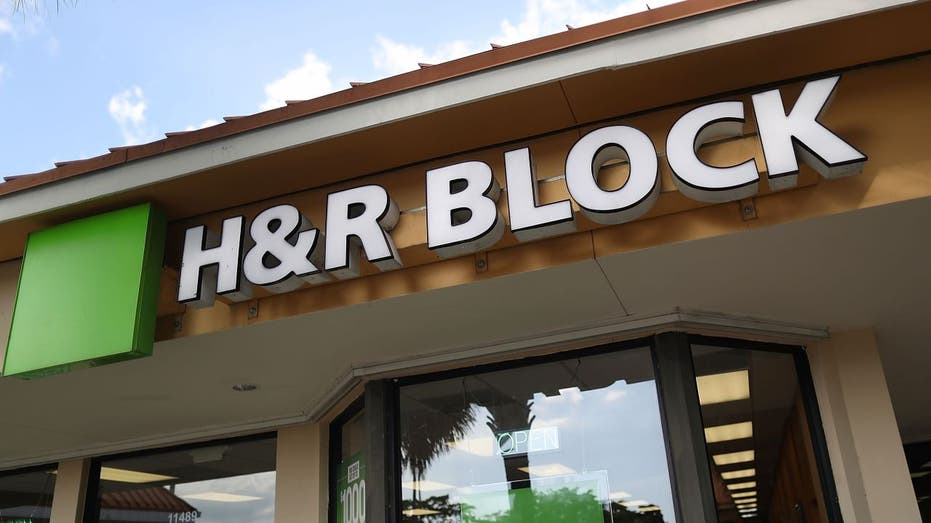
H&R Block Branch

A H&R Block office is seen on the day President Donald Trump signed the Republican tax cut bill in Washington, DC on December 22, 2017 in Miami, Florida.  (Photo by Joe Raedle/Getty Images / Getty Images)

The outage started around 9 p.m. Sunday and continued for most of Monday. An H&R Block spokeswoman said the company fixed the problem by around 4 p.m. Monday. It has notified clients via an in-product message and is telling people who call customer service that they can now e-file their returns.

The filing deadline for tax returns in all but two U.S. states is 11:59 p.m. on Monday. Millions of Americans rely on online tax preparation services to help them fill out the appropriate forms and send them to the Internal Revenue Service.

HOW MUCH OF YOUR TAX MONEY GOES TOWARD SERVICING US NATIONAL DEBT?

H&R Block, one of the largest tax preparation companies, had told some customers experiencing issues that they could print out their forms and send them to the IRS by mail. The IRS encourages e-filing, warning that processing paper returns takes several weeks longer. Paper filers who are owed refunds can experience delays receiving them.

Ticker Security Last Change Change %
HRB H&R BLOCK INC. 46.32 +0.06 +0.13%

H&R Block said it received about 2,000 inquiries related to the technology outage. More than 20 million taxpayers filed with H&R Block last year. 

Users posted on social media that they were getting error messages, and repeat pending credit card charges for multiple filing attempts. 

IRS USED AU TO ACCESS BANK ACCOUNTS OF US CITIZENS: REP. HARRIET HAGEMAN

Many taxpayers who procrastinate owe taxes. Late filing penalties and interest charges on balances due kick in one day after tax day.
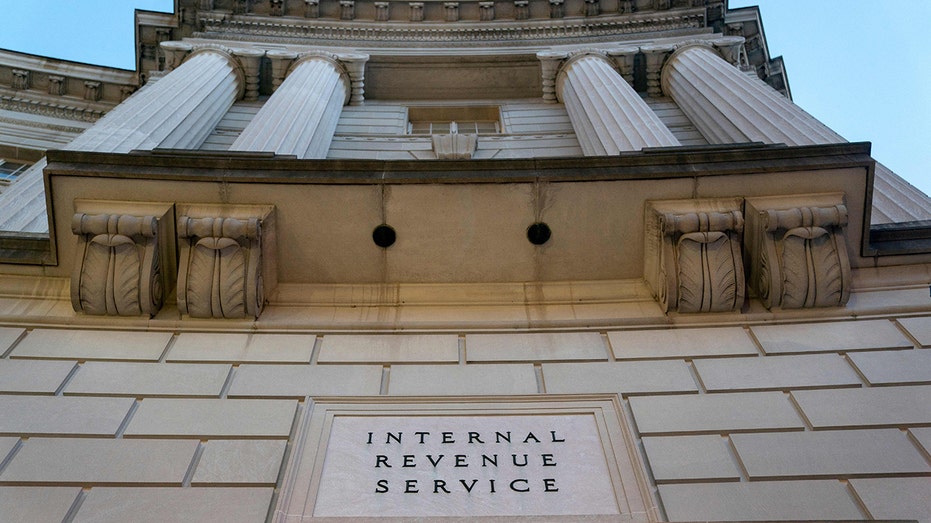
IRS building

View of the Internal Revenue Service (IRS) building in Washington, DC, on January 24, 2023.  (STEFANI REYNOLDS/AFP via Getty Images / Getty Images)

GET FOX BUSINESS ON THE GO BY CLICKING HERE

Separately, the U.S. Treasury Department said Monday that it met the goal of 100,000 taxpayers filing returns as part of the Direct File pilot program by midday Sunday, with more than 50,000 taxpayers filing over the past week. Eligible taxpayers in all 12 pilot states can file simple tax returns using Direct File until 11:59 p.m. on Monday, or on Wednesday for those in Massachusetts. Taxpayers with more complicated returns can file for free online with an IRS Free File partner or by using IRS fillable forms. 

Continue Reading

Finance

Tokenized Debt Shifts How Corporate Manage Short Term Liquidity

Published

on

Tokenized Debt Shifts Corporate Liquidity

The landscape of institutional debt markets is undergoing a profound structural shift on July 21, 2026, as major corporate issuers and commercial banks rapidly accelerate the deployment of tokenized debt instruments. Data published by leading capital market consortiums indicates that primary issuances of digital commercial paper and tokenized corporate bonds have reached record volumes this month. By moving legacy debt origination, underwriting, and secondary distribution onto permissioned distributed ledgers, corporate treasurers are unlocking unprecedented operational flexibility and instantaneous cross-border liquidity.

The adoption of tokenized debt is fundamentally altering how enterprise balance sheets manage short-term liquidity needs. Traditional corporate bond settlement cycles historically required multi-day clearing processes involving numerous intermediaries, custodial entities, and clearinghouses. Through programmable smart contracts on distributed ledgers, issuers can now execute atomic settlement—enabling continuous, 24/7 access to institutional capital pools. This instantaneous clearing mechanism drastically reduces counterparty risk, eliminates costly settlement friction, and allows treasury teams to dynamically optimize working capital in real time.

A major catalyst driving this institutional migration is the establishment of comprehensive digital asset regulatory frameworks across major financial hubs. Clear legal guidelines regarding ledger-based securities ownership have provided institutional compliance officers with the regulatory confidence necessary to transition multi-billion-dollar liquidity facilities onto digital platforms. Furthermore, the integration of automated regulatory reporting directly into token smart contracts simplifies ongoing compliance audits, ensuring that secondary market trades automatically enforce investor accreditation limits and tax withholding requirements.

For chief financial officers and institutional portfolio managers, tokenized debt represents a fundamental evolution in fixed-income strategy. Companies that embrace ledger-based debt structures gain direct access to a broader, global base of digital-native institutional investors while substantially reducing borrowing overhead. As ledger interoperability continues to improve across global exchanges, tokenized debt is poised to become the standard infrastructure for global corporate finance.

Continue Reading

Finance

Private Credit Expansion: How Alternative Lending Platforms Are Reshaping Corporate Liquidity

Published

on

How Alternative Lending Platforms Are Reshaping Corporate Liquidity

Private credit has firmly established itself as a foundational pillar of global financial markets in 2026, transitioning from an alternative asset class into a dominant mechanism for middle-market corporate financing. Reports published in mid-July 2026 show that direct lending assets under management have expanded significantly, as corporate borrowers increasingly bypass traditional syndication desks in favor of customized private debt solutions. This structural migration has fundamentally altered corporate liquidity dynamics, providing middle-market enterprises with reliable access to tailored capital packages even during periods of regulatory bank tightening.

The primary driver of this continued growth is the structural flexibility inherent in private debt agreements. Unlike public bond markets or conservative commercial bank loans—which often carry rigid covenants and slow underwriting timelines—private credit funds offer speed of execution, flexible payment-in-kind structures, and customized debt-service frameworks. For companies undertaking strategic acquisitions, capital expenditures, or complex balance sheet recapitalizations, the ability to negotiate directly with a unified syndicate of private lenders provides significant certainty and confidentiality.

However, the expansion of private credit is attracting heightened regulatory attention and risk scrutiny. Financial regulatory bodies are closely evaluating the lack of secondary market price discovery and the potential concentration of illiquidity risks within non-bank financial institutions. Because private debt instruments are held to maturity and marked to model rather than marked to market, evaluating real-time enterprise valuations during economic shifts requires robust internal credit assessment standards. Analysts note that as loan portfolios mature, performance variations between disciplined lenders and aggressive underwriters will become increasingly apparent.

For corporate financial officers and institutional portfolio managers, private credit represents both a powerful strategic tool and a vital diversification strategy. Borrowers must weigh the higher nominal coupon rates of private debt against the tangible value of operational flexibility and execution certainty. Meanwhile, investors must maintain rigorous credit due diligence, prioritizing funds with proven restructuring capabilities and deep operational expertise in underwriting resilient middle-market businesses.

Continue Reading

Finance

Tokenized Real-World Assets: Institutional Ledger Adoption Achieves Scale in July 2026

Published

on

Institutional Ledger Adoption Achieves Scale in July 2026

The integration of blockchain technology with legacy financial markets has reached a decisive tipping point in July 2026, driven by the rapid scaling of Real-World Asset (RWA) tokenization. Major global investment banks, custodial entities, and asset managers are actively shifting sovereign debt, commercial paper, and private fund shares onto permissioned distributed ledgers. Recent industry data confirms that the aggregate market capitalization of tokenized treasury products and private credit funds has surged past major milestones, illustrating that ledger-based settlement is no longer experimental, but core financial infrastructure.

The fundamental value proposition of asset tokenization rests on operational efficiency, continuous liquidity, and automated compliance execution. By embedding regulatory checks, investor accreditation limits, and automated coupon distributions directly into smart contract code, financial institutions eliminate vast amounts of manual back-office reconciliation. Furthermore, fractionalized ownership structures allow high-value asset classes—such as prime commercial real estate and private equity funds—to be split into accessible units, significantly expanding liquidity pools and enabling real-time collateral optimization.

A key catalyst behind this institutional momentum is the establishment of comprehensive regulatory clarity across major financial jurisdictions. The implementation of standardized digital asset frameworks in the United States and Europe has provided institutional compliance officers with the legal certainty required to deploy capital on-chain. As a result, premier custodian banks are now offering unified digital asset custody, seamlessly bridging traditional securities depositories with programmable ledger ecosystems.

Looking forward, the maturation of tokenized assets will continue to transform secondary market trading and treasury management. Corporate treasurers can now yield-optimize idle cash in real time by moving into tokenized money market instruments that settle instantaneously on a 24/7 basis. To remain competitive, financial leaders must ensure their institutional architectures are interoperable with modern digital ledger protocols, positioning their organizations at the forefront of modern capital market efficiency.

Continue Reading

Trending