
Accounting
Inside the 2024 Best Firms for Young Accountants

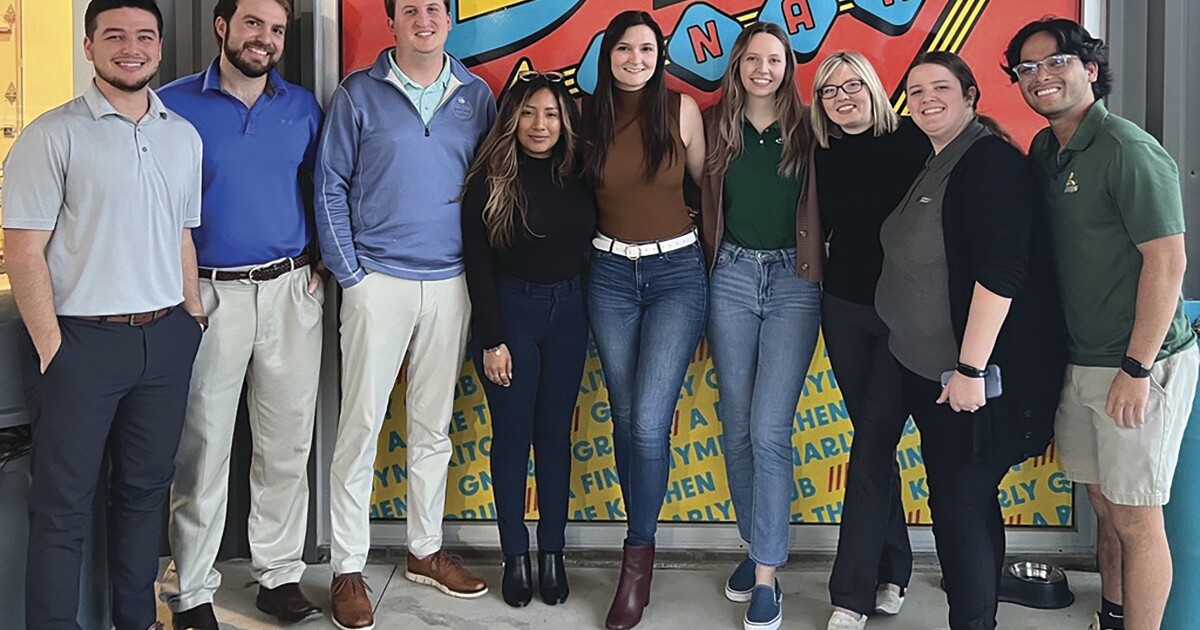
What’s the secret to recruiting and retaining the next generation of accountants?
It’s a combination of trust, flexibility and investment, according to the 2024 class of Best Firms for Young Accountants (see the list on page 10).
In a professional landscape stressed by an ongoing talent shortage, fostering an attractive firm culture where young talent wants to work and stay is more important than ever. That involves identifying their needs and wants, which differ from those of previous generations.
Young talent wants the opportunity to grow and to feel trusted by their firms, but they also value work-life balance. They want to feel fulfilled by their professional lives and still have the time to enjoy their personal lives.
While each of the Best Firms for Young Accountants takes its own approach to retaining talent, all of their efforts point to the shared themes of trust, flexibility and professional development.
“Basically anything that needs to cater to your life, we’re up for it because we want to keep our good people, and happy people make happy workers,” said talent and engagement coordinator Kendra Anderson at Rudler, a Fort Wright, Kentucky-based firm with more than 60 employees.
Establishing trust
In a shrinking talent market, the search for new talent is shifting further upstream in the pipeline. Many firms are extending internship offers to college students as young as sophomores and beginning outreach programs to high schools.
Building out a robust internship program is a great way to build for the future, according to Holly Feltenberger, director of talent acquisition and retention at McKonly & Asbury, a Camp Hill, Pennsylvania-based firm with over 120 employees: “If you don’t have the students coming in to learn and grow, then you’re going to stagnate, and your employees are going to stagnate and they’re going to be, I think, unhappy.”

A student’s internship experience is crucial to their decision to stay at the firm. That means training them and trusting them with real work — not just having them push paper. “We expect you to do the same job,” Janice Snyder, assurance and HR partner at McKonly & Asbury, said. “We’re not putting on a show. We want you to know what it’s really like to work here.”
Meanwhile, Austin, Texas-based Maxwell Locke & Ritter focuses its recruiting efforts on experienced hires with five or more years of experience. By focusing on this demographic, new hires require less training than interns and can hit the ground running, clients are better served, engagement teams can be slimmer, and the firm experiences lower turnover.
One significant application of trust is remote work. At Maxwell Locke & Ritter, “We don’t have a policy. We basically tell people to work what’s best for them,” leading partner Kyle Park said. “We expect you to be available and accessible — not only to people inside the firm, but to your clients — and as long as you are, we don’t really care where you’re at. … We treat everyone as a professional. We’re not babysitting or hand-holding anyone.”
Of the firm’s 138 employees, roughly a third are remote and based outside the office’s locality, another third are remote and local, and the remaining third work a range of schedules from hybrid to fully in office.
Meanwhile, WilkinGuttenplan, based in East Brunswick, New Jersey, has employees working across 11 states. Of its 138 employees, “pretty much everybody” is remote unless they choose to work in the office, said talent acquisition and development manager Fatima Sabir.
“People have different obligations outside of work, so we want to make it easy for them,” Sabir said. “That correlates to working parents, but it doesn’t even have to be working parents — it could be anybody. You could be taking care of your own parents. You could have a dog. Whatever the case is, obviously we know these individuals are important to you, even pets.”
Susan Yohn, director of HR at Brown Plus, a 124-person firm in Camp Hill, Pennsylvania, explained the benefits of allowing employees the freedom to work from home: “What it has allowed us to do is retain our team members. … We are able to look outside of our geographical region for talent. The talent shortage is real, so we’re able to bring in great talent from different locations.”
Transparent leadership and upper management is also crucial to fostering a culture of trust that retains young accountants. At Brown Plus, leadership is very visible: “For every new hire that comes in, we have a morning mixer for them where people can come down and talk to them and just say hi. We provide breakfast and just kind of get them more acquainted with people in the firm,” Yohn said.
There needs to be a consistent message between what people hear and what people see. Management must practice what they preach. That increases trust and, in turn, opens the door for candid conversations and feedback.

The Brown Plus Emerging Professionals group facilitates just that. The group is comprised of employees with zero to seven years of experience. Together, they host volunteering and networking events, as well as lunch-and-learns. Once a year, BEP members present their feedback and concerns to the board and offer suggestions for improvement. “Last year, our paid parental leave policy paid for two weeks of paid leave, but they were looking to increase that. So we increased to three weeks of paid leave,” Yohn said.
Groups and committees such as these give young people a stake in the firm without being a stakeholder. Allowing them to contribute ideas and shape the firm fosters a sense of belonging.
Even something as simple as the dress code comes down to trust, too. The best firms all follow a “dress for your day” or “dress to your client” policy. So on days with no meetings, employees are welcome to wear jeans and sneakers, or even shorts and hoodies in some offices. On days they meet with clients, they’re expected to dress to the client’s standard.
“How someone is dressed doesn’t affect how they do their jobs,” McKonly & Asbury’s Snyder said. “When we go to our clients, we dress how they dress. If the client is in suits, we’re in suits. If our client wants us to wear jeans, then we’re going to wear jeans. We’re going to respect their wishes. But when someone’s in our office, it just doesn’t matter.”
Making the investment
Next-generation accountants want their firm to invest in them as much as they’re investing in the firm. That’s why the top Best Firms for Young Accountants all have professional development in common. That can look like reimbursements for continued education, CPE courses and tracking, CPA exam prep, days off for taking the exam, bonuses for passing, and support groups for those studying.
“There’s a lot more to development than just doing a job,” McKonly & Asbury’s Feltenberger said. “There’s a lot more relationally, there’s a lot more emotional intelligence that people have to develop … People don’t realize that.”
At her firm, that looks like interns being assigned a buddy when they start. This is the “baseline,” Feltenberger said. “When you don’t feel comfortable going to your supervisor or direct report, you can ask your buddy questions. You can be a little more open and honest and feel more comfortable.”
Everyone at the firm also receives a direct report — a manager who is personally invested in driving their career and works with partners and leaders to facilitate that employee’s growth — as well as a mentor, whom the employee chooses.
Keeping it real
The focus on mental wellness and enabling work-life balance is perhaps among the most important aspects of what makes these firms the best for young people, who simply want to be treated as human beings.
That means feeling heard and seen. “Bring it on. Tell us what you don’t like,” Snyder said. “I have meetings with younger staff and say, ‘Tell me something you think I don’t want to hear.'”
WilkinGuttenplan utilizes a commitment schedule basis rather than implementing across-the-board hours requirements. Accountants decide on a minimum target of hours worked (billable and nonbillable) that they want to meet through the year. “Do they want to just work that minimum target, or do they want to exceed that minimum target?” Sabir said. “We give them the opportunity to tell us what makes sense for them.”
There, accountants can start their day whenever it works best for them, whether that’s 8 a.m. or 11 p.m., and the firm encourages people to establish boundaries and push back if they are asked to work outside of their set schedule.
“That’s kind of our human approach to everything,” Sabir explained. “When we get on calls, we understand we’re all humans, and it’s a very comfortable environment where you can vocalize and have open communication, candid feedback, everybody truly just understands one another.”

At Rudler, Anderson finds unique ways to plan fun, de-stressing activities for both in-office and remote employees. “Anything that we do in office, I try to make a version of it that caters to the remote people,” she said.
During tax season, for example, they hire a massage company to come to the office, while remote workers get mailed an at-home spa kit. On Valentine’s Day, Anderson took inspiration from nostalgic elementary school years and had employees decorate tissue boxes to collect candy and cards. “Of course one of the guys had to do a beer box,” she joked. “We just try to keep it really lighthearted.”
“Whatever a person needs to flourish mentally, we really try to cater to that,” Anderson continued. “Burnout, we know that’s real. That’s why we do a lot of fun things throughout tax season, like the coffee carts, playing games, weekly bingo, massages.”
These firms also adhere to their core values and make tangible, consistent efforts to demonstrate them.
“We’re flexible. We’re very employee-friendly. By flexible, I mean in terms of working hours — where you work, how you work, that type of thing. Friendly, meaning we want you to live life outside of the office,” Maxwell Locke & Ritter’s Park said. “We have a saying that no success at work is worth failure at home, and you can interpret that however you want it to be.”
“We genuinely care about one another,” Holocombe added. “We care about each other as employees and coworkers, but we really care about each other as people.”





U.S. Inflation Outlook for 2027

S&P 500 September Outlook: Tech Rally Holds Index at 7,600

India Unveils ‘Saptadhara’ Reform Agenda Targeting Technology, Youth Skilling, and Growth

Armanino adds Strategic Accounting Outsourced Solutions

New 2023 K-1 instructions stir the CAMT pot for partnerships and corporations

Tax Strategy: Employee Retention Credit update
-

 Technology1 week ago
AI Infrastructure Boom Hits Physical Limits: Power, Financing, and Supply Chain Strain
-

 Economics7 days ago
U.S.- Canada Trade Talks Collapse; Carney Says Retaliatory Tariffs Begin September 8
-
 Stock News3 days ago
S&P 500 September Outlook: Tech Rally Holds Index at 7,600
-

 Finance3 days ago
S&P 500 Outperforms Amid Strong Corporate Earnings as Treasury Yields Cap Equity Multiples
-

 Technology7 days ago
Flock Cameras and the Future of Public Security
-

 Insights3 days ago
Climate Resilience and Offshore Wind and Land Restoration Milestones
-

 Accounting3 days ago
Mandatory ESG Reporting Standards Demand Standardized Non-Financial Audit Trails
-
 Leaders3 days ago
India Unveils ‘Saptadhara’ Reform Agenda Targeting Technology, Youth Skilling, and Growth