
Personal Finance
IRS delays hinder EV sales as tax credit deadline looms: car dealers

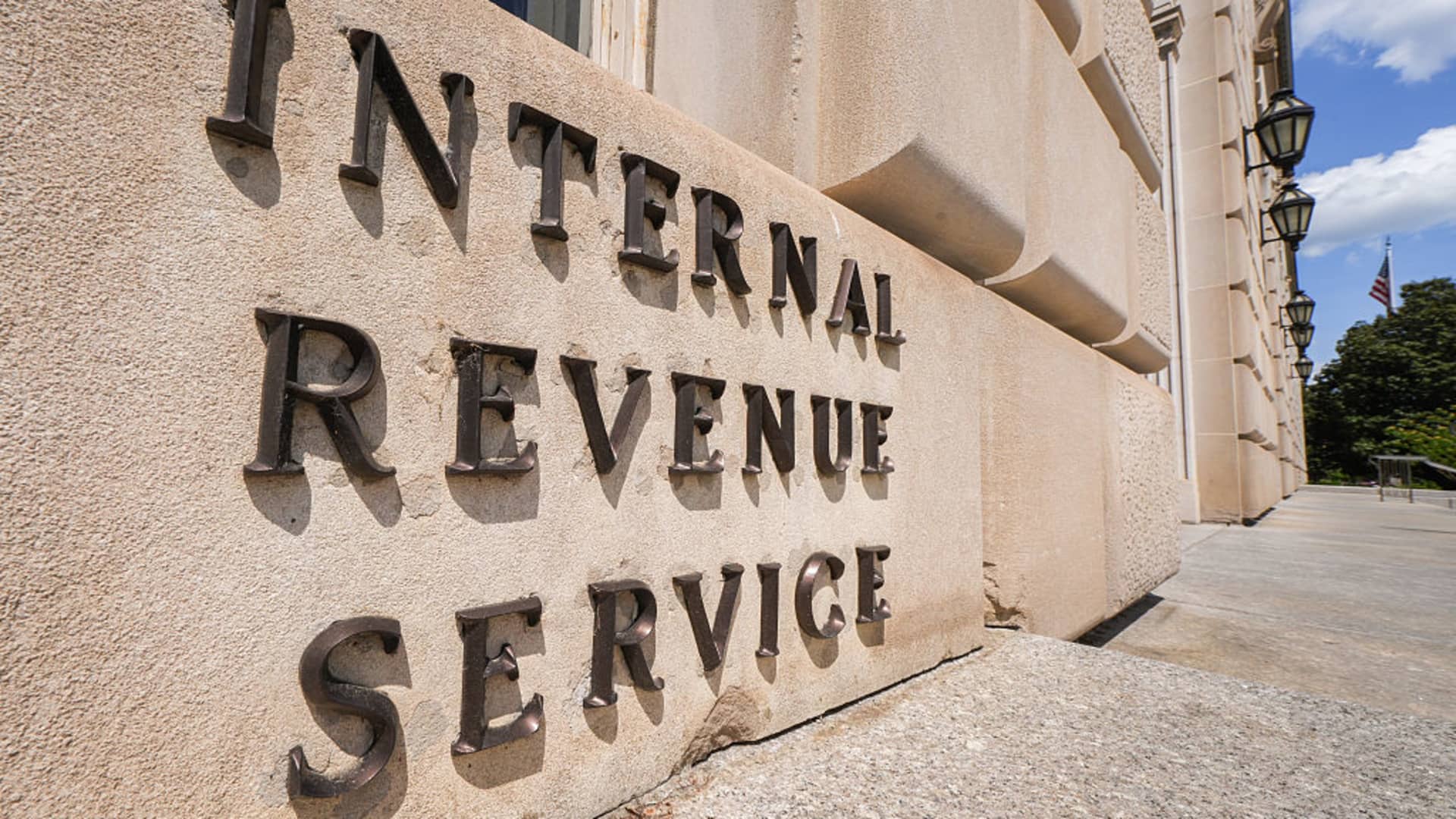
Internal Revenue Service headquarters on April 30, 2025, in Washington, DC.
J. David Ake | Getty Images News | Getty Images
The Internal Revenue Service has been slow in recent weeks to approve and pay federal tax credits for electric vehicles, according to auto dealers and industry analysts — creating confusion for car dealers and hindering EV sales less than a week before the tax break is slated to disappear.
The delays began in earnest in mid-September, according to accounts shared with CNBC from three dealers in different parts of the country. Auto analysts and two national trade associations also confirmed to CNBC dealership reports of delays.
The dealerships say it forces them into a tough choice: carry the cost to keep offering the credit, or pull back and risk losing vehicle sales.
“We’re continuing to pay the tax credit, though with a lot of anxiety,” said Jesse Lore, founder of Green Wave Electric Vehicles in North Hampton, New Hampshire. “We’re out close to $100,000 right now.”

Most consumers access the tax break — worth up to $4,000 for used EVs and $7,500 for new EVs — as an upfront rebate at the point of sale. That rebate can serve as a full or partial down payment, or reduce a car’s overall cost, for example.
Car dealers generally front that money to qualifying consumers after getting online approval from the IRS, and the agency then repays dealers.
Prior to mid-September, that entire process generally happened within a few days, dealers said.
Now, the IRS is taking an unusually long time to approve and pay EV tax credits, dealers said. They say they are unable to get in touch with the agency, and as a result are in limbo and without an idea of when — or if — they’ll get those funds.
A White House official said in an e-mail that all valid EV tax credits applied for before the Sept. 30 deadline would be granted and paid out.
Robyn Capehart, an IRS spokesperson, wrote in an e-mail that “any submissions through the Energy Credits Online portal have always been subject to IRS review and approval.”
“Once approved by the IRS, seller reports (also known as time of sale reports) support vehicle eligibility for the credit, even if that acceptance followed an IRS review period,” Capehart wrote.
The White House and the IRS offered no explanation for the reported delays.
‘We’re in the dark’
Some dealerships have continued to issue the EV tax credit to qualifying buyers, hoping the federal government will pay them back later.
A dozen new applications Lore has submitted to the IRS since Sept. 15 are still listed as “pending,” he said. Three others were approved on Thursday. None have been paid yet. Lore showed screenshots of the transactions to CNBC.
Such a delay had previously rarely occurred since the tax break first became available as an upfront rebate, in January 2024, Lore said.
“We’re in the dark,” he said.
He also hasn’t been able to provide customers with the time-of-sale report that they need to reconcile the tax credit on their annual tax return, Lore said.
EV tax credit delays come at ‘worst possible time’
Uwe Krejci | Digitalvision | Getty Images
It’s unclear why and to what extent delays are happening.
Some dealers speculated they may be tied to backlogs at the IRS due to reduced staffing and higher volume of EV sales. Others said they think it could be a purposeful move by the Trump administration in an effort to reduce EV sales.
Regardless, the roadblocks come at a bad time, dealers and analysts said.
Republicans ended the EV tax credit after Sept. 30 as part of the so-called “big beautiful bill” passed in July. The tax break was supposed to last through 2032.
Consumers have rushed to buy EVs before the tax break disappears, to secure the cars at a discounted price.
That helped push new and used EV sales to record highs in August, according to Cox Automotive data. September was expected to be another blockbuster month.
But some dealers have pulled back amid the uncertainty, unable to float big sums of cash to consumers.
“I know for a fact there are dealers saying, ‘We’re not doing it anymore. We’re not getting paid,'” Lore said. “Others are saying [to consumers], ‘We’re holding the cars, and you can’t drive the car home until we get paid in full.'”
More from Personal Finance:
How EVs and gasoline cars compare on total cost
Climate change is gentrifying neighborhoods
Here’s how to buy renewable energy from your electric utility
Gary Pretzfeld, co-owner of AutoTrust USA in Miramar, Florida, said the IRS owes him about $80,000 to $90,000 in rebates that he has floated to EV buyers this month.
“There are definitely some dealers who can’t afford to do it this way,” Pretzfeld said.
Car dealerships are a “really cash-intensive business,” and payment delays threaten to tip dealers into a “cash crunch” at a time when they were expecting to sell huge volumes of EVs, said Scott Case, the CEO of Recurrent, an EV market research firm.
“It’s a quiet, festering problem at the worst possible time,” Case said.
The National Independent Automobile Dealers Association, a trade group that represents used car dealers, is aware of the issue, said spokesperson Richard Greene.
“The dealers and NIADA have engaged the IRS,” Greene said in an e-mail. “NIADA hopes the payments are processed by the IRS before the program’s expiration.”
Amy Hunter Wright, a spokesperson for the National Automobile Dealers Association, a trade group, also said some members had experienced delays.
“Anecdotally, we have heard some dealers report that recent submissions have been placed in pending status since last week,” she wrote in an e-mailed statement. “NADA has been and continues to work with the IRS and the Department of Treasury regarding the portal and they have been cooperative.”
Why the upfront rebate is important to buyers
Jackyenjoyphotography | Moment | Getty Images
Of course, dealers aren’t obligated to offer the tax credit as an upfront payment.
Consumers can still try to claim the tax break when they file their annual tax returns next year.
But the point-of-sale rebate has been a big draw for consumers, said Al Salas, CEO of Eco Auto, a dealer with operations in Massachusetts and Washington state, and which is expanding to Florida, Georgia and New Jersey.
It’s a quiet, festering problem at the worst possible time.
Scott Case
CEO of Recurrent
Getting the tax break upfront reduces monthly payments for consumers who finance their purchase and reduces the total sales tax on the purchase, Salas said.
For example, a consumer who buys a used EV might pay $80 to $100 more per month on a five-year loan if they’re unable to get the $4,000 tax credit upfront, Salas said.
The tax break is also harder for certain consumers to access at tax time. While the point-of-sale rebate is available to qualifying consumers regardless of their tax liability, that’s not true for those who claim the tax break on their annual tax return: They must have a tax liability to claim even a partial credit.

The IRS has approved some applications Salas submitted last week, while others are pending.
“As dealers, it’s a really unfortunate situation, because we are fronting the money,” Salas said. “And in a lot of ways, we’re financing the consumer’s ability to get a new vehicle.”
The IRS owes him about $50,000 of tax credits, Salas said. He expects the federal government to pay him back eventually.
So does Pretzfeld, the dealer based in Miramar, Florida.
Pretzfeld saw all EV sales submitted to the IRS for tax credit approval listed as “pending” starting around Sept. 15, he said.
One submitted Sept. 16 and one from Sept. 17 have been approved, and he’s awaiting payment.
“The timeline is now longer, and it’s murkier,” Pretzfeld said. “That’s the part that’s freaking everyone out.”


Personal Finance
Next-Generation Retirement Planning: Managing Longevity Risk and Variable Income Streams


U.S.- Canada Trade Talks Collapse; Carney Says Retaliatory Tariffs Begin September 8

Flock Cameras and the Future of Public Security

AI Infrastructure Boom Hits Physical Limits: Power, Financing, and Supply Chain Strain

Armanino adds Strategic Accounting Outsourced Solutions

New 2023 K-1 instructions stir the CAMT pot for partnerships and corporations

Tax Strategy: Employee Retention Credit update
-

 Stock News1 week ago
Nvidia Earnings Preview: What Wall Street Expects From the AI Bellwether’s Q2 Report
-

 Accounting1 week ago
SEC’s Semiannual Reporting Proposal Faces Investor Pushback: What CFOs Need to Know
-

 Stock News1 week ago
Nvidia Q2 FY2027 Earnings beats Wall Street Expectation with Record $96.2 Billion Revenue
-

 Finance1 week ago
Treasury Bond Volatility Forces Bessent to Double Debt Buyback Size as Yields Swing
-
 Technology5 days ago
AI Infrastructure Boom Hits Physical Limits: Power, Financing, and Supply Chain Strain
-
 Technology3 days ago
Flock Cameras and the Future of Public Security
-
 Economics3 days ago
U.S.- Canada Trade Talks Collapse; Carney Says Retaliatory Tariffs Begin September 8