Connect with us

Accounting

IRS starts tax season with hiring freeze and rescinded job offers

Published

on

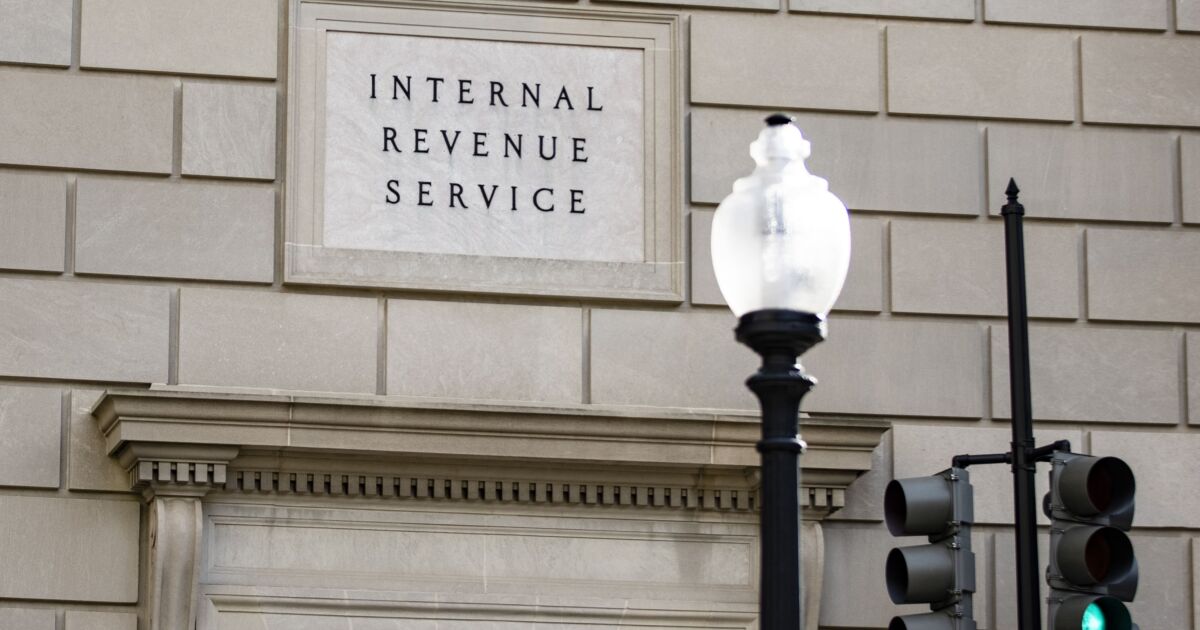
The Internal Revenue Service kicked off tax season Monday facing a hiring freeze imposed by President Donald Trump in an executive order on Inauguration Day and lingering uncertainty over how to make up for over $20 billion in budget cuts.

The IRS has been rescinding job offers and posted on its website that offers with a start date on or before Feb. 8, 2025, will be allowed to continue/proceed with the hiring and onboarding process. But offers with a start date after Feb. 8, 2025, or an unconfirmed start date will be revoked. 

Last week, Trump formally nominated Billy Long, a former Republican congressman from Missouri, as IRS commissioner, after announcing his intention last month to nominate Long, even though then-commissioner Danny Werfel’s term wasn’t set to end until Nov. 12, 2027. Werfel announced he would be resigning on Jan. 20, Inauguration Day. Deputy commissioner Douglas O’Donnell is acting commissioner in the meantime. He was previously acting commissioner from November 2022 to March 2023 during the transition between former IRS Commissioner Chuck Rettig and Werfel. But the IRS newsroom page was uncharacteristically quiet this past week since the inauguration, especially considering it was the week before the official launch of tax season on Jan. 27, and the IRS had already begun accepting business tax returns and Free File individual returns.

Tax season ran relatively smoothly last year thanks to the increased funding from the Inflation Reduction Act of 2022, and despite the budget cuts, hopes are high that it will happen again this year. 

“Busy season is always terrible, but I think it’s going to be sort of business as usual because there are no major expiring provisions to deal with,” said Bill Smith, managing director of the CBIZ Advisors’ National Tax Office.

But there could be problems with the hiring freeze, especially with the IRS already having trouble recruiting enough employees. “A third of the workforce is eligible for retirement, and if you hire new people, they don’t come in as senior auditors, they come in out of college or relatively inexperienced for the most part,” said Smith. “It takes two years to train them and get them marginally effective. If you kill all that, there will be a tremendous amount of natural attrition at the service, and the attrition is going to be at the most experienced level, which will have a huge impact.”

It’s unclear when Long will get a confirmation hearing, but questions have already arisen over his promotion of the fraud-plagued Employee Retention Credit. Sen. Elizabeth Warren, D-Massachusetts, a member of the Senate Finance Committee, who will likely be at the hearing, has already sent Long a letter with a long list of questions about that and his other qualifications.

“He has no tax background,” said Smith. “The Democrats on the Senate Finance were asking about all of his interactions with the Employee Retention Tax Credit company he was working for. He’s on record as saying, everybody’s eligible. He’s on record as saying even if your accountant told you you’re not eligible, come see us. You’ve got the IRS over the last several years prosecuting companies for illicit claims for the Employer Retention Tax Credit. And these two companies that he was affiliated with seem to have been doing exactly that. That’s in addition to the fact that he has no tax experience as an attorney, accountant or Enrolled Agent. He’s a certified auctioneer. That seems to be his lone certification.”

Long has said he’s a certified tax and business advisor, but according to ProPublica, the CTBA that Long uses on his X profile comes from a Florida company called Excel Empire that has only been around for two years and gives the certifications to people who have only attended a two-day seminar.

Some believe that the IRS needs to do more to speed up the processing of ERC claims. National Taxpayer Advocate Erin Collins highlighted the problem with delayed ERC claims earlier this month in her annual report to Congress.  As of Oct. 26, 2024, the IRS faced a backlog of about 1.2 million ERC claims, with many claims pending for over a year. 

“I’ve been hearing the exact same issues from taxpayers, CPAs lawyers, ERC firms, as well as government officials’ frustration about the overall management of the program,” said Jesse Morton, a managing director at Berkeley Research Group. Somebody who actually has experience with the program and is knowledgeable about the good, the bad and the ugly of the program has a perhaps better and more realistic perspective, I think, is going to be positive for the IRS, and certainly positive for the 1.2 million taxpayers that are currently waiting on their pandemic relief, and have been waiting on it for, in some cases, years.”

Long perhaps may make a priority of speeding up ERC claim processing at the IRS. The Taxpayer Advocate noted that as the report was going to press, Werfel announced in mid-December he expects that approximately 500,000 additional claims will be processed in 2025, but the details and timing of the refunds are still to be determined. However, with the extra $20 billion in budget cuts and the hiring freeze, it’s unclear when or if the IRS will return to other priorities from Werfel such as ramping up audits of large partnerships, big corporations and the wealthy. Trump has threatened to reassign thousands of IRS agents to patrol the Southern border. 

‘They hired — were trying to hire 88,000 new workers to go with you, and we’re in the process of developing a plan to either terminate all of them or maybe we move them to the border,” Trump said during a rally in Las Vegas, according to the Daily Mail. “I think we’re going to move them to the border where they are allowed to carry guns. You know, they’re so strong on guns. But these people are allowed to carry guns. So we will probably move them to the border.”

These echoed comments he made last Monday when he was signing his executive order freezing hiring across the federal government, but singling out the IRS for an even longer hiring freeze. 

“Upon issuance of the OMB plan, this memorandum shall expire for all executive departments and agencies, with the exception of the Internal Revenue Service (IRS),” says the executive order. “This memorandum shall remain in effect for the IRS until the Secretary of the Treasury, in consultation with the Director of OMB and the Administrator of USDS, determines that it is in the national interest to lift the freeze.”

As he signed the order, Trump remarked, “We’re going to take those 88,000 — let’s see if they’d like to work on the border because that’s where we want them really.”

He seemed to be alluding to the 87,000 armed IRS agents who were supposedly going to be hired by the Biden administration, although that claim has been disputed by the IRS and its employee union.

Nevertheless, the extra $20 billion in cuts to IRS funding from the Inflation Reduction Act, on the heels of an earlier $20 billion in cuts, due to legislative language that was repeated in two continuing resolutions passed by Congress last year to keep the government open, are supposed to be coming out of the funding for the IRS’s enforcement budget. That will certainly translate into less emphasis on audits under Long. 

“It’s a little frightening to think about what might happen in the IRS if he gets confirmed,” said Smith. “You almost want to tell your clients, you’ve got a four-year holiday because the IRS isn’t going to go after anybody during this period of time. You can’t do that, of course, because it would be unethical. But all of the initiatives they were talking about, like spending a lot more money on auditing big partnerships, that would be an important and very money-making operation for the IRS and the United States. But I would guess they’re going to scale back audits, which are already at kind of historic lows, so I think it will have a very big impact if he’s confirmed.”


Continue Reading

Accounting

FASB Standardizes Carbon Offsets Accounting Rules

Published

on

FASB Standardizes Carbon Offsets Accounting Rules

In a decisive move toward standardized environmental financial reporting, accounting standards boards issued updated implementation guidance during the week ending July 25, 2026, regarding the formal recognition and valuation of corporate carbon offsets and environmental credits. The revised frameworks establish precise rules for how enterprises must measure, record, and disclose carbon credits on balance sheets, eliminating years of inconsistent reporting practices across public capital markets.

Under the finalized accounting standard, purchased carbon offsets can no longer be categorized under vague administrative expenses or unstandardized intangible asset accounts. Instead, organizations must classify environmental credits based on underlying operational intent—distinguishing between credits held for immediate compliance compliance obligations, long-term offset obligations, or active market trading. Furthermore, companies are required to evaluate carbon holdings for fair value impairment at the end of each reporting period, ensuring that depreciated or low-quality environmental credits do not distort corporate asset values.

The standardized rules carry significant implications for corporate audit committees and chief accounting officers. External audit firms are implementing rigorous verification protocols to validate the physical legitimacy, legal ownership, and scientific permanence of carbon credits claimed on balance sheets. Inaccurate or overstated carbon accounting claims now carry substantial financial litigation risk, alongside potential regulatory enforcement for misleading ESG disclosures.

To remain fully compliant, corporate accounting departments must establish centralized carbon tracking systems integrated into primary standard ERP ledgers. Accounting teams that proactively adopt standardized environmental reporting protocols will build investor credibility, streamline annual audit processes, and insulate their organizations against evolving regulatory scrutiny.

Continue Reading

Accounting

Automated Tax Compliance Tools Reduce Risk

Published

on

Automated Tax Compliance Tools Reduce Risk

Corporate tax departments reached a critical juncture in automated operational management. With nations worldwide rapidly enacting digital service taxes, localized value-added tax (VAT) mandates, and real-time electronic invoicing requirements, manual tax calculations have become obsolete. Modern corporate tax divisions are aggressively deploying AI-driven tax engine software to automate complex cross-border indirect tax calculations in real time.

The imperative for automated tax compliance stems from the sheer complexity of current trade policies and multi-jurisdictional commerce. E-commerce platforms, software vendors, and global manufacturers face constantly changing regional tax rates, statutory exemption rules, and cross-border tariff structures. Automated tax engines embed directly into enterprise enterprise resource planning (ERP) architectures, automatically applying correct tax codes at the point of sale, calculating real-time withholding amounts, and generating compliant e-invoices.

Automated audit trail generation represents another key advantage of modern tax tech integration. Advanced compliance platforms log every transactional tax determination on immutable digital ledgers, providing tax authorities with transparent, self-verifying audit trails. This capability drastically reduces the operational duration and administrative cost of corporate tax audits, protecting enterprises against severe penalties resulting from calculation errors or missed reporting deadlines.

For chief financial officers and tax directors, investing in automated tax compliance is a vital operational risk mitigation strategy. Automating routine tax calculations frees high-level accounting professionals to focus on strategic tax planning, transfer pricing optimization, and risk management in an increasingly complex global economic environment.

Continue Reading

Accounting

Continuous Auditing Transforms Corporate ERPs

Published

on

continuous auditing transforms corporate erps

As corporate accounting departments cross the threshold into late July 2026, the adoption of continuous, automated auditing systems has reached a definitive turning point. Driven by advances in artificial intelligence and deep integration with modern Enterprise Resource Planning (ERP) platforms, leading finance organizations are moving away from traditional, periodic post-hoc audits in favor of real-time, 100% transactional verification. This technological transition is redefining internal control environments, reducing compliance costs, and eliminating the structural delays inherent in legacy quarterly closing processes.

Unlike traditional auditing frameworks that rely on statistical sampling—a process that inevitably leaves operational blind spots—continuous auditing software monitors operational data feeds continuously. Every purchase order, electronic invoice, payroll disbursement, and cross-border wire transfer is automatically cross-referenced against established corporate governance parameters, regulatory tax schedules, and anti-fraud algorithms in real time. Anomalies or unauthorized ledger entries are flagged instantly, allowing internal audit teams to investigate and remediate compliance gaps immediately rather than months after the close of a financial period.

The implications for executive financial management are far-reaching. By embedding continuous verification directly into daily transaction workflows, chief financial officers gain uninterrupted visibility into the organization’s true financial standing. Real-time balance sheet auditing eliminates the severe operational bottlenecks associated with month-end and quarter-end financial reconciliations, freeing accounting professionals to focus on strategic financial modeling, tax planning, and capital allocation rather than manual data entry and spreadsheet consolidation.

However, implementing continuous auditing requires accounting leadership to invest heavily in data governance and technical upskilling. Internal audit teams must evolve from manual ledger reviewers into system architects capable of auditing complex algorithms and validating automated data pipelines. Accounting firms and corporate controllers that master continuous auditing will establish a resilient compliance framework capable of meeting stringent international regulatory standards with total transparency.

Continue Reading

Trending