Connect with us

Leaders

Jeff Bezos Is The Architect of Modern Ecommerce

Published

on

Jeff Bezos: From Garage Startup to Space Dreams - A Journey of Relentless Innovation

In the pantheon of tech visionaries, Jeff Bezos Is The Architect of Modern Ecommerce. Jeff Bezos stands as a titan who transformed not just how we shop, but how we live, work, and dream. His journey from a garage-based bookseller to the architect of a global empire exemplifies the power of long-term thinking and customer obsession.

Early Life: Building the Foundation

Born in Albuquerque, New Mexico, in 1964, Jeffrey Preston Bezos showed early signs of intellectual curiosity and ingenuity. Raised by his mother Jackie and stepfather Miguel Bezos, young Jeff spent summers at his grandfather’s ranch in Texas, where he learned valuable lessons about self-reliance and problem-solving.

His brilliant mind led him to Princeton University, where he graduated summa cum laude with degrees in electrical engineering and computer science. While his early career on Wall Street proved successful, it was a statistic about the internet’s explosive growth that would change his life – and the world – forever.

The Amazon Revolution: From Books to Everything

In 1994, Bezos made a decision that seemed crazy to many: leaving a lucrative position at D.E. Shaw to sell books online. Working from his garage in Seattle, he built Amazon with a vision that extended far beyond books. His famous “Day 1” philosophy – treating every day as if it were the company’s first – became the driving force behind Amazon’s relentless innovation.

Under his leadership, Amazon revolutionized e-commerce with innovations like:

  • One-Click shopping
  • Amazon Prime’s game-changing delivery promise
  • AWS (Amazon Web Services), which now powers much of the internet
  • Kindle, which transformed digital reading
  • Alexa, bringing voice computing into homes worldwide

Beyond Amazon: Expanding Horizons

Jeff Bezos stands as a titan. Indeed his ambitions extend far beyond Earth’s atmosphere. Blue Origin, his space company, represents his passion for pushing human boundaries. With the successful New Shepard launches and plans for lunar missions, Bezos is working to make space travel accessible while developing technologies to benefit Earth.

His acquisition of The Washington Post in 2013 demonstrated his commitment to preserving quality journalism in the digital age. Under his ownership, the publication has undergone a digital transformation and returned to profitability.

The Bezos Earth Fund and Philanthropy

In 2020, Bezos announced the creation of the Bezos Earth Fund, pledging $10 billion to combat climate change. This initiative, alongside other philanthropic efforts, shows his growing focus on solving global challenges.

Leadership Style and Business Philosophy

Bezos’s success stems from several core principles:

  • Customer obsession rather than competitor focus
  • Passion for invention
  • Commitment to operational excellence
  • Long-term thinking over short-term profits

Looking to the Future

Today, while no longer Amazon’s CEO, Bezos continues to shape the future through various ventures. His focus has shifted to:

  • Blue Origin’s space exploration missions
  • Climate change initiatives through the Earth Fund
  • Investment in breakthrough technologies
  • Supporting entrepreneurship and innovation

Personal Evolution

The transformation of Bezos himself – from a bookish Princeton graduate to a global business icon – mirrors the growth of his enterprises. His well-documented physical transformation and increasing public presence show a leader who has evolved alongside his ambitions.

As he often says, “It’s still Day 1” – suggesting that despite all his achievements, Jeff Bezos sees his greatest contributions still ahead. His story continues to inspire entrepreneurs and innovators worldwide, proving that with vision, determination, and a willingness to think long-term, extraordinary achievements are possible.

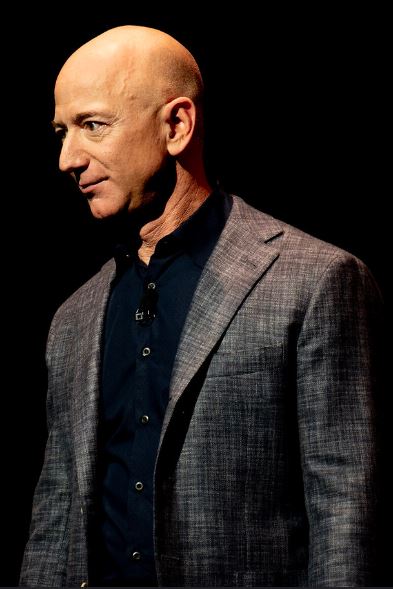
Picture: Daniel Oberhaus, 2019

Level up your leadership

Level up your leadership


Continue Reading

Leaders

Adaptive Governance in Volatile Markets

Published

on

adaptive governance in volatile markets

The hallmark of successful corporate leadership in late July 2026 is adaptive governance—the ability to maintain a clear, long-term strategic vision while dynamically adjusting tactical operations in response to swift macroeconomic shifts. In an operational environment marked by unilateral trade tariffs, technological transformations, and shifting regulatory landscapes, rigid multi-year strategic plans are increasingly ineffective. Today’s most resilient chief executives and board directors operate through flexible, scenario-driven governance structures.

Adaptive governance requires building transparent, decentralized communication frameworks across the enterprise. Executive leadership must actively eliminate organizational silos and encourage operational teams to report emerging supply chain frictions, cost increases, or technological bottlenecks immediately. By shortening the feedback loop between ground-level operations and C-suite decision-makers, leaders can execute timely strategic adjustments before localized operational hurdles develop into major corporate setbacks.

Furthermore, effective modern governance demands balancing rapid technological integration with rigorous ethical oversight. As automated decision tools and algorithmic frameworks manage larger portions of daily enterprise operations, executive boards must establish proactive governance guardrails to monitor data privacy, algorithmic accuracy, and systemic operational risk. Leaders who neglect model governance risk significant brand damage and regulatory penalties if automated systems make flawed operational choices.

Ultimately, executive excellence in 2026 is defined by organizational resilience, strategic agility, and unwavering purpose. By empowering decentralized decision-making, investing in continuous workforce adaptability, and maintaining robust risk management protocols, modern leaders can steer their organizations through complex economic conditions while establishing a lasting competitive advantage.

Continue Reading

Leaders

Adaptive Governance in Turbulent Times: Leadership Strategies for the Late-2026 Landscape

Published

on

Adaptive Governance in Turbulent Times

The defining characteristic of successful executive leadership in July 2026 is adaptive governance—the capacity to maintain steady strategic direction while dynamically recalibrating tactical execution in response to relentless market shifts. In an environment shaped by shifting trade policies, technological evolution, and macroeconomic volatility, rigid multi-year strategic plans are rapidly obsolete. Today’s most effective chief executives and board chairs operate through dynamic, scenario-based governance frameworks built for rapid adaptation.

Adaptive governance begins with cultivating organizational humility and institutional awareness at the highest levels. Executive teams must move past confirmation bias, establishing transparent internal communication channels that encourage front-line operational staff to report emerging market frictions, supply constraints, or technological bottlenecks immediately. By shortening the feedback loop between operational reality and C-suite decision-making, leaders can execute decisive strategic pivots long before minor operational challenges evolve into public corporate crises.

Furthermore, modern leadership requires balancing aggressive technological adoption with robust ethical stewardship. As artificial intelligence systems and automated decision frameworks assume larger roles in corporate operations, board leadership must establish strict governance guardrails to oversee algorithmic fairness, data privacy compliance, and systemic operational risk. Leaders who neglect model governance risk severe brand erosion and regulatory backlash if automated systems execute flawed strategic decisions.

Ultimately, effective executive leadership in late 2026 is defined by resilience, transparency, and clarity of purpose. By building agile organizational structures, fostering a continuous learning culture, and establishing unwavering ethical standards, executive leaders can navigate macroeconomic uncertainty with confidence, transforming systemic industry disruptions into lasting competitive advantages.

Continue Reading

Leaders

Cultivating Institutional Resilience: How Modern Leaders Build Anti-Fragile Organizations

Published

on

How Modern Leaders Build Anti-Fragile Organizations

In the mid-2026 corporate arena, executive performance is increasingly measured not merely by peak quarterly profitability, but by institutional resilience—the ability of an organization to withstand external shocks, adapt under pressure, and emerge stronger from systemic disruptions. As supply chain volatility, regulatory shifts, and technological shifts continue to test corporate stability, forward-thinking leaders are actively rearchitecting their enterprises around principles of anti-fragility.

Building an anti-fragile enterprise requires a fundamental departure from hyper-optimized, single-point-of-failure management practices. For decades, corporate efficiency was defined by ultra-lean inventories, single-source supplier contracts, and minimal capital reserves. While these practices maximized short-term return on capital during stable economic periods, they left organizations deeply vulnerable to sudden external disruptions. Resilient leaders in 2026 deliberately introduce strategic redundancy into critical operational channels—maintaining diversified supplier bases, multi-region operational capacity, and robust liquidity buffers.

Equally important is the cultivation of a psychologically safe, decentralized leadership culture. In times of crisis, centralized command-and-control hierarchies frequently bottleneck critical operational responses due to information delays. Anti-fragile leaders empower regional managers and operational teams to exercise decisive localized initiative within clear strategic guardrails. This decentralized authority fosters operational agility, allowing regional teams to address disruptions directly while maintaining alignment with broader corporate objectives.

For board directors and chief executives, instilling anti-fragility is a continuous, long-term strategic commitment. It requires prioritizing capital preservation during expansionary cycles, investing heavily in employee adaptability, and evaluating every strategic decision through the lens of long-term survival. Leaders who cultivate deep institutional resilience ensure that their organizations not only navigate the uncertainties of 2026, but thrive amidst continuous change.

Continue Reading

Trending