
Personal Finance
Key ways consumer loans are affected


When the Fed hiked rates in 2022 and 2023, the interest rates on most consumer loans quickly followed suit. Even though the central bank lowered its benchmark rate three times in 2024, those consumer rates are still elevated, and are mostly staying high, for now.
Five ways the Fed affects your wallet
1. Credit cards
Many credit cards have a variable rate, so there’s a direct connection to the Fed’s benchmark.
With a rate cut likely postponed until July, the average credit card annual percentage rate has stayed just over 20% this year, according to Bankrate — not far from 2024’s all-time high. Last year, banks raised credit card interest rates to record levels and some issuers said they are keeping those higher rates in place.
At the same time, “more people are carrying debt because of higher prices,” said Ted Rossman, senior industry analyst at Bankrate. Total credit card debt and average balances are also at record highs.
2. Mortgages
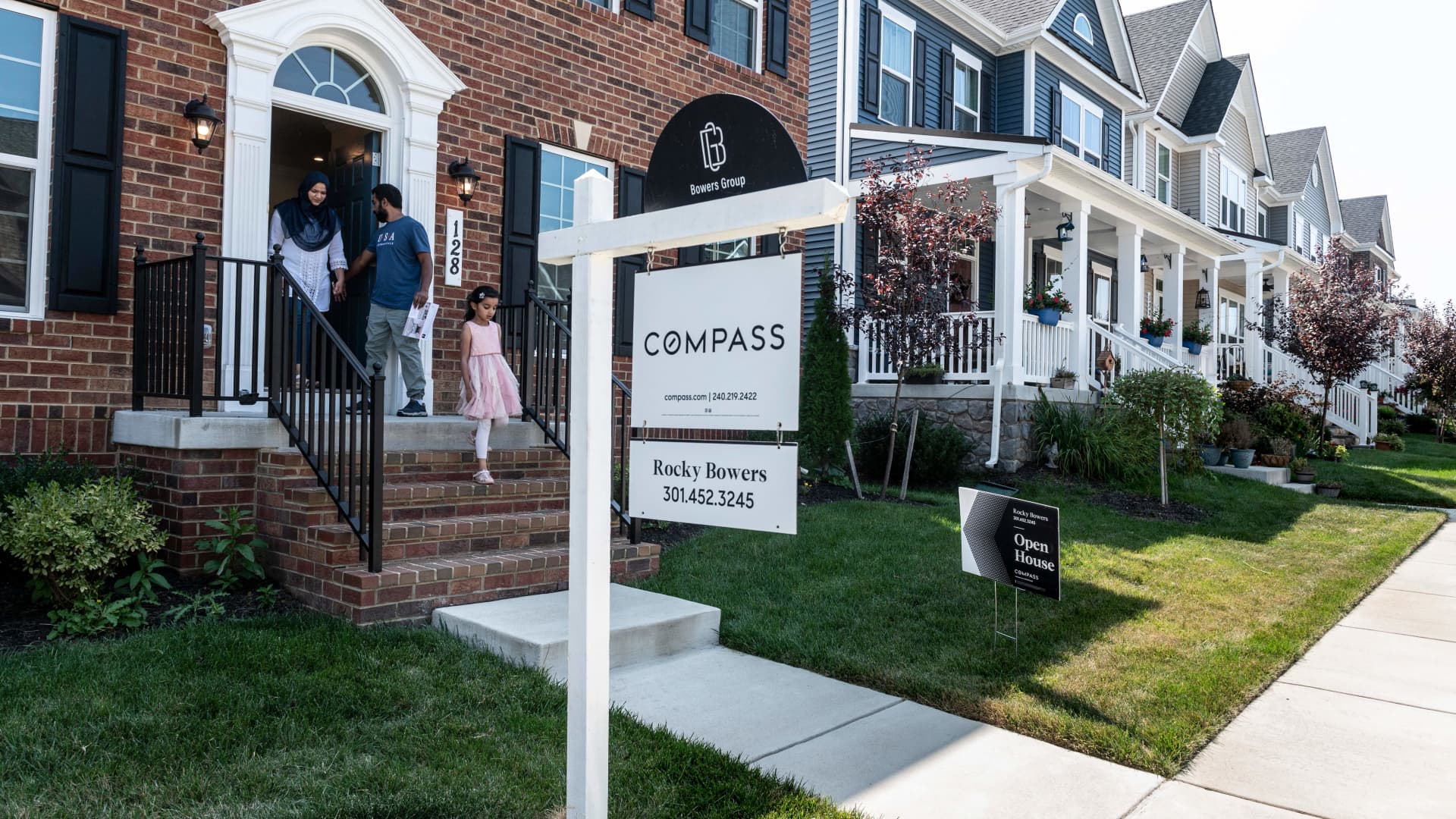
Prospective home buyers leave a property for sale during an Open House in a neighborhood in Clarksburg, Maryland.
Roberto Schmidt | AFP | Getty Images
Mortgage rates don’t directly track the Fed, but are largely tied to Treasury yields and the economy. As a result, uncertainty over tariffs and worries about a possible recession are dragging those rates down slightly.
The average rate for a 30-year, fixed-rate mortgage is 6.91% as of May 6, while the 15-year, fixed-rate is 6.22%, according to Mortgage News Daily.
Mortgage rates “are showing signs of life after a slow couple of years,” said Michele Raneri, vice president and head of U.S. research and consulting at TransUnion.
But for potential home buyers, that’s not enough of a decline to give the housing market a boost. “Many borrowers are reluctant to take on a loan at today’s rates, particularly if they currently have a loan at a significantly lower rate,” Raneri said.
3. Auto loans
Auto loan rates are tied to several factors, but the Fed is one of the most significant.
With the Fed’s benchmark holding steady, the average rate on a five-year new car loan was 7.1% in April, while the average auto loan rate for used cars is 10.9%, according to Edmunds. At the end of 2024, those rates were 6.6% and 10.8%, respectively.
With interest rates near historic highs and car prices rising — along with pressure from Trump’s 25% tariffs on imported vehicles — new-car shoppers are facing bigger monthly payments and an affordability crunch, according to Joseph Yoon, Edmunds’ consumer insights analyst.
“Consumers continue to face a challenging market, now with added uncertainty of the tariff impact on their next vehicle purchase,” Yoon said. “Prices and interest rates remain elevated, and there’s no fast or easy answer as to how the tariffs will affect inventory levels — and therefore pricing — as buyers try to make sense of an increasingly complex shopping journey.”
4. Student loans
Federal student loan rates are fixed for the life of the loan, so most borrowers are somewhat shielded from Fed moves and recent economic turmoil.
Interest rates for the upcoming school year will be based in part on the May auction of the 10-year Treasury note, and are expected to drop slightly, according to higher education expert Mark Kantrowitz. Undergraduate students who took out direct federal student loans for the 2024-25 academic year are paying 6.53%, up from 5.50% in 2023-24.
Borrowers with existing federal student debt balances won’t see their rates change, adding to the other headwinds some now face along with fewer federal loan forgiveness options.
5. Savings
While the central bank has no direct influence on deposit rates, the yields tend to be correlated to changes in the target federal funds rate.
“Continued high interest rates are discouraging for those with debt but awesome for savers,” said Matt Schulz, chief credit analyst at LendingTree.
Yields for CDs and high-yield savings accounts may not be as high as they were a year ago, but the Fed’s rate cut pause has left them well above the annual rate of inflation, Schulz said. Top-yielding online savings accounts currently pay 4.5%, on average, according to Bankrate.
“With all of the uncertainty in the economy right now, it makes sense for people to act now to lock in CD rates and take advantage of current high-yield savings account returns while they still can,” Schulz said.


Personal Finance
Next-Generation Retirement Planning: Managing Longevity Risk and Variable Income Streams


U.S.- Canada Trade Talks Collapse; Carney Says Retaliatory Tariffs Begin September 8

Flock Cameras and the Future of Public Security

AI Infrastructure Boom Hits Physical Limits: Power, Financing, and Supply Chain Strain

Armanino adds Strategic Accounting Outsourced Solutions

New 2023 K-1 instructions stir the CAMT pot for partnerships and corporations

Tax Strategy: Employee Retention Credit update
-

 Stock News1 week ago
Nvidia Earnings Preview: What Wall Street Expects From the AI Bellwether’s Q2 Report
-

 Accounting1 week ago
SEC’s Semiannual Reporting Proposal Faces Investor Pushback: What CFOs Need to Know
-

 Stock News1 week ago
Nvidia Q2 FY2027 Earnings beats Wall Street Expectation with Record $96.2 Billion Revenue
-

 Finance1 week ago
Treasury Bond Volatility Forces Bessent to Double Debt Buyback Size as Yields Swing
-
 Technology5 days ago
AI Infrastructure Boom Hits Physical Limits: Power, Financing, and Supply Chain Strain
-
 Technology3 days ago
Flock Cameras and the Future of Public Security
-
 Economics3 days ago
U.S.- Canada Trade Talks Collapse; Carney Says Retaliatory Tariffs Begin September 8