
Personal Finance
Labor Department issues rule to crack down on bad retirement savings advice

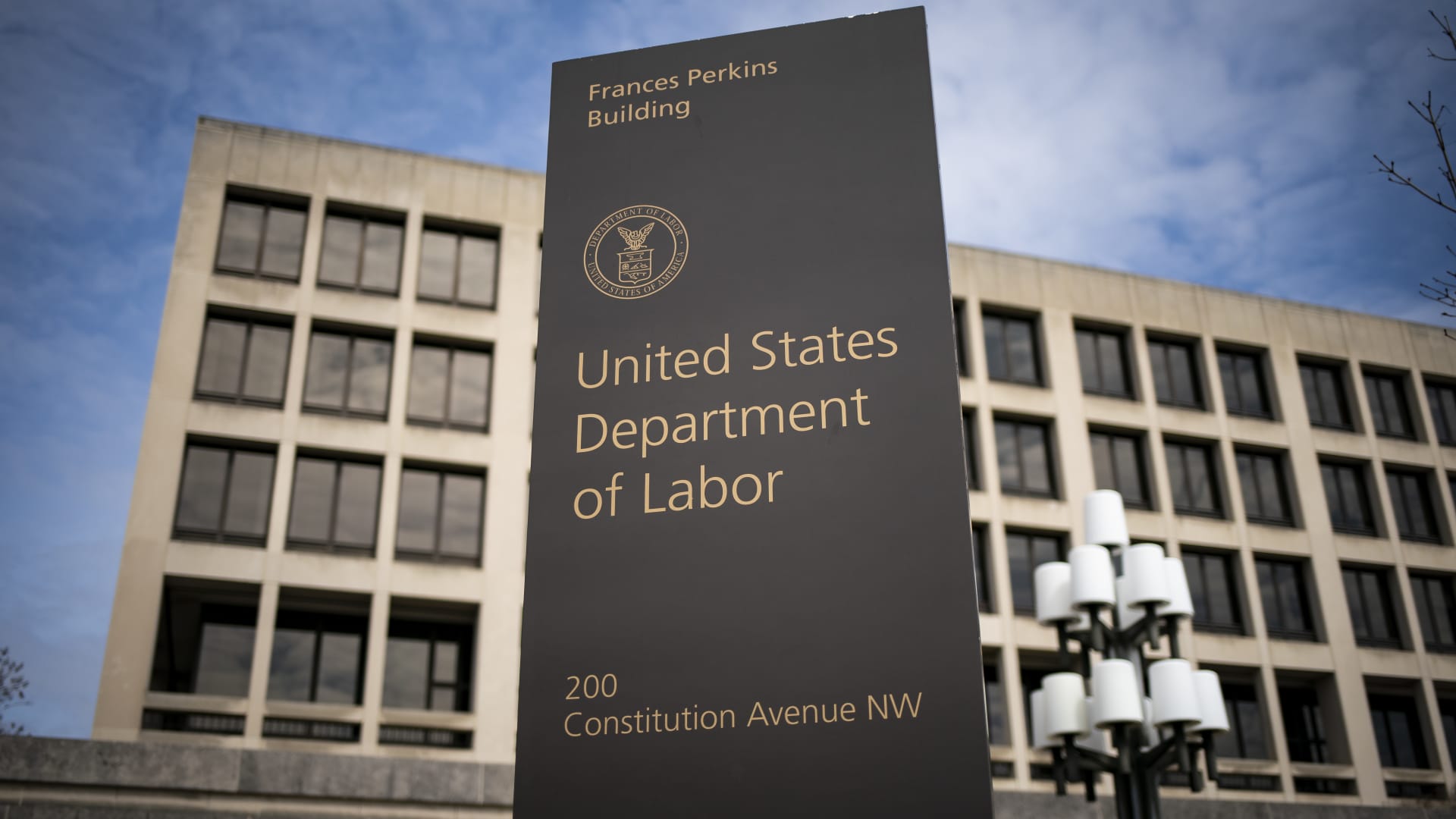
The U.S. Department of Labor headquarters in Washington.
Al Drago/Bloomberg via Getty Images
The Biden administration issued a final rule on Tuesday that cracks down on the investment advice that advisors, brokers, insurance agents and others give to retirement savers.
The U.S. Department of Labor regulation — which follows a rule proposal in October — aims to ensure that investment recommendations are in savers’ best interests, according to agency officials.
In legal terms, the final rule expands the scope of when a broker, advisor or other intermediary must act as a “fiduciary,” meaning they are required to give advice that puts the client first.
The final rule takes effect on Sept. 23. It takes up the mantle of a prior effort by the Obama administration to rein in conflicts of interest in retirement accounts. That Obama-era “fiduciary” rule, which experts say was broader than Biden’s, was killed in court.
Current retirement rules don’t provide adequate protections to savers, Labor Department officials said during a press call Tuesday.
Often, advice is tainted by “significant conflicts of interest” and in many circumstances there’s “no obligation” to act in retirement customers’ best interests, said Lisa Gomez, assistant secretary of the Employee Benefits Security Administration.
“That’s not right,” Gomez said.
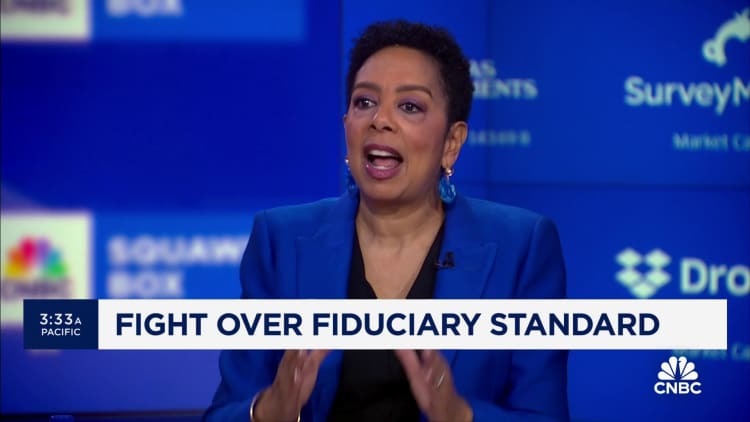
The Labor Department is trying to rein in bad actors relative to two big areas of advice: rollovers from 401(k) plans to individual retirement accounts and purchases of insurance products like annuities, according to retirement and legal experts.
In certain instances, conflicts of interest may allow financial professionals to recommend a transaction that pays them a higher fee but isn’t necessarily best for the client. Such a dynamic can “chip away” at Americans’ savings, Gomez said.
The Council of Economic Advisers estimates Americans lose up to $5 billion a year due to conflicts of interest relative to one insurance product, an indexed annuity.
“For too many people, the retirement plan savings they have through their job are by far the single biggest sources of savings they have,” Gomez said. “These important and tax preferred savings deserve protection, and it is the Department of Labor’s job to make sure they are protected.”
The amount of 401(k)-to-IRA rollovers is ‘astronomical’
The final rule doesn’t differ significantly from the Biden administration’s initial proposal, Labor officials said.
Its elements kick in over two phases.
Starting Sept. 23, the financial industry must acknowledge fiduciary status when working with clients and adhere to “impartial conduct standards.”
Those standards mean financial professionals, when giving personalized investment advice to customers, have an obligation to be prudent, loyal and truthful and charge reasonable fees, for example, Labor officials said.
The remaining parts of the rule kick in a year later, in September 2025, officials said.
More from Personal Finance:
Most retirees don’t delay Social Security benefits
IRS waives mandatory withdrawals from certain inherited IRAs
Women turning ‘peak 65’ may be financially vulnerable
Americans rolled about $779 billion from 401(k)-type plans into IRAs in 2022, according to data cited in a Council of Economic Advisers analysis. Rollovers are common upon retirement, and the annual rollover dollar sum has grown as more baby boomers enter their retirement years.
“The amount of money being rolled over is astronomical,” said Andrew Oringer, partner and general counsel at the Wagner Law Group.
“That juxtaposition of an enormous amount of money and a compensation system that can incentivize the seeking of the rollover without regard necessarily to the best interest of the participant, is something that has concerned the Department of Labor,” Oringer said.
Meanwhile, industry groups say the regulation isn’t necessary and would harm the very retirement savers the Labor Department is trying to protect.
In a memo issued ahead of the final rule’s publication, the American Council of Life Insurers, a trade group, said the new regulation was shaping up to be “alarmingly similar to the Department’s 2016 regulation” under President Obama.
Before being overturned, that rule caused more than 10 million investor accounts with $900 billion in total savings to lose access to professional financial guidance, ACLI said.
Additionally, federal and state rules governed respectively by the Securities and Exchange Commission and National Association of Insurance Commissioners already offer “robust” consumer protections for retirement savers, ACLI said.
However, there appears to be concern from the Labor Department that the “reach and substance” of those regulatory schemes are “insufficient” in the retirement content, and the agency is trying to “level the playing field,” Oringer said.
Labor officials also said Tuesday that the final fiduciary rule differs significantly from the Obama-era regulation.
“We have done our level best to write a rule that takes the teaching of the Fifth Circuit [Court of Appeals], the lessons we learned from the [public] comments,” and draft a rule that protects investors without putting “undue burden” on the financial industry, said Timothy Hauser, deputy assistant secretary for program operations at the Employee Benefits Security Administration.


Personal Finance
Next-Generation Retirement Planning: Managing Longevity Risk and Variable Income Streams


U.S.- Canada Trade Talks Collapse; Carney Says Retaliatory Tariffs Begin September 8

Flock Cameras and the Future of Public Security

AI Infrastructure Boom Hits Physical Limits: Power, Financing, and Supply Chain Strain

Armanino adds Strategic Accounting Outsourced Solutions

New 2023 K-1 instructions stir the CAMT pot for partnerships and corporations

Tax Strategy: Employee Retention Credit update
-

 Stock News1 week ago
Nvidia Q2 FY2027 Earnings beats Wall Street Expectation with Record $96.2 Billion Revenue
-
 Technology5 days ago
AI Infrastructure Boom Hits Physical Limits: Power, Financing, and Supply Chain Strain
-
 Technology3 days ago
Flock Cameras and the Future of Public Security
-
 Economics3 days ago
U.S.- Canada Trade Talks Collapse; Carney Says Retaliatory Tariffs Begin September 8