Connect with us

Accounting

Longtime Apple CFO Luca Maestri to take on smaller role

Published

on

Longtime Apple Inc. chief financial officer Luca Maestri will step down from the job at the end of the year, handing the role to top deputy Kevan Parekh after more than a decade.

Parekh, 52, will become CFO on Jan. 1 in what Apple described as a “planned succession.” Maestri, who has been CFO since 2014, will remain at Apple in a reduced position, continuing to oversee information technology and real estate functions, the company said Monday.

The 60-year-old Maestri was a steward of Apple’s finances in the post-Steve Jobs era and a familiar voice on the company’s conference calls. During his tenure, Apple became more of a services provider, with that category accounting for much of its revenue growth. The Italian-born executive will continue to report to chief executive officer Tim Cook in his new position. 

Parekh, meanwhile, will replace Maestri on Apple’s executive team and report to Cook as well. 

“Kevan has been an indispensable member of Apple’s finance leadership team, and he understands the company inside and out,” Cook said in a statement. “His sharp intellect, wise judgment and financial brilliance make him the perfect choice to be Apple’s next CFO.”

Parekh has been at Apple for 11 years and joined around the same time as Maestri. He currently oversees financial planning, investor relations and market research functions. He took on more responsibility late last year, when Maestri’s other top deputy — Saori Casey — stepped down. She later joined Sonos Inc. as its CFO.

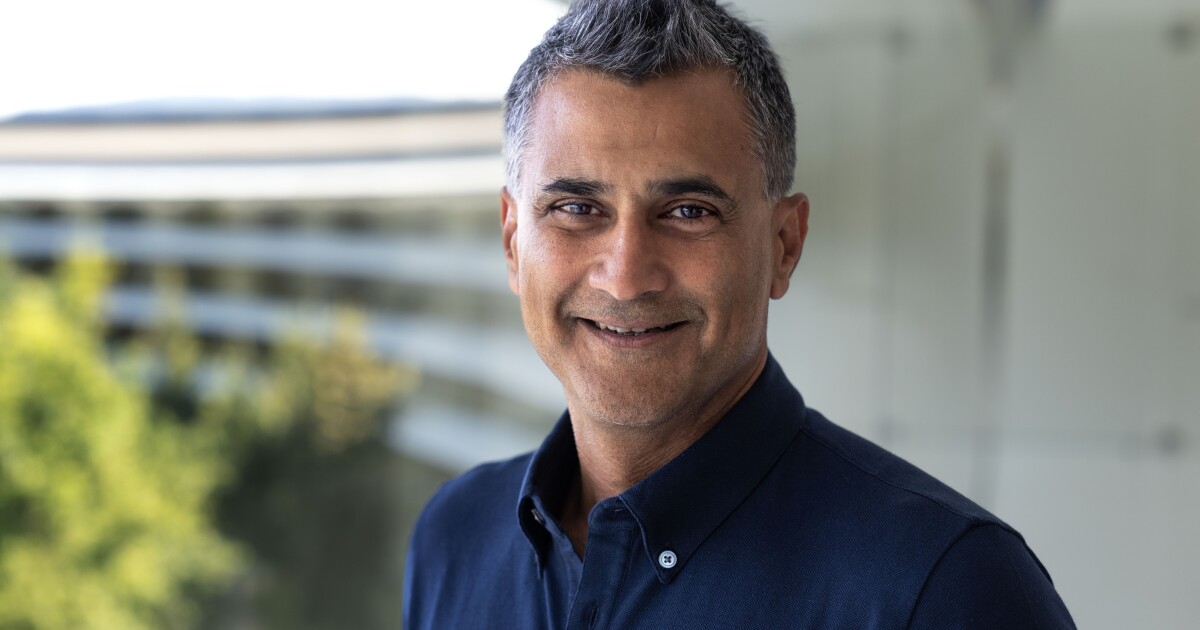
Apple's Kevan Parekh will become CFO on Jan. 1, 2025.
Apple’s Kevan Parekh will take the CFO job on Jan. 1.

Brooks Kraft/Apple/Source: Apple

Maestri had been grooming Parekh for the CFO role during the last several months, and Bloomberg News reported in May that Apple had been preparing to name Parekh as its next finance chief. Parekh also has increasingly attended private meetings with Apple financial analysts and partners. Maestri said Monday that he has “enormous confidence” in his successor.

Apple’s Kevan Parekh will take the CFO job on Jan. 1. Apple shares fell as much as 1.7% in late trading, but regained most of the ground. The transition will likely be a smooth one, according to Bloomberg Intelligence analysts Anurag Rana and Andrew Girard. The change “appears to us to be part of a normal management-planning move,” they said in a note.

Maestri’s shift to a smaller role at the company follows a recent pattern for executives there. When Phil Schiller stepped down as marketing chief in 2020, he decided to remain at Apple and now leads a smaller portfolio that includes the App Store. Dan Riccio, head of hardware engineering until 2021, left the company’s management team but still oversees development of the Vision Pro headset.

“We’re fortunate that we will continue to benefit from the leadership and insight that have been the hallmark of his tenure at the company,” Cook said of Maestri. The move marks the second CFO transition during Cook’s tenure, with previous CFO Peter Oppenheimer stepping down in 2014. 

Apple’s management team is likely due for more changes in the foreseeable future. Many of the executives are around 60 years old and have been at the company for decades.

The transition marks the second notable management switch this month. Last week, Apple told employees that Matt Fischer, its vice president in charge of the App Store, will be leaving as part of a reorganization. He’s being replaced by two deputies.

Continue Reading

Accounting

AI-Driven Automation and Continuous Accounting Frameworks

Published

on

The accounting profession is undergoing a fundamental structural transition as enterprise finance departments shift from periodic month-end closes toward automated continuous accounting models. By integrating specialized machine learning algorithms directly into enterprise resource planning (ERP) platforms, chief accounting officers are transforming financial reporting from a retrospective exercise into a real-time operational asset.

The Shift from Periodic Close to Continuous Financial Reporting
Traditional accounting workflows heavily relied on manual data reconciliation, spreadsheet calculations, and multi-week closing cycles at the end of each fiscal period. In contrast, continuous accounting frameworks utilize automated software agents to process, validate, and post transactional data in real time as business activities occur.

Automated bank reconciliation tools cross-reference incoming bank feeds, invoice records, and purchase orders automatically. By resolving transactional variances instantly throughout the month, corporate accounting teams eliminate the traditional workload spikes associated with quarterly and annual closes.

Machine Learning in Audit Trails and Anomaly Detection
Advanced natural language processing (NLP) and machine learning tools are redefining internal audit and financial control environments. Automated systems analyze 100% of general ledger entries, identifying anomalous transactions, duplicate payments, and unauthorized journal entries in real time.

Rather than relying on random statistical sampling, corporate internal auditors can focus their attention on high-risk flags automatically surfaced by algorithmic monitoring platforms. This continuous risk assessment strengthens internal controls over financial reporting (ICFR) and significantly reduces fraud risk.

Evolving Roles for Accounting Professionals
As routine data entry and manual reconciliation tasks become fully automated, the skill set required for accounting professionals is shifting toward data analysis, system design, and strategic business advisory.
– Systems Governance: Accountants are increasingly responsible for monitoring algorithmic accuracy and managing data integration pipelines.
– Business Partnership: Finance professionals leverage real-time financial dashboards to advise operational leaders on margin management and working capital allocation.
– Regulatory Compliance Management: Accounting teams utilize automated platforms to ensure compliance with dynamic tax codes and international accounting standards.

Core Implementation Recommendations
1. Deploy Automated Reconciliation Tools: Integrate continuous transaction processing modules into existing enterprise ERP architectures.
2. Establish Algorithmic Governance Controls: Implement strict internal testing protocols to ensure automated accounting rules comply with GAAP/IFRS standards.
3. Reskill Accounting Teams: Invest in training finance staff on data analytics, workflow automation, and predictive financial modeling.

Continue Reading

Accounting

Global ESG Reporting Standards and Double Materiality Compliance

Published

on

Corporate accounting departments face expanding reporting expectations as international sustainability disclosure standards achieve regulatory enforcement across major global jurisdictions. Chief Accounting Officers (CAOs) and corporate controllers are establishing rigorous internal accounting controls to treat Environmental, Social, and Governance (ESG) metrics with the same data precision, auditability, and governance as traditional financial statements.

Regulatory Harmonization Under Global Sustainability Frameworks
The implementation of standardized sustainability reporting frameworks—notably rules established by international sustainability accounting boards—has created unified expectations for public and large private enterprises. Corporations must report standardized metrics covering greenhouse gas emissions (Scope 1, 2, and material Scope 3), energy utilization, workforce demographics, and supply chain governance.

In Europe and other participating international jurisdictions, double materiality principles are mandatory. Under double materiality, organizations must report both how external sustainability risks impact corporate financial performance, and how internal corporate operations affect surrounding environmental and social structures.

Integrating Sustainability Metrics into Core ERP Systems
To provide auditable non-financial data, enterprise organizations are integrating specialized carbon accounting and ESG management platforms directly into core ERP systems. Automated data collectors capture energy utility invoices, logistics fuel consumption metrics, and vendor compliance records in real time.

Establishing automated, traceable data pipelines ensures that non-financial reporting is supported by clear audit trails. This structured approach allows external financial auditors to provide reasonable assurance on sustainability disclosures during annual corporate reporting cycles.

Financial Impacts and Capital Market Disclosure
Accurate ESG reporting directly influences corporate cost of capital and institutional credit ratings. Commercial lenders and institutional asset managers systematically incorporate sustainability metrics into risk pricing models. Companies that demonstrate transparent, verifiable progress in operational energy efficiency and climate risk mitigation benefit from expanded access to green bond markets and lower debt pricing.

Action Steps for Accounting Leadership
1. Implement Double Materiality Frameworks: Conduct comprehensive assessments to identify material financial and operational sustainability metrics.
2. Build Auditable Non-Financial Data Pipelines: Automate ESG data collection within core accounting software to ensure data integrity.
3. Align Sustainability with Annual Financial Filings: Prepare non-financial disclosures concurrently with financial statements to satisfy regulatory audit expectations.

Continue Reading

Accounting

Modernizing Internal Controls: Machine Learning and Continuous Monitoring in Auditing

Published

on

Internal audit departments and corporate risk managers are modernizing internal control frameworks by shifting from periodic sampling techniques to continuous monitoring and machine learning analytics. As operational data volumes increase across enterprise organizations, automated control testing ensures financial integrity, prevents corporate fraud, and streamlines annual audit engagements.

The Limitation of Periodic Audit Sampling
Historically, internal and external auditors evaluated internal controls by reviewing random samples of financial transactions—often analyzing less than five percent of total ledger entries. In complex enterprise environments, periodic sampling methods carry inherent risks of overlooking localized financial misstatements, unauthorized disbursements, or operational control breakdowns.

In 2026, progressive internal audit functions are utilizing automated continuous monitoring platforms that evaluate one hundred percent of financial transactions in real time. Continuous control auditing systems continuously monitor general ledger entries, procurement approvals, and expense reimbursements across all operating subsidiaries.

AI-Powered Fraud Detection and Anomaly Identification
Machine learning models trained on historical corporate financial data excel at identifying subtle transactional anomalies that indicate potential fraud or operational error. Automated systems instantly flag duplicate invoice payments, unapproved vendor creation, unusual journal entry timing, and unauthorized override of authority thresholds.

When an anomaly is detected, the automated auditing platform generates an instant risk alert, allowing internal audit teams to investigate root causes immediately. Early detection prevents minor operational errors from escalating into material weaknesses in financial reporting.

Streamlining External Audit Preparation
Continuous internal control monitoring delivers significant benefits during annual external financial audits. External audit firms can review continuous audit logs and automated control testing documentation, reducing the time required for manual field testing.

This integrated approach lowers overall audit compliance fees, reduces administrative burdens on corporate accounting staff, and provides senior management and audit committees with real-time visibility into the organization’s overall risk profile.

Core Implementation Guidelines
1. Transition to 100% Data Testing: Replace legacy sampling methods with automated continuous audit monitoring systems.
2. Deploy Anomaly Detection Algorithms: Implement machine learning models to identify unauthorized transactions and operational control overrides.
3. Align Internal and External Audit Workflows: Coordinate continuous control testing protocols with external auditors to optimize annual compliance cycles.

Continue Reading

Trending