Connect with us

Finance

MAS sets up review group in bid to revive its SGX development

Published

on

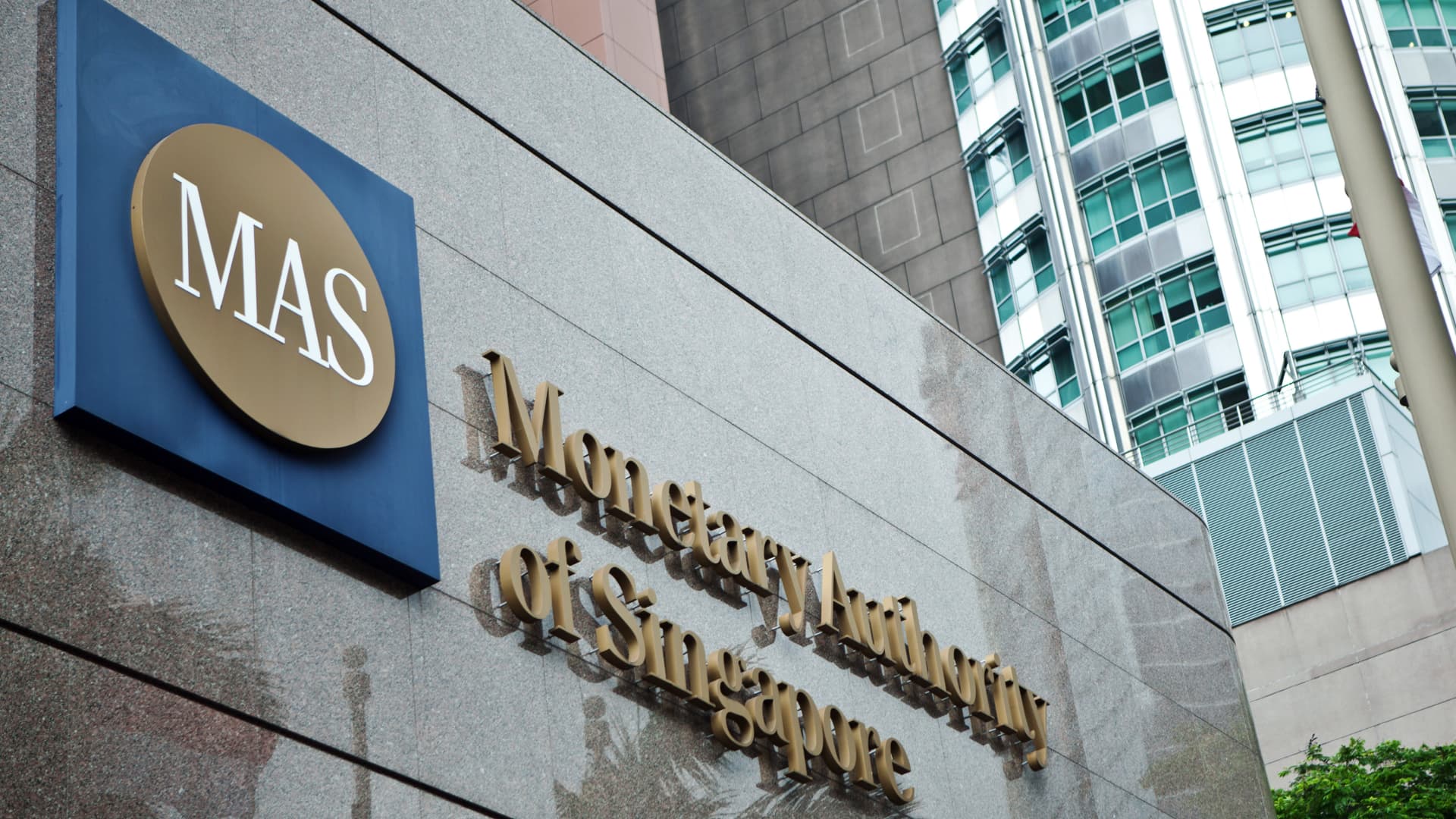
Signage for the Monetary Authority of Singapore (MAS) is displayed outside the central bank’s headquarters in Singapore.

Sam Kang Li | Bloomberg | Getty Images

Singapore’s central bank has established a task force to bolster the city-state’s stock market.

The Monetary Authority of Singapore announced that the review group will evaluate measures to “improve the vibrancy” of the Singapore equities market.

MAS said on Friday the panel will focus on addressing market challenges, fostering listings, and facilitating market revitalization, as well as enhancing regulations to facilitate market growth and foster investor confidence.

It said another key goal will be to identify methods for encouraging private sector participation, including from capital market intermediaries, investors and listed companies. 

The authority noted that a “dynamic equities market is an important part of the capital formation value chain,” and that a liquid market enables companies to not only access capital as they expand, but also “allows asset owners and the investing public to participate in the growth of quality companies.”

“Improving the attractiveness of Singapore’s equities market can therefore enhance Singapore’s standing as a vibrant enterprise and financial hub,” the MAS said, adding that this will also “[complement] Singapore’s innovation and start-up ecosystem, private markets, as well as asset and wealth management sectors.”

Stock Chart IconStock chart icon

hide content

Despite the Straits Times Index rising in three of the last four years including 2024, Singapore’s stock market has been long plagued by thin trading volumes and more delistings than listings. This has led observers to describe the exchange as “boring,” “unexciting” and even once in 2021, a “zombie” bourse.

Turnover velocity at the SGX, a measure of market liquidity, stood at 36% for the whole of 2023, compared to 57.35% at the Hong Kong Exchange in the same period, and 103.6% at the Japan Exchange.

Analysts who previously spoke to CNBC outlined ways to revive interest in the SGX, including taking lessons from “value up programs” in Japan and South Korea.

The review group announced Friday will be chaired by Chee Hong Tat, Singapore’s second minister of finance, and also include members like Koh Boon Hwee, the current chairman of the SGX.

Continue Reading

Finance

Treasury Yields Rise as Fed Cut Expectations Shift

Published

on

Treasury Yields Rise as Fed Cut Expectations Shift

Fixed-income markets recorded significant re-pricing during the week ending July 25, 2026, as a convergence of strong labor market metrics and surging energy costs drove U.S. Treasury yields higher across all maturities. The benchmark 10-year Treasury yield climbed toward 4.70%, reaching its highest point in several months. Institutional bond investors rapidly adjusted portfolio durations as expectations for near-term interest rate cuts by the Federal Reserve faded in response to inflation concerns.

The upward shift in sovereign yields reflects a broader fundamental reassessment of global monetary policy. Earlier in the quarter, money markets had priced in a series of rate reductions designed to support economic activity. However, with initial jobless claims falling to 187,000 and crude oil breaching $100 per barrel, fixed-income traders are pricing in a ‘higher-for-longer’ interest rate environment. The inversion between short-term Treasury bills and long-term bonds narrowed, indicating a shift toward term premium expansion.

Rising Treasury yields present both challenges and opportunities for institutional wealth managers. While commercial lenders and mortgage origination volumes face headwinds from elevated borrowing costs, fixed-income investors are locking in attractive real yields on high-quality sovereign and investment-grade corporate bonds. Institutional debt issuers, conversely, are recalibrating their capital structures, opting for shorter-term refinancing instruments or private credit facilities to avoid committing to elevated long-term coupon rates.

Navigating the current bond market landscape demands strict duration management and credit selection. Wealth advisors recommend maintaining flexible fixed-income allocations, combining short-duration Treasuries with inflation-protected securities (TIPS) to shield capital against potential energy-driven inflation spikes while earning dependable nominal income.

Continue Reading

Finance

Private Credit Expansion Transforms Corporate Loans

Published

on

Private Credit Expansion Transforms Corporate Loans

Private credit markets reached a pivotal milestone during the week ending July 25, 2026, as non-bank direct lending consortiums captured a record share of middle-market corporate debt originations. With commercial banks maintaining conservative credit standards and public bond yields remaining elevated, corporate borrowers are increasingly turning to private fund managers for customized capital solutions. This expansion marks a permanent structural shift in enterprise finance, establishing private credit as a primary pillar of institutional corporate liquidity.

The acceleration of private credit deals is driven by speed, deal certainty, and flexible terms. Unlike traditional syndicated bank loans that require lengthy underwriting, credit rating approvals, and public roadshows, private direct lenders can structure tailored financing packages within days. Middle-market firms facing upcoming debt maturities are utilizing private debt facilities to execute recapitalizations, strategic acquisitions, and growth capital deployments without risking execution delay in public markets.

However, financial regulators and central bank supervisors are scrutinizing the sector’s rapid growth. Supervisory agencies are evaluating potential systemic risks associated with non-bank leverage, valuation transparency, and liquidity mismatches during economic downturns. Despite regulatory interest, major pension funds, insurance firms, and sovereign wealth entities continue to expand capital allocations to private credit funds, attracted by reliable floating-rate yields that outperform public fixed-income benchmarks.

As private credit matures into a dominant asset class, corporate chief financial officers must evaluate non-bank lenders alongside traditional banking relationships. Direct lending partnerships provide valuable balance sheet resilience, enabling companies to secure flexible financing terms even during periods of public market turbulence.

Continue Reading

Finance

Tokenized Debt Shifts How Corporate Manage Short Term Liquidity

Published

on

Tokenized Debt Shifts Corporate Liquidity

The landscape of institutional debt markets is undergoing a profound structural shift on July 21, 2026, as major corporate issuers and commercial banks rapidly accelerate the deployment of tokenized debt instruments. Data published by leading capital market consortiums indicates that primary issuances of digital commercial paper and tokenized corporate bonds have reached record volumes this month. By moving legacy debt origination, underwriting, and secondary distribution onto permissioned distributed ledgers, corporate treasurers are unlocking unprecedented operational flexibility and instantaneous cross-border liquidity.

The adoption of tokenized debt is fundamentally altering how enterprise balance sheets manage short-term liquidity needs. Traditional corporate bond settlement cycles historically required multi-day clearing processes involving numerous intermediaries, custodial entities, and clearinghouses. Through programmable smart contracts on distributed ledgers, issuers can now execute atomic settlement—enabling continuous, 24/7 access to institutional capital pools. This instantaneous clearing mechanism drastically reduces counterparty risk, eliminates costly settlement friction, and allows treasury teams to dynamically optimize working capital in real time.

A major catalyst driving this institutional migration is the establishment of comprehensive digital asset regulatory frameworks across major financial hubs. Clear legal guidelines regarding ledger-based securities ownership have provided institutional compliance officers with the regulatory confidence necessary to transition multi-billion-dollar liquidity facilities onto digital platforms. Furthermore, the integration of automated regulatory reporting directly into token smart contracts simplifies ongoing compliance audits, ensuring that secondary market trades automatically enforce investor accreditation limits and tax withholding requirements.

For chief financial officers and institutional portfolio managers, tokenized debt represents a fundamental evolution in fixed-income strategy. Companies that embrace ledger-based debt structures gain direct access to a broader, global base of digital-native institutional investors while substantially reducing borrowing overhead. As ledger interoperability continues to improve across global exchanges, tokenized debt is poised to become the standard infrastructure for global corporate finance.

Continue Reading

Trending