
Finance
Mortgage rates hit a two-month low this week, remain under 7%


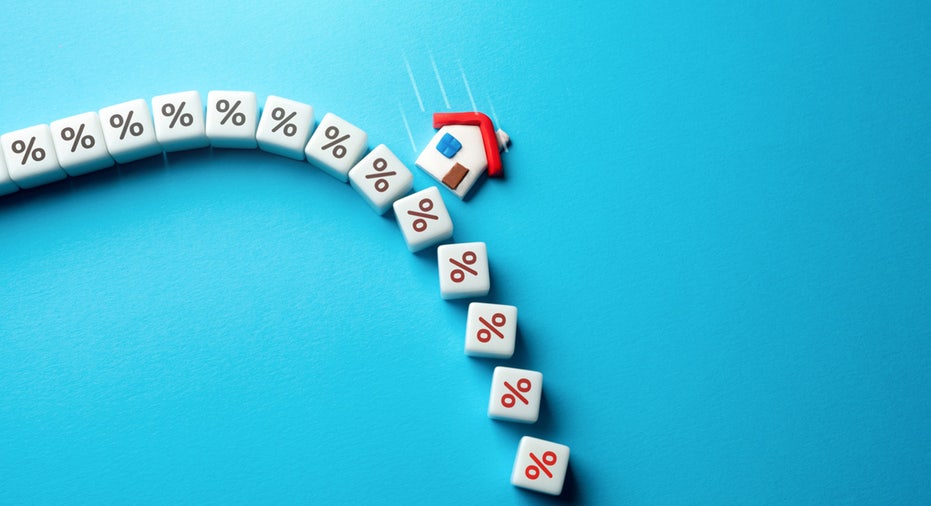
Mortgage rates continued to trend down. (iStock)
There’s good news for potential homebuyers: mortgage rates continued to trend down this week. In January, rates hit 7.04%, the highest level since last May. This week, however, 30-year rates dropped to 6.76% for fixed-rate mortgages, according to Freddie Mac.
“This week, mortgage rates decreased to their lowest level in over two months,” Freddie Mac Chief Economist Sam Khater said. “The drop in mortgage rates, combined with modestly improving inventory, is an encouraging sign for consumers in the market to buy a home.”
Last week, 30-year mortgage rates averaged 6.85%, so this week’s drop in rates is somewhat significant. Rates for 15-year mortgages also dropped this week from 6.04% to 5.94% for fixed-rates.
If you think you’re ready to shop around for a home loan, consider using Credible to help you easily compare interest rates from multiple lenders in minutes.
JANUARY INFLATION GIVES FED MORE REASON TO HOLD ON INTEREST RATE CUTS
Home prices are trickling down in some areas
Home prices are dropping in many areas, although they’re still not anywhere near pre-pandemic prices. About 23% of sellers cut their listing prices in January, Zillow found.
“Homeowners are finally coming back to the market as the effects of rate lock ease over time, but buyers are still struggling with high monthly costs,” Zillow Chief Economist Skylar Olsen said.
“Sellers are in a good position and are willing to make price cuts to close a deal,” Olsen said. “Home equity is near record highs, and the general economy and financial markets are surprisingly strong. Homes are selling faster than they did before the pandemic.”
Home values are still up 44% compared to before the pandemic, with prices rising 2.6% from last year. Despite high home prices and stubborn buyers, more sellers are putting their homes on the market as the “rate lock” effect is beginning to weaken.
New listings rose nearly 12% year-over-year in January. Sellers appear tired of waiting for rates to break and are listing their homes in response to various life events. Zillow found that 78% of sellers were influenced by events like a new job or changing family sizes.
Many of these sellers are still getting more than they originally listed their home for. Nearly 25% of homes sold in December of last year sold for more than the original listing price. That’s higher than the 19% of homes before the pandemic.
If you’re looking to purchase a home, Credible can help you find the best mortgage rate for your financial situation.
CALIFORNIA’S HOMEOWNERS INSURANCE INDUSTRY FACES ROUGH ROAD AHEAD AS WILDFIRES CONTINUE
Renting is still more affordable than homebuying in most places
Despite rising rental costs, renting is still, by-and-large, cheaper than owning a home, according to a Realtor.com report.
Pittsburgh and Detroit are the only two metros with lower average listing prices, and they are two of the most affordable cities to buy. The average price in Pittsburgh is $229,700 and is $239,950 in Detroit. Rent is increasing in both these cities, so buying a home may be cheaper in the long run.
“For most Americans, owning a home is still a big part of the American Dream, yet the lower monthly costs of renting in all but two of the 50 largest markets are a key consideration,” Realtor.com Chief Economist Danielle Hale said. “This relative cost advantage is one of the reasons we expect an increase in renter households and declines in the homeownership rate in 2025.”
Renting may be cheaper than owning, but rent costs are still high, even though rents are technically falling in general across the country. Rent costs in January 2025 are lower than in 2024 and 2023, but they still exceed rent prices from January 2020 by $257, Realtor.com found.
To see if you qualify for a mortgage based on your current credit score and salary, visit Credible, where you can compare multiple mortgage lenders at once.
FHFA ANNOUNCES HIGHER MORTGAGE LOAN LIMITS FOR 2025
Have a finance-related question, but don’t know who to ask? Email The Credible Money Expert at [email protected] and your question might be answered by Credible in our Money Expert column.





Nvidia Q2 FY2027 Earnings beats Wall Street Expectation with Record $96.2 Billion Revenue

Treasury Bond Volatility Forces Bessent to Double Debt Buyback Size as Yields Swing

Nvidia Earnings Preview: What Wall Street Expects From the AI Bellwether’s Q2 Report

Armanino adds Strategic Accounting Outsourced Solutions

New 2023 K-1 instructions stir the CAMT pot for partnerships and corporations

Tax Strategy: Employee Retention Credit update
-

 Economics1 week ago
Nvidia’s Potential $3 Billion SB Energy Investment Could Reshape AI Infrastructure
-

 Economics4 days ago
Top 10 Largest Economies by 2030: IMF & World Bank GDP Projections for Global Powerhouses
-

 Stock News4 days ago
How to understand Intel $15B Stock Offering
-

 Technology1 week ago
U.S.-China AI Competition Intensifies as Washington Pushes Allies to Choose Sides
-
 Stock News1 day ago
Nvidia Earnings Preview: What Wall Street Expects From the AI Bellwether’s Q2 Report
-

 Economics4 days ago
Economic Profile of the United States of America (2026–2030 Horizon)
-

 Leaders3 days ago
Jackson Hole 2026: What the First Symposium Under Fed Chair Kevin Warsh Means for Markets
-

 Economics3 days ago
U.S. National Debt Surpasses $40 Trillion for the First Time: What It Means for the Economy