
Accounting
Musk’s cost-cutting campaign is annoying Treasury staff

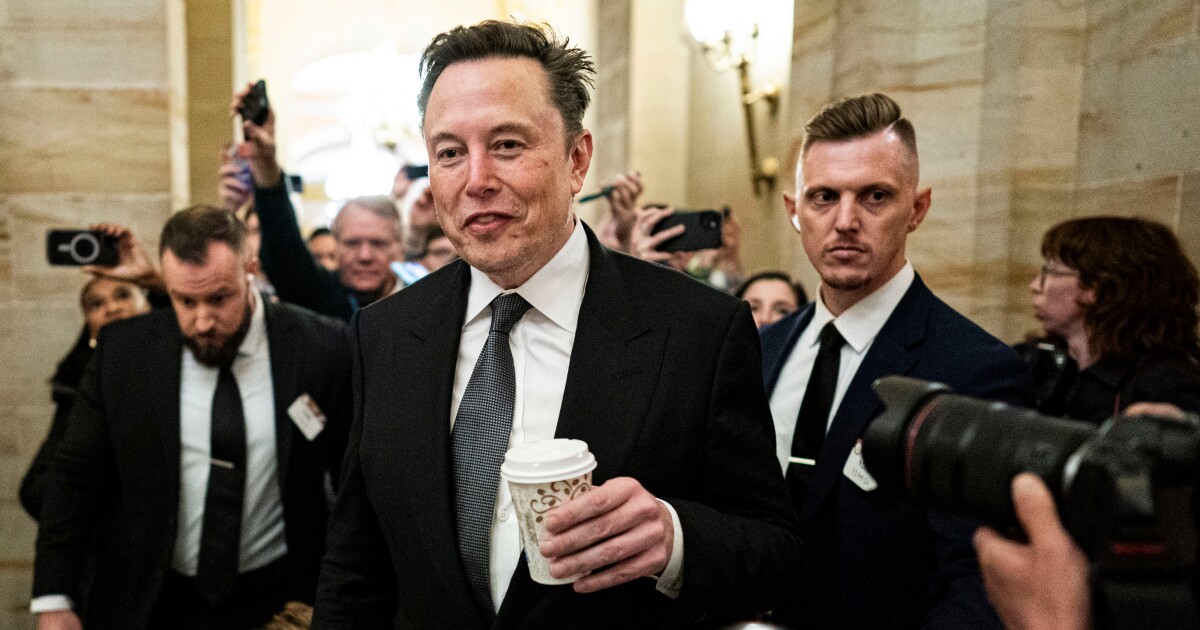

When Elon Musk and his team of young deputies gained access to the Treasury Department computer network that the U.S. government uses to pay its bills, and where private financial data of nearly every American is stored, it caused alarm across the country.
It also seemed to put Treasury Secretary Scott Bessent in the middle of a delicate standoff between bureaucrats at the agency he is charged with leading and President Donald Trump’s loudest advisor.
With Trump’s blessing, Musk, the world’s richest man and chief executive of automaker Tesla Inc., has been leading a tornadic campaign to remake the federal bureaucracy that some critics have called illegal.
Bessent, a figure of the traditional finance world, is more on board with the Musk crew’s mission than has been widely understood.
As Bessent was building out his team in December, he interviewed Tom Krause, who is now a member of Musk’s Department of Government Efficiency, according to a person familiar with the matter. Krause is now digging into Treasury’s systems and data.
Among the topics they discussed during the interview was the very mission in which DOGE is now engaged, the person said.
A group of roughly half a dozen GOP senators reached out privately to the White House to object to Musk’s accessing of Treasury systems, according to people familiar with the conversations. The senators indicated that the moves went beyond DOGE’s stated mission to save the government money.
Yet the secretary they voted to confirm was involved in planning the moves now underway, even recommending Krause for the special government employee status he now is using to plumb Treasury’s servers.
A Treasury spokesperson declined to comment.
Musk’s systematic provocation has put even some allies of the White House in uncomfortable positions. But the relationship with Bessent reflects how the symbiosis between Musk and Trump is holding — for now.
While Trump aides aren’t bothered by Musk’s efforts to reduce outlays, according to people familiar with the dynamic, the manner in which he is doing it is causing some heartburn, since he often plows ahead before the president has previewed his actions.
Overseeing Musk’s efforts has fallen to Trump Chief of Staff Susie Wiles and the White House counsel, while other top Trump aides have tried to steer clear. Wiles and other Trump officials have also had to fix problems Musk created for some of the president’s Cabinet appointees.
So far, Trump has been pleased with the furor Musk has kicked up, people close to the president say, even if he has at times had to reiterate that he — and not the world’s richest man — occupies the Oval Office.
“Sometimes we won’t agree with it, and we’ll not go where he wants to go,” Trump said of Musk this week. “But I think he’s doing a great job.”
Invaluable access
Even if Trump eventually sours on Musk and his frantic effort to rein in federal spending, Musk, who entered government in a prime position to advance his business interests, will come out ahead, say former Trump officials.
By the time Trump tires of Musk, which most Trump advisors see as inevitable, the magnate will have enough information and access to the government to no longer need his compact with the president.
Musk’s rapid-fire moves to peel back financial data and payment systems could be invaluable in the long run, the people said, as it could shed light on pricing and payment data from Boeing Co., with which Musk’s SpaceX has competed for launch business, or tax information for automakers competing with Tesla.
The Treasury Department said in a letter Tuesday to Senator Ron Wyden, an Oregon Democrat, that Musk’s team
Musk’s broad visibility into the government’s finances and operations poses serious questions about the potential for conflicts with his business empire, which in addition to Tesla and SpaceX includes social media platform X and brain-implant maker Neuralink, as well as The Boring Company, a tunneling business.
Musk is classified as a “special government employee,” a temporary designation that in theory limits his term of service to 130 days out of the year, while shielding him from financial disclosures and other ethics requirements imposed on regular federal hires.
“Everyone is working as a team, led by President Trump and his highly respected Chief of Staff Susie Wiles, and any speculation otherwise is pure fantasy pushed by people who have nothing better to do with their lives,” said White House Press Secretary Karoline Leavitt.
Disdaining diversity
Musk’s sweeping moves to downsize the government echo the views of other top Trump officials. The casual denigration of government service in emails that the DOGE team blasted out to encourage federal workers to resign recalled speeches given by Russ Vought, the president’s nominee to run the Office of Management and Budget. Vought has reportedly said his goal is for federal workers to dread coming to work, and
Musk and Trump also share a disdain for diversity, equity and inclusion, or DEI. Among the new regime’s earliest moves was to convene a meeting of all the offices at the headquarters of the Federal Aviation Administration, according to a person briefed on the plan. The only section not invited to the meeting: the FAA’s Office of Civil Rights.
Behind the scenes, Trump officials have had to rein in Musk’s unruliness when it risked creating blowback for other parts of the administration.
Last week, Wiles helped direct efforts to clean up after Musk responded to Senator Todd Young’s reported doubts about the nomination of former Representative Tulsi Gabbard to be the director of national intelligence, according to a person familiar with the matter.
“Todd Young is a deep state puppet,” Musk declared on X. He then walked back the comment two hours later, posting that he and Young had an “excellent” conversation. Young voted to advance Gabbard’s nomination on Tuesday.
Familiar roles
Some of Musk’s DOGE staff have been brought on to do work that echoes tasks they carried out for his companies.
Nicole Hollander, the romantic partner of a Musk lieutenant named Steve Davis, is embedded at the General Services Administration, working on terminating leases for federal office space. Hollander, who has worked in real estate for over a decade, currently serves as real estate director at X Corp., where she similarly aided Musk’s mission of reducing the social media company’s physical footprint.
In coordination with DOGE staffers, GSA’s public buildings commissioner this week directed agency employees to terminate 300 federal leases a day until they reach 3,000, part of DOGE’s plan to “right size” the government portfolio, according to two people familiar with the mandate.
That fast-paced effort will likely put GSA and DOGE on a collision course with lawmakers, who have historically rejected efforts to get rid of buildings in their districts.
Democrats appeared dazed by DOGE’s initial strikes. That was changing this week, as lawmakers joined federal workers rallying outside government office buildings. Increasingly, they are trying to turn Trump against Musk by painting him as a threat to the president’s primacy.
“We don’t pledge allegiance to Elon Musk,” said Senator Chris Murphy, Democrat of Connecticut. “We don’t pledge allegiance to the creepy 22-year-olds working for Elon Musk.”





U.S.- Canada Trade Talks Collapse; Carney Says Retaliatory Tariffs Begin September 8

Flock Cameras and the Future of Public Security

AI Infrastructure Boom Hits Physical Limits: Power, Financing, and Supply Chain Strain

Armanino adds Strategic Accounting Outsourced Solutions

New 2023 K-1 instructions stir the CAMT pot for partnerships and corporations

Tax Strategy: Employee Retention Credit update
-

 Stock News1 week ago
Nvidia Q2 FY2027 Earnings beats Wall Street Expectation with Record $96.2 Billion Revenue
-
 Technology6 days ago
AI Infrastructure Boom Hits Physical Limits: Power, Financing, and Supply Chain Strain
-
 Technology4 days ago
Flock Cameras and the Future of Public Security
-
 Economics4 days ago
U.S.- Canada Trade Talks Collapse; Carney Says Retaliatory Tariffs Begin September 8