
Personal Finance
Paying for college gets increasingly difficult as tuition rises

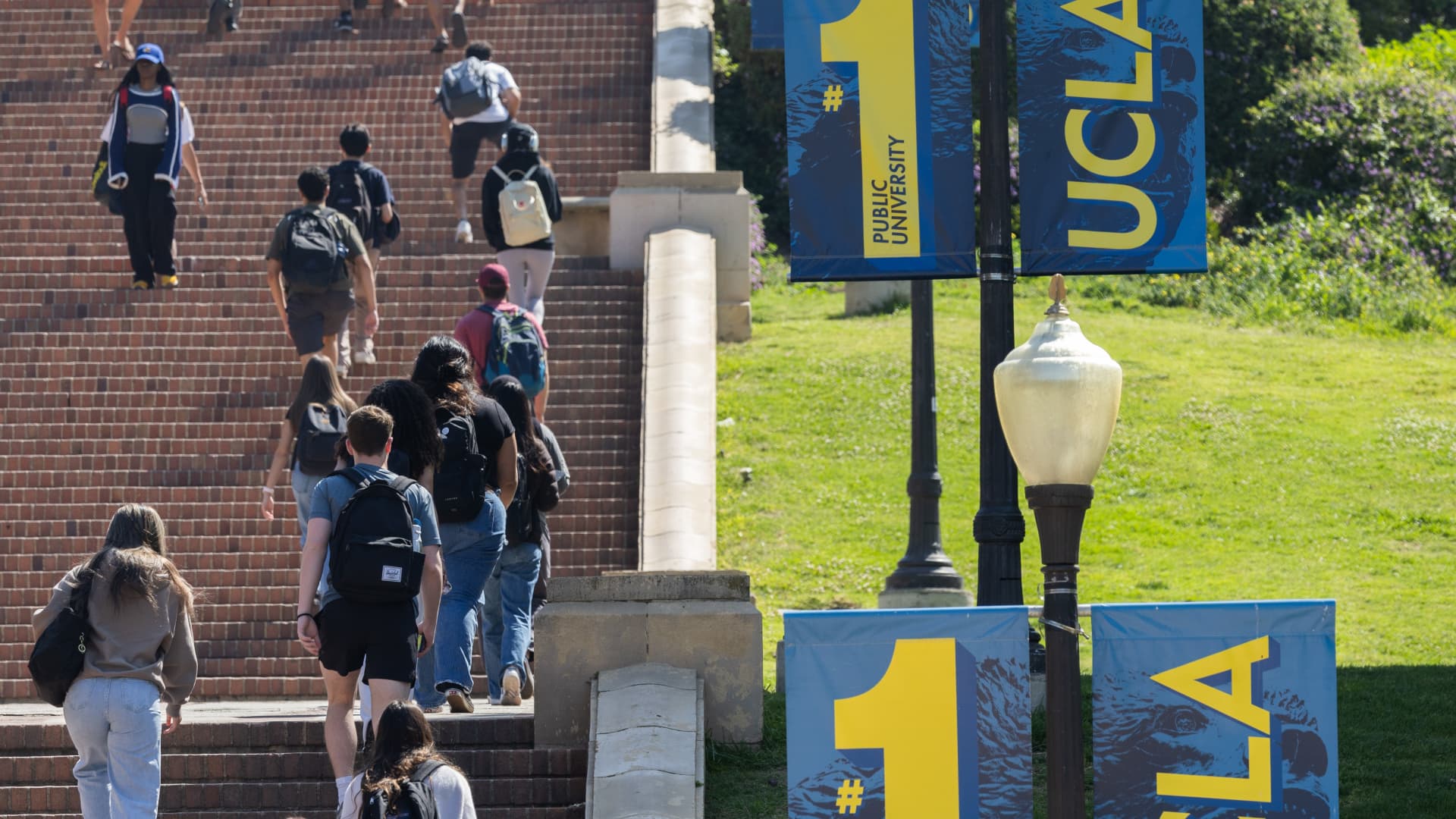
The Janss Steps at UCLA in Westwood, CA on Tuesday, April 8, 2025.
Myung J. Chun | Los Angeles Times | Getty Images
With the start of fall semester just weeks away, sky-high college costs are an extreme pain point for most students and their parents.
A recent report by Citizens Financial Group found a growing “confidence gap.” While 59% of parents said they were confident about managing college expenses when their child was accepted, just 21% said they felt prepared for the actual cost once tuition bills arrived.
“We know the cost of attendance continues to grow, and a lot of forms of federal lending and grants and aid have not kept pace,” said Chris Ebeling, head of student lending at Citizens.
“Families felt like they were going to be OK, but once those tuition bills arrived, that number plummeted,” Ebeling said.
In April and May, Citizens polled more than 1,000 parents of children aged 13 to 29 who are either planning on attending or have some experience with college.
More from Personal Finance:
These college majors have the best job prospects
Student loan forgiveness may soon be taxed again
Student loan borrowers — how will the end of the SAVE plan impact you? Tell us
College costs have risen significantly in recent decades, with tuition increasing 5.6% a year, on average, since 1983 — outpacing inflation and other household expenses, according to a recent report by J.P. Morgan Asset Management.
A growing share of schools are now crossing the $100,000 threshold for total annual cost to attend, and tuition is still rising roughly 5% a year.
How much families really pay for college
To be sure, few families pay a school’s sticker price. As of the 2024-25 academic year, the amount families actually spent on education costs was closer to $31,000, on average, according to Sallie Mae’s annual How America Pays for College report — but that figure is still up nearly 10% from a year earlier.
Sallie Mae polled 1,000 parents of undergraduate students between the ages of 18 and 24, as well as 1,000 undergraduate students.
In most cases, parent income and savings cover about half of college costs. Free money from scholarships and grants accounts for more than a quarter of the costs and student loans make up most of the rest, the education lender found.
Scholarships are a key source of funding, yet only about 60% of families use them, according to Sallie Mae. Those who do receive about $8,000, on average.
“Every dollar counts when it comes to paying for college,” said Rick Castellano, a spokesperson for Sallie Mae. “The last thing you want to do is leave free money on the table.”
There are other “stubborn statistics,” too, Castellano said, which are at odds with the growing cost-consciousness among families.
For example, only 71% of families submitted the Free Application for Federal Student Aid, or FAFSA, which serves as the gateway to all federal aid money, including loans, work study and grants. That’s down from 74% in the previous academic year.

And although most advisors say 529 college savings plans are a “no-brainer” when it comes to financial planning for college — largely because of the tax advantages — fewer than one-third of families utilize them, according to Sallie Mae.
“I think there is generally a lack of awareness around 529 plans,” Castellano said.
Recent data from Credit Karma paints an even starker picture: Fewer than one-quarter of the parents polled said they had a 529 account for their children and 43% said they’ve never heard of a 529 at all.
Roughly 18% said they aren’t contributing because they didn’t realize the funds could be used for education expenses beyond college, such as K-12 private school tuition or trade and vocational programs — not to mention that Donald Trump‘s massive tax and spending package expanded 529 qualified education expenses even further to include educational therapies and tutoring, among other costs, for students starting in kindergarten.
Most experts say 529 plans are often misunderstood and overlooked. But even among families that do have a college plan, and have saved for years, few have enough stashed away to cover the entire cost.
“Even those families that are really well prepared, most families are going to have a financial gap,” Ebeling said.
Another point of contention is the growing share of young adults rethinking their education altogether. The rising cost of attendance and ballooning student loan balances have played a large role in changing views about the higher education system, with students increasingly deciding to opt out.
“The last thing you want, as parents or students, is to feel like higher education is the ultimate goal and you get ready to pay and it’s just not possible,” Castellano said.


Personal Finance
Next-Generation Retirement Planning: Managing Longevity Risk and Variable Income Streams


U.S.- Canada Trade Talks Collapse; Carney Says Retaliatory Tariffs Begin September 8

Flock Cameras and the Future of Public Security

AI Infrastructure Boom Hits Physical Limits: Power, Financing, and Supply Chain Strain

Armanino adds Strategic Accounting Outsourced Solutions

New 2023 K-1 instructions stir the CAMT pot for partnerships and corporations

Tax Strategy: Employee Retention Credit update
-

 Stock News1 week ago
Nvidia Earnings Preview: What Wall Street Expects From the AI Bellwether’s Q2 Report
-

 Accounting1 week ago
SEC’s Semiannual Reporting Proposal Faces Investor Pushback: What CFOs Need to Know
-

 Stock News1 week ago
Nvidia Q2 FY2027 Earnings beats Wall Street Expectation with Record $96.2 Billion Revenue
-

 Finance1 week ago
Treasury Bond Volatility Forces Bessent to Double Debt Buyback Size as Yields Swing
-
 Technology5 days ago
AI Infrastructure Boom Hits Physical Limits: Power, Financing, and Supply Chain Strain
-
 Technology3 days ago
Flock Cameras and the Future of Public Security
-
 Economics3 days ago
U.S.- Canada Trade Talks Collapse; Carney Says Retaliatory Tariffs Begin September 8