
Accounting
Practice Profile: Personal Finance 101 at SD Mayer

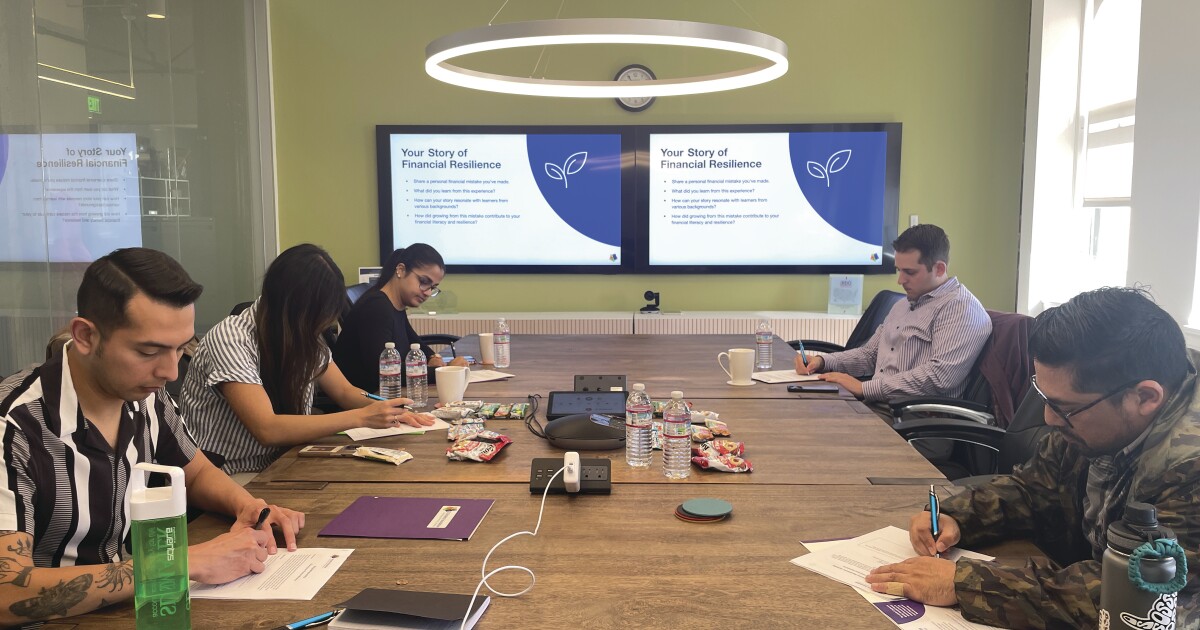
Of all the deliverables Steve Mayer has presented in his long career in accounting, he singles out giving his books on personal finance to his kids’ friends as a highlight.
Mayer has written two books on the subject, and conducted more than 50 presentations on it over the past several years, and when he’s not involved in his day job as founder and managing director of Redwood City, California-based SD Mayer & Associates, his ongoing work in financial education is largely via the 5 Buckets Foundation.
The foundation was named after his first book, “5 Buckets, 4 Shovels, a Beach and a Map.” He shares that and his follow-up, “Adulting 101: A Guide to Personal Finance” with family and friends — it’s a firm-sponsored series based on his metaphorical framework for finances. The buckets represent five asset groups, the four shovels are different financial professionals, the beach is an individual’s life full of sand, which represents money, and the map is a guide to financial security.
After leaving the regional firm he co-founded to establish SD Mayer in early 2013, Mayer was “kicking around the idea of writing a book” based on this concept.
“No one was looking at the holistic approach,” he recalled. “Our company has a team of people in tax, investment, insurance, lawyers — they’re all there. That was the genesis of the book, and this is a great way to serve clients.”
After writing the second book, Mayer founded the nonprofit in 2019 and brought on Victoria Terheyden as president and CEO three years later. The 5 Buckets Foundation provides financial literacy education, mainly through an interactive introductory curriculum that covers the basics of personal finance.
SD Mayer and its wholly owned subsidiary wealth management practice, SDM Advisors, contribute well over 50% of the funding for 5 Buckets, along with resources and office space; as Mayer describes it, the firm and foundation are “separate, but joined at the hip.”

“Most volunteers for the 5 Buckets Foundation come from the firm, and the 5 Buckets Foundation is housed in the offices,” he explained. “The firm provides office space and marketing support, but we are careful it’s a separate organization…. We’re not trying to make money off the foundation but have it as a legacy project of the firm.”
SD Mayer also functions as one of about 15 corporate partners of the foundation that provide support and funds, along with employees who are trained to be educators in the foundation’s workshops.
“It’s a unique opportunity for corporate partners, SD Mayer being one,” said Terheyden. “It’s a tool to help us grow and scale, having a lot of different partners and workshops in the Bay Area and nationally. We have a staff of two doing the teaching, and to broaden the reach, there’s a business opportunity to become a volunteer educator through our training program.”
The foundation has currently trained about 15 volunteers from SD Mayer, who reported an “overwhelming positive response to the experience,” according to Terheyden, who explained anyone is welcome as a volunteer, regardless of knowledge and experience — though typically, as employees of corporate partner CPA firms or banks, many have at least a baseline expertise.
“You sign up for a two-hour training session, and you go into the curriculum and do studying on your own, including strategies to become an effective educator,” Terheyden said. “You go observe workshops in person or online, and from there, you let us know if it’s something you want to do.”
SD Mayer’s participation thus far has been beneficial, according to Terheyden. “For SD Mayer, it’s been terrific, as an engagement tool for employees to give back their time, and develop other skills as well, teaching workshops to college groups, community organizations in the Bay Area or nationally, that they reach with Zoom.”
Workshops vary, though the most popular is a 75-minute course that covers the basics of personal finance. Roughly 80% of all workshop participants are in the 18-to-22-year age range who are beginning their personal finance journeys, though the foundation works with older groups as well.
Currently, Terheyden and her colleague conduct about 60% of the workshops, with the other 40% facilitated by volunteer educators; however, that “could grow to 100%,” she said. “We’re moving in the right direction. The goal is training other people. It’s a movement, not just in teaching, but the importance, hoping to see a movement in society toward that education.”
Movement and momentum
The 5 Buckets curriculum was created to provide the education studies say is lacking in young people, with the foundation’s website displaying key statistics: According to an American Psychological Association study, 92% of respondents say it’s important to learn about personal finance while in high school or college, but only 20% say they would know where to begin with their financial literacy education. And it’s not just young people: The survey found that 64% of U.S. adults feel anxious about money and say that it is a major source of stress.
This emotional aspect is addressed in the foundation’s workshops, Terheyden explained, which include “exploring one’s relationship with money, where that comes from — family, society. Money is a challenging topic so we are aware of the emotional states of a room. The curriculum covers all the basics: building and managing credit; buy now, pay later options, what those mean … budgeting, a tool needed in personal and business life … intro to investing, insurance.”
5 Buckets also focuses on underserved populations, with a couple of projects in the works that Terheyden is particularly enthusiastic about.
“One exciting thing over the last few weeks is a $50,000 grant to work with a current partner in Oakland to create a personal finance curriculum focused on first-generation college students,” she shared. “It’s the regular curriculum, but going deeper with groups that have different experiences. We’re also creating a curriculum for transitional-age foster youth — a population that’s had a tough hand in life and needs these skills more than ever.”
The latter program will specifically address California’s Extended Foster Care Law (AB 12), which allows eligible youth to remain in foster care beyond age 18 up to age 21, with additional requirements and financial implications, like a monthly stipend that the foundation’s course can help advise on.
In addition to expanding to more demographics, 5 Buckets hopes to broaden its overall reach, according to Mayer: “Our goal is to teach 10,000 to 20,000 kids a year.”
Terheyden registers an impressive reach so far.
“We survey all learners and participants in the end on metrics of what they have learned and measure by demand for our workshops,” she explained. “[They say] ‘We were never approached at school, we’ve never done this in a way that’s effective.’ Young people tell it like it is — that they were not taught, are in huge student debt, feel ill-prepared to start life. In college they are given a free T-shirt and hat to sign up for a credit card. All of these concepts need more deep diving. We are making an impact and continue to grow. I hope down the line this is taught robustly in schools and families. But that’s a long time away.”





S&P 500 September Outlook: Tech Rally Holds Index at 7,600

India Unveils ‘Saptadhara’ Reform Agenda Targeting Technology, Youth Skilling, and Growth

S&P 500 Outperforms Amid Strong Corporate Earnings as Treasury Yields Cap Equity Multiples

Armanino adds Strategic Accounting Outsourced Solutions

New 2023 K-1 instructions stir the CAMT pot for partnerships and corporations

Tax Strategy: Employee Retention Credit update
-

 Stock News1 week ago
Nvidia Q2 FY2027 Earnings beats Wall Street Expectation with Record $96.2 Billion Revenue
-

 Technology6 days ago
AI Infrastructure Boom Hits Physical Limits: Power, Financing, and Supply Chain Strain
-

 Economics4 days ago
U.S.- Canada Trade Talks Collapse; Carney Says Retaliatory Tariffs Begin September 8
-
 Stock News3 hours ago
S&P 500 September Outlook: Tech Rally Holds Index at 7,600
-

 Technology4 days ago
Flock Cameras and the Future of Public Security
-

 Insights4 hours ago
Climate Resilience and Offshore Wind and Land Restoration Milestones
-
 Finance4 hours ago
S&P 500 Outperforms Amid Strong Corporate Earnings as Treasury Yields Cap Equity Multiples
-

 Accounting4 hours ago
Mandatory ESG Reporting Standards Demand Standardized Non-Financial Audit Trails