
Accounting
Practice Profile: Providing rare clarity at Accounting for Jewelers

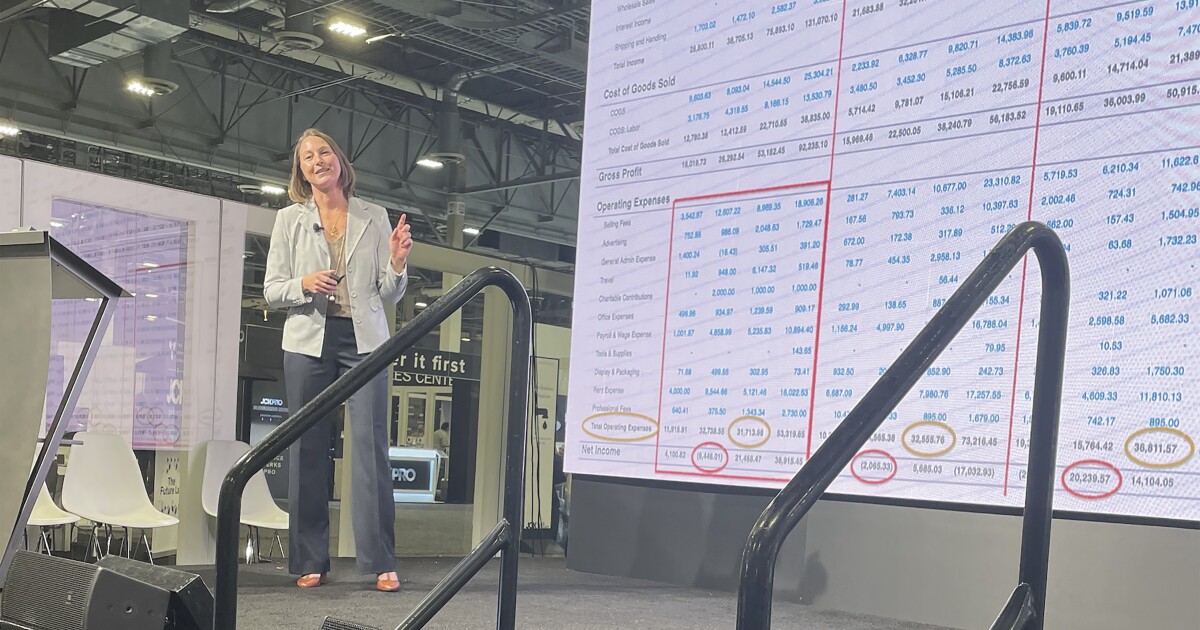
Since she founded Accounting for Jewelers in 2013, Mariel Diaz has provided value for her exclusively jewelry-industry clientele, including one quality they find particularly admirable: a lack of judgment.
According to the firm’s recent midyear survey, Accounting for Jewelers’ approximately 53 clients said they appreciated the practice’s good culture and “nonjudgmental and very caring” attitudes, reported Diaz.
“Business owners can feel really messy when they first come to us,” she explained. “We try to work with them and train them on best practices.”

In addition to an open-minded and supportive environment, clients of Accounting for Jewelers find a like-minded entrepreneur in Diaz, who was a jeweler herself before becoming a bookkeeper. “My first language is jewelry,” Diaz explained. “I grew up in the jewelry industry; I was a gemologist before I was in accounting. I got that creative side from my dad, and my grandma was a bookkeeper, my dad’s bookkeeper, and I helped her with it growing up.”
Both of Diaz’s parents were jewelers, with her dad owning seven boutique jewelry stores and selling wholesale, a path she eventually followed by owning her own jewelry business after training under various independent jewelry designers. But it was the work she did on her father’s books, and moving him from paper ledgers to QuickBooks, that kept her balancing spreadsheets and gemstones.
“It was a side hustle of mine,” she explained. “I did the books for any jeweler I worked for, and I decided I’m a better accountant than jeweler.”
So Diaz ventured into corporate accounting as an accounting assistant, working for a music publishing house in Nashville. Then, after discovering online accounting software Xero and training other jewelers on it, she realized a way to merge her two passions by establishing Accounting for Jewelers.
The firm provides core bookkeeping services including accounting, reconciliation, sales tax and forecasting. And though Diaz stopped providing income tax returns in-house in 2022, it’s on the firm’s long-term radar to bring that service back.
Within the jewelry industry, Accounting for Jewelers’ clients range from brick-and-mortar storefront owners to studio owners to wholesale-focused jewelers to studio artists. And all “have an e-commerce component nowadays,” said Diaz.
The clients also share common pain points, mainly inventory management, according to Diaz, with cash flow also being a challenge. “Jewelry is a very expensive commodity to fund upfront, produce, managing sales and deposits from customers. I understand them first and foremost,” she shared, adding that these relationships help her keep a bond with her father, who passed away: “I essentially work with my dad every day in my clients.”
A deeper understanding
Diaz has the expertise to serve her clients, but also the empathy.
“One of the most common complaints I get from new clients that have worked with multiple accountants over time [is that the accountants] looked at them like they were dumb and didn’t know what they were talking about, and didn’t help them to understand it.”
Accounting for Jewelers, on the other hand, takes the time to explain. “A lot of them are business-savvy,” Diaz said. “They don’t necessarily understand the financials. But being able to relate to them, speak to them caringly, explain things to them in a way they understand — we end up giving them a lot of business strategy on jewelry production, matchmaking with resources. I understand things, from different production types to gemstone dealers, that most accountants wouldn’t understand.”
Diaz enjoys offering this more holistic guidance. “Budgeting and forecasting I love to do,” she said. “It’s something we all need, whether we want it or not.”
Meanwhile, hiring for the practice has been tricky amid a professionwide talent shortage, according to Diaz, who currently oversees a staff of seven that has ranged as high as 12 over the years.
Diaz identifies the problem of finding CPAs or enrolled agents to hire as “everyone wants to work for themselves.”
To help solve for the issue, “I did move offshore, and it was the best decision I ever made,” she shared. “It was a struggle communicating that value to clients, and I feel it’s still an ongoing thing. We educate clients on why we did it and why it is good for them. We offshore in the Philippines and the people are delightful, smart and design-driven. Since COVID, we have struggled with staffing.”
For other firms looking to carve out as specific a vertical as she has, Diaz recommends immersion in the industry,
“Try to learn as much as you can about their business,” she advised. “Go to their industry conferences and trade shows. Eventually be a speaker there if you can. Build up relationships with people in the industry, become a member of nonprofits and charities in the industry. It can be very helpful to network.”
For her part, Diaz plans to boost her accounting acumen, aiming to attain her CPA and CFP licenses, and grow her general knowledge.
“My goal is to improve capacity management,” she said. “I didn’t grow up in a traditional accounting firm, so it’s new to me, improving system efficiencies. My goal long term is that Accounting for Jewelers outlives me.”





S&P 500 September Outlook: Tech Rally Holds Index at 7,600

India Unveils ‘Saptadhara’ Reform Agenda Targeting Technology, Youth Skilling, and Growth

S&P 500 Outperforms Amid Strong Corporate Earnings as Treasury Yields Cap Equity Multiples

Armanino adds Strategic Accounting Outsourced Solutions

New 2023 K-1 instructions stir the CAMT pot for partnerships and corporations

Tax Strategy: Employee Retention Credit update
-

 Stock News1 week ago
Nvidia Q2 FY2027 Earnings beats Wall Street Expectation with Record $96.2 Billion Revenue
-

 Technology6 days ago
AI Infrastructure Boom Hits Physical Limits: Power, Financing, and Supply Chain Strain
-

 Economics4 days ago
U.S.- Canada Trade Talks Collapse; Carney Says Retaliatory Tariffs Begin September 8
-
 Stock News3 hours ago
S&P 500 September Outlook: Tech Rally Holds Index at 7,600
-

 Technology4 days ago
Flock Cameras and the Future of Public Security
-

 Insights4 hours ago
Climate Resilience and Offshore Wind and Land Restoration Milestones
-
 Finance4 hours ago
S&P 500 Outperforms Amid Strong Corporate Earnings as Treasury Yields Cap Equity Multiples
-

 Accounting4 hours ago
Mandatory ESG Reporting Standards Demand Standardized Non-Financial Audit Trails