
Accounting
Recession may reveal new wave of Ponzi schemes

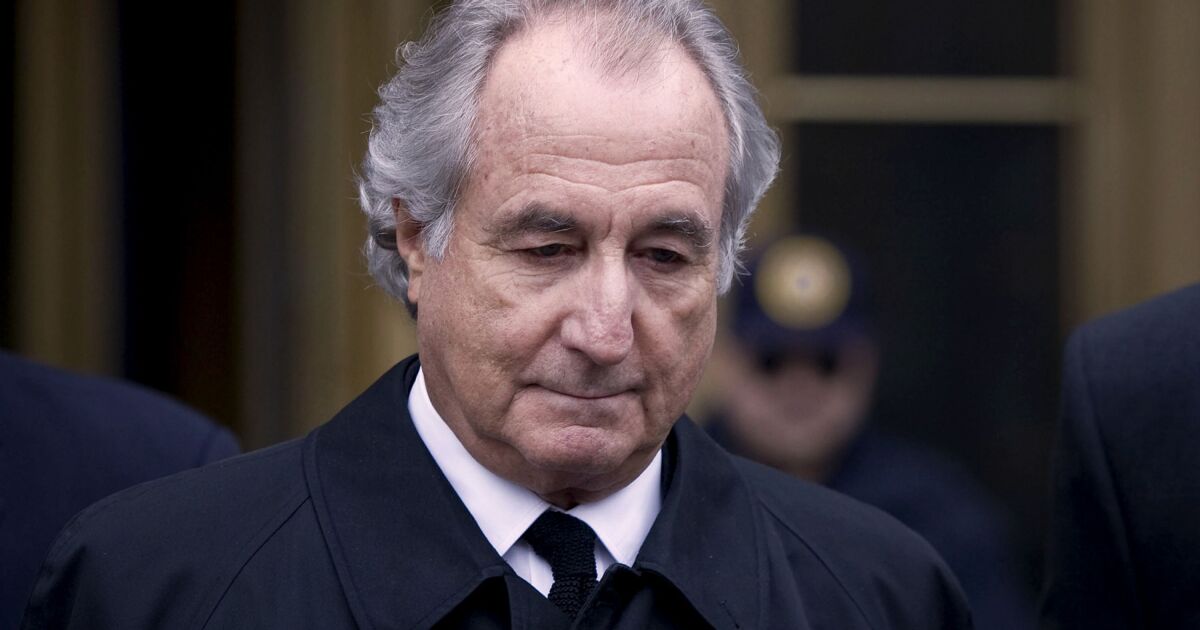
Get ready to spot some frauds.
“Ponzi schemes don’t collapse when the markets are booming. They collapse when the music stops,” warned Jeffrey Schneider, managing partner at law firm Levins Kellogg Lehman Schneider + Grossman, describing how financial frauds typically unravel during recessions and why we should be on high alert.
With recession odds jumping from 23% in January to 36% in March, according to CNBC’s Fed Survey, and J.P. Morgan putting the risk at 40% (likely higher after the latest round of tariff announcements), the economic pressure is mounting — and so is the potential for Ponzi schemes to implode.

Jin Lee/Bloomberg
During recessions, the influx of new investors dries up, while demand for withdrawals rise. “It’s a perfect storm that often reveals the unsustainable foundation of a Ponzi scheme,” according to Schneider. “As we’ve seen time and again — from 2008’s Great Recession to COVID-era fraud — downturns don’t just hurt the market, they expose what’s been lurking beneath it.”
Schneider is a trial attorney who has recovered more than $400 million for defrauded investors, including well-known frauds such as Jay Peak and Mutual Benefits.
“When the economy is strong and investor optimism is high, Ponzi schemes can run for years undetected,” he said. “But when markets turn and recession fears grow, that’s when the house of cards begins to crumble. The influx of new investors dries up, and pressure mounts from existing investors trying to withdraw their money. That combination is deadly for fraudsters, and it’s often how their schemes are finally exposed.”
Ponzi schemes remain a serious issue in the U.S., even after the high-profile collapses of Bernie Madoff, Allen Stanford and Scott Rothstein, Schneider observed.
“In 2023 alone, 66 Ponzi schemes were uncovered, which collectively involved nearly $2 billion of potential losses, according to Ponzitracker,” he explained. “And those are just the ones that have been caught. Many more fly under the radar until, in many cases, economic conditions bring them to light.”
Investors should remain vigilant and be on the lookout for common red flags that may signal a Ponzai scheme, Schneider emphasized. These include consistently high returns that appear unaffected by market conditions. If an investment opportunity seems too good to be true, it probably is, he advised.
“A lack of transparency is another warning sign,” he continued. “If you can’t clearly understand how the investment works or where the returns are coming from, proceed with caution. Difficulty withdrawing funds or pressure to continually reinvest should also raise alarms, as legitimate investments typically allow for straightforward access to your money. It is also important to verify that both the investment products and the individuals offering them are properly registered with the Securities and Exchange Commission or FINRA. Unregistered entities are a major red flag.”
“I’ve seen firsthand how devastating these schemes can be and how important it is to hold bad actors accountable,” Schneider said. “But the best defense is always prevention. In uncertain economic times like these, heightened vigilance is critical.”
Getting your own back
“Ponzi schemes are so prevalent that they have their own set of guidelines,” said Miami CPA Carrie Baron of Carrie Baron & Associates.
For tax years 2018 through 2025, individuals can only deduct casualty or theft losses of personal-use property not connected with a trade or business or a transaction entered into for profit if the loss is attributable to a federally declared disaster.
“But theft losses incurred in a transaction entered into for profit may still be deductible,” she noted. “The amount of the theft loss includes not only the investor’s [unrecovered investment], but also the amounts reported as income from the investment in prior years that were reinvested in the fraudulent investment arrangements, according to the IRS.”
“The defrauded investor can take an ordinary loss of 95% of the loss if they are not seeking recovery,” noted Baron. “The IRS says if you use the safe harbor they won’t challenge the Ponzi deduction.”
The safe harbor under the revenue procedure generally permits taxpayers to deduct in the year of discovery 95% of their net investment less the amount of any actual recovery in the year of discovery and the amount of any recovery expected from private or other insurance, such as that provided by the Securities Investor Protection Corporation.




U.S. Inflation Outlook for 2027

S&P 500 September Outlook: Tech Rally Holds Index at 7,600

India Unveils ‘Saptadhara’ Reform Agenda Targeting Technology, Youth Skilling, and Growth

Armanino adds Strategic Accounting Outsourced Solutions

New 2023 K-1 instructions stir the CAMT pot for partnerships and corporations

Tax Strategy: Employee Retention Credit update
-

 Technology1 week ago
AI Infrastructure Boom Hits Physical Limits: Power, Financing, and Supply Chain Strain
-

 Economics6 days ago
U.S.- Canada Trade Talks Collapse; Carney Says Retaliatory Tariffs Begin September 8
-
 Stock News2 days ago
S&P 500 September Outlook: Tech Rally Holds Index at 7,600
-
 Finance2 days ago
S&P 500 Outperforms Amid Strong Corporate Earnings as Treasury Yields Cap Equity Multiples
-

 Technology6 days ago
Flock Cameras and the Future of Public Security
-

 Insights2 days ago
Climate Resilience and Offshore Wind and Land Restoration Milestones
-

 Accounting2 days ago
Mandatory ESG Reporting Standards Demand Standardized Non-Financial Audit Trails
-
 Leaders2 days ago
India Unveils ‘Saptadhara’ Reform Agenda Targeting Technology, Youth Skilling, and Growth