Connect with us

Accounting

REDW acquires Hatcher Financial | Accounting Today

Published

on

REDW Advisors & CPAs has grown its presence in Arizona, adding Hatcher Financial, a firm based in Phoenix to the Regional Leader.

The deal, announced last week, will increase Albuquerque, New Mexico-based REDW’s Phoenix office to 114 team members, and nearly 350 team members, including 50 principals, across its national and international footprint. Three principals and less than 10 employees are joining from Hatcher and will be based in Phoenix.

Through the acquisition, Hatcher Financial, which provides tax and accounting services as well as a suite of wealth management and financial planning to its clients, will join REDW Wealth LLC, an SEC-registered investment advisory firm subsidiary of REDW Advisors & CPAs with more than $1 billion in assets under management. Financial terms of the deal were not disclosed. REDW ranked No. 6 on Accounting Today‘s 2024 Regional Leaders list of the Top Firms in the Southwest, with $49.73 million in annual revenue.

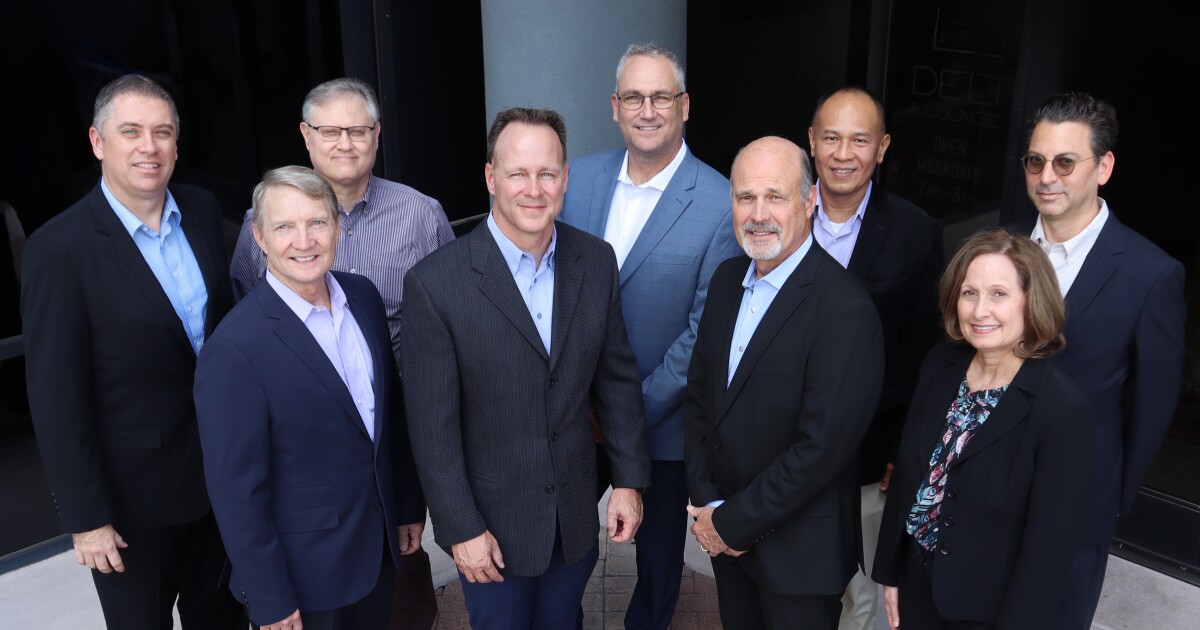
REDW and Hatcher Financial professionals

REDW and Hatcher Financial professionals. Back row (left to right): Robert Elzholz, Dan A. DiPomazio, Byron Wheeler, Albert Cheung and Brian Foltyn. Front row (left to right): Douglas M. Hatcher, James R. Karberg, Thomas C. Ottmar and Lisa Osselaer.

“For the past several years, REDW has undergone a seismic shift in its business model by creating partnerships, acquiring key talent, and investing in technology that allows us to approach our clients’ needs in a more holistic way,” said Kerry Prine, chief operating officer of REDW Advisors & CPAs, in a statement last week. “Today, as a full-service advisory firm, our focus is to continue to excel at traditional tax and accounting functions, but also to offer a wide array of services to complement them.”

REDW offers advisory and specialized expertise to a variety of industries and Tribal communities nationwide. They include cybersecurity; business valuation, forensics and dispute advisory; transaction advisory; specialized state and local tax and incentives services; personal financial planning; human resources consulting and compensation studies; business software and digital decision-making support; outsourced client accounting from bookkeeping and controllership to chief financial officer services; personal financial planning and wealth management bundled with tax planning and compliance; policy and procedures support; and internal audit with a solutions-based consultative approach.

REDW was looking to strategically expand in the market. “REDW’s goal for expansion efforts has been to continue to be indispensable partners in navigating markets, leveraging advanced technology, and driving personal financial and business growth,” said REDW managing principal Steve Cogan in a statement. 

This acquisition is the latest in a series of moves by REDW across its national footprint, including the opening of its first Pacific Northwest office in late 2023 via an acquisition of Oregon-based Grove, Mueller & Swank, P.C., as well as its acquisition of Edwards, Largay, Mihaylo & Co. in Phoenix in 2022. In 2021, REDW added CPA Global Tax & Accounting, a firm in Scottsdale, Arizona, and in 2020, it merged in Human Resources Experience LLC, an Albuquerque-based HR consulting and proactive legal practice.

Hatcher Financial’s 400 clients look to the firm to provide tax, accounting, and financial services rather than a single strategy.

“Since founding Hatcher Financial in 2015, we have applied a disciplined approach, blending wealth management and tax planning, guiding businesses as well as individuals across a wide variety of areas, uncovering unnecessary risks and ensuring that opportunities aren’t missed,” said Douglas M. Hatcher, founder, director of financial planning, and a tax consultant for over 45 years. “Our team has over 100 years of combined financial services, accounting and tax expertise, and provides innovative, tax-optimized wealth management solutions. We are looking forward to expanding our efforts through this opportunity with REDW.”


Continue Reading

Accounting

Continuous Auditing Transforms Corporate ERPs

Published

on

continuous auditing transforms corporate erps

As corporate accounting departments cross the threshold into late July 2026, the adoption of continuous, automated auditing systems has reached a definitive turning point. Driven by advances in artificial intelligence and deep integration with modern Enterprise Resource Planning (ERP) platforms, leading finance organizations are moving away from traditional, periodic post-hoc audits in favor of real-time, 100% transactional verification. This technological transition is redefining internal control environments, reducing compliance costs, and eliminating the structural delays inherent in legacy quarterly closing processes.

Unlike traditional auditing frameworks that rely on statistical sampling—a process that inevitably leaves operational blind spots—continuous auditing software monitors operational data feeds continuously. Every purchase order, electronic invoice, payroll disbursement, and cross-border wire transfer is automatically cross-referenced against established corporate governance parameters, regulatory tax schedules, and anti-fraud algorithms in real time. Anomalies or unauthorized ledger entries are flagged instantly, allowing internal audit teams to investigate and remediate compliance gaps immediately rather than months after the close of a financial period.

The implications for executive financial management are far-reaching. By embedding continuous verification directly into daily transaction workflows, chief financial officers gain uninterrupted visibility into the organization’s true financial standing. Real-time balance sheet auditing eliminates the severe operational bottlenecks associated with month-end and quarter-end financial reconciliations, freeing accounting professionals to focus on strategic financial modeling, tax planning, and capital allocation rather than manual data entry and spreadsheet consolidation.

However, implementing continuous auditing requires accounting leadership to invest heavily in data governance and technical upskilling. Internal audit teams must evolve from manual ledger reviewers into system architects capable of auditing complex algorithms and validating automated data pipelines. Accounting firms and corporate controllers that master continuous auditing will establish a resilient compliance framework capable of meeting stringent international regulatory standards with total transparency.

Continue Reading

Accounting

U.S. Imposes New 50% Tariffs on Canadian Imports Under Rare Legal Provision

Published

on

U.S. Imposes New 50% Tariffs on Canadian Imports Under Rare Legal Provision

WASHINGTON — In a major escalation of cross-border trade friction, U.S. President Donald Trump has signed executive orders imposing new 50% tariffs on a wide selection of Canadian exports, citing discriminatory practices by Ottawa targeting American auto, dairy, and beverage industries.

The new duties, announced Monday, will take effect in 30 days. They target a broad spectrum of consumer and industrial goods—ranging from wine, liquor, and milk products to commercial cement, furniture, clothing, and hockey equipment.

Untested Legal Mechanism

To enact the sweeping measures, the administration invoked Section 338 of the Tariff Act of 1930—a rarely used legal provision allowing the executive branch to levy additional tariffs of up to 50% on foreign nations deemed to discriminate against U.S. commerce.

White House officials noted that Section 338 addresses trade discrimination rather than national security or economic emergencies. The move comes months after prior global emergency tariffs faced legal challenges in domestic courts, signaling Washington’s pivot toward alternate statutory authorities to maintain import duties.

Senior administration officials briefed reporters that the measure directly responds to Canadian provincial bans on U.S. alcohol, restrictions on American vehicle exports, and import quota disparities affecting U.S. dairy and cheese producers relative to third-party trading partners.

“While the administration continues to secure reciprocal trade agreements globally, Canada retaliated against efforts to protect domestic industry,” U.S. Trade Representative Jamieson Greer stated.

USMCA Impact and Carve-Outs

Significantly, the newly ordered 50% duties will apply to designated items even if they otherwise comply with the United States-Mexico-Canada Agreement (USMCA).

However, the administration confirmed key targeted exemptions:

  • Energy products (including oil and natural gas)
  • Potash and critical minerals
  • Fish and seafood
  • Goods already governed by sector-specific duties (such as existing steel and aluminum tariffs)

Administration representatives emphasized that the tariffs do not stem from recent disputes concerning drifting Canadian wildfire smoke, noting that policy options regarding environmental spillover remain under separate review.

Canadian Response and Market Reaction

Following the White House announcement, the Canadian dollar experienced a sharp decline against the U.S. dollar, falling approximately 0.4% during evening trading.

Canadian Prime Minister Mark Carney issued a statement emphasizing that Canada’s earlier counter-duties had merely matched previous U.S. trade actions. “Canada stands ready to engage intensively to address outstanding issues with the U.S. to the mutual benefit of our citizens,” Carney stated, pointing to detailed proposals Ottawa submitted to modernize the USMCA framework.

Ontario Premier Doug Ford took a firmer stance, urging a “dollar-for-dollar” reciprocal response if the measures go into effect on August 19.

With a 30-day implementation window before the duties officially lock in, industry associations and trade groups on both sides of the border are calling for urgent bilateral negotiations to avert further supply chain disruption across North America.

Continue Reading

Accounting

Automated Continuous Auditing: Transforming Compliance and Real-Time Financial Oversight

Published

on

Transforming Compliance and Real-Time Financial Oversight

The traditional accounting paradigm—defined by periodic monthly closures and post-hoc annual audits—is rapidly giving way to continuous, automated financial oversight. As of July 2026, forward-thinking accounting practices and multinational corporate finance departments are leveraging continuous auditing systems powered by advanced machine learning models. These systems monitor operational transactions in real time, shifting audit methodologies from sample-based post-analysis to absolute, 100% transaction-level verification.

The operational advantages of continuous auditing are transformative. Standard auditing procedures historically relied on statistical sampling, which, despite rigorous methodology, inherently left gaps where anomalies or fraudulent transactions could go undetected for months. Modern continuous auditing platforms integrate directly with enterprise resource planning (ERP) databases, instantly cross-referencing purchase orders, invoices, bank feeds, and tax records. Any deviation from established control parameters or unusual transaction behavior triggers immediate flags for internal audit teams, dramatically reducing detection lag from quarters to seconds.

Beyond fraud prevention, continuous auditing fundamentally alters internal reporting and decision-making. Executive leadership no longer has to wait weeks after the close of a quarter to evaluate precise financial standing; real-time verified ledger data provides an uninterrupted view of operating margins, tax liabilities, and cash flow dynamics. This real-time visibility enables corporate controllers to adjust capital allocation strategies dynamically, mitigating liquidity constraints and capitalizing on emerging commercial opportunities far more efficiently than competitors bound to legacy reporting cycles.

However, implementing continuous auditing requires accounting professionals to acquire new analytical capabilities. The role of the auditor is evolving from manual data reconciliation toward system validation, algorithmic model governance, and strategic risk interpretation. Accounting firms and corporate finance departments must invest in continuous technical education, ensuring that audit staff possess the data engineering skills necessary to design, maintain, and evaluate complex automated compliance systems.

Continue Reading

Trending