
Accounting
SEC plans to renew international convergence of accounting, auditing standards

The Securities and Exchange Commission is planning to encourage greater cooperation between U.S. and international standard-setters on accounting and auditing standards as a way to lower costs and complexity for multinational companies, while putting pressure on the International Financial Reporting Standards Foundation to improve its funding and place less emphasis on sustainability standards.
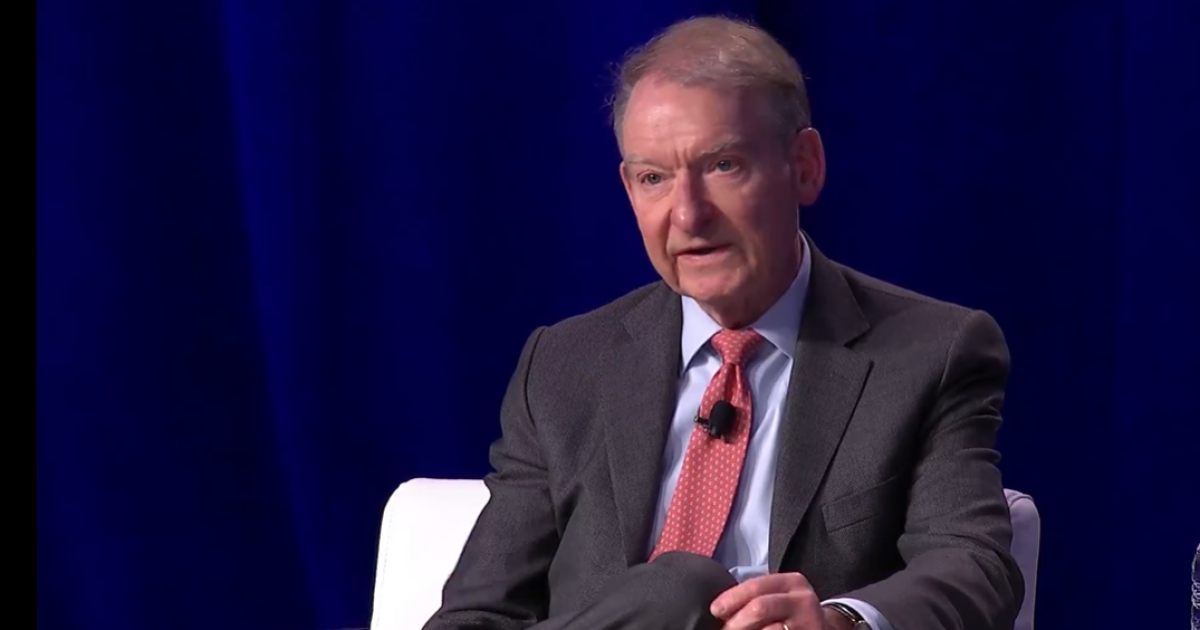
During a session Monday at the AICPA’s Conference on Current SEC and PCAOB Developments in Washington, D.C., SEC chairman Paul Atkins and chief accountant Kurt Hohl discussed their plans with Center for Audit Quality CEO Julie Bell Lindsay.
Hohl, who was formerly global deputy vice chair of EY’s global assurance professional practice before he was
“I told Rich it’s really important for him to work with the IASB on developing international accounting standards, and then vice versa, for the IASB to work with the FASB to learn from one another,” said Hohl. “One of the things that I’m really focused on is to try to get as much cooperation and convergence as we can on standards because it reduces investor confusion. There’s maybe undue costs associated with it, and I think we can basically leverage the work of each body to get developing standards out faster. If the IASB takes up a topic first, and the FASB wants to basically take up a similar project afterward, they can basically learn from the feedback that the IASB has gotten and maybe get out standards on a quicker basis.”
Hohl noted that the big challenge here on the cost side is trying to figure out how to get preparers and other stakeholders participating in the standard-setting process. “Auditors and the big firms and investors are pretty vocal,” said Hohl. “Some of the trade associations for preparers are, but we see individual companies are coming in after the fact and saying, ‘Well, you know, we don’t like the standard. We want you to change it or maybe not follow it, and we have to figure out a mechanism for companies to participate on the front side of the project to inform the FASB so that we can get fairly high-quality standards at a reasonable cost.”
FASB and the IASB had long worked together on converging accounting standards such as revenue recognition in 2014, but ultimately
Subverting accounting
SEC chair Atkins said he wants accountants and auditors to “get back to basics” of focusing on integrity, objectivity and professional skepticism. He criticized the growing focus on issues and services that promote the “financial self-interest of the firms and accountants.”
He criticized some of the stances he has seen from accounting firms in their comment letters to the SEC.
“I do have to say, I want to emphasize this right up front that especially over the last five or so years, I was really shocked at the focus of some of the firms on things that I think would have completely subverted the importance of financial materiality and financial accounting,” said Atkins. “That’s some of the disclosure rules that were pushed forward at the SEC to the chairs of some of the largest firms in the profession that would have subverted [Regulations] S-X, S-K and ultimately U.S. GAAP. Those things are looking to the profession to uphold, and if you can’t even do that in the face of pressure from the government or your investors and even so-called ‘investors,’ frankly politicized investors. I think that’s a real problem. Some of these comment letters that were submitted to the SEC are still on firms’ websites, so I guess you still stand by that. Looking forward, we have a very heavy regulatory agenda coming up next year. But basically, I will look with rather skepticism and discount some of the comments that come from the profession in this area. I think there has to be a real refocus, again, on the basics of financial accounting and auditing.”
PCAOB overhaul
Atkins was asked by Bell Lindsay about the Public Company Accounting Oversight Board after a provision to merge it with the SEC was
Atkins referred to the
“Independence is very important to me,” said Atkins. “With some firms acquiring law firms, and then we are seeing other potential challenges with private equity coming into the profession and rollups of accounting firms and that sort of thing, maybe that’s good for efficiency, but I think we have to be very mindful of independence issues and to keep focus on improving audit quality,” said Atkins. “And I think especially the PCAOB has a real need to not impose unclear standards or make things needlessly complicated, as I think a couple of the proposals in the past would have done. We are, of course, looking at the board and, in July, I accepted Erica Williams’ offer to resign, and we are in the process of looking at the board and the membership and it is a high priority. Christina Ho announced her resignation and she’ll step down. She’s been there since 2021, I believe, and I thought she did a very good job. She basically pushed for meaningful change at the board. She certainly is tenacious. She stands up for her principles, so I really appreciate her service there.”
The recent 43-day government shutdown slowed down the process of finding new PCAOB board members. “We are moving forward after that, obviously,” said Atkins. “That was too bad that impeded our progress, but we’re obviously back at work and look forward to the new year.”
He wants to see greater coordination between the U.S. and the rest of the world on accounting and auditing.
“The one thing that I hear when I go abroad, over and over, in Europe and elsewhere, is that people really look to us with our capital markets to set the pace,” said Atkins. “They are very envious, let’s just say, of our strong investment ethos here in the United States and the willingness of our investors to take risks. Too often, other countries don’t have the capital markets to rely on. They rely on banks for financing new companies and that sort of thing. But I think we have just half of the world’s capitalization represented right here in the United States. Let’s keep that going. And the accounting profession, auditing profession, is incredibly important for all of that. It got started, after all, here in the United States, with foreigners being concerned with where’s our money going that we’re investing in U.S. railroads, and building canals and that sort of thing. That’s what built such a strong and important auditing profession here.”
Coordinating with IAASB
SEC chief accountant Hohl wants to see the U.S. coordinating more with international standard-setters like the International Auditing and Assurance Standards Board and the Monitoring Board that oversees it. He noted that the IAASB approved
“Maybe there’s an opportunity for the PCAOB to shift the inspection program to focus more on the system of quality management, and I think what that will do, in my own personal view, is it will shift the accountability to the leadership of the firm and their systems and processes, and less on individual engagement teams and the partners.”

He wants to see the PCAOB leveraging IAASB standards, similar to how FASB could leverage IASB standards, once there’s a replacement for Williams at the board. In the meantime, he has been working closely with
“One of the things that I’d like to focus on when we get a new chair in place at the PCAOB is to focus on their standard-setting process,” said Hohl. “The FASB just went through their agenda consultation asking practitioners where they think they need to emphasize their time? I think the PCAOB could benefit from that as well. And then again, focused on alignment with the IAASB standards. All the major firms use the International Standards of Auditing as the baseline for their audit methodologies. The AICPA adopted the International Standards of Auditing in their development of their standards. If we can basically get some level of convergence, that will actually, in my view, be beneficial for investors, because it will essentially develop a single set of high-quality standards. It will essentially significantly reduce cost and complexity because if you’re working on a multinational group audit, and you’re doing statutory accounts under ISA standards, and you basically are working on a component for an SEC engagement, you have to basically use a different set of standards, and that adds confusion, cost and the risk for noncompliance. To the extent that we can basically converge the two standards and get them as close as possible, I think that will be beneficial for all stakeholders in the long run.”
Despite the desire for convergence with international standard-setters, he echoed
“The chairman gave a speech in Brussels in September, basically emphasizing the need for high-quality standards,” said Hohl. “Interestingly enough, Paul was on the SEC when the SEC adopted the rules that allowed foreign private issuers using IFRS to use those without reconciliation to U.S. GAAP, and he did so because of his comfort in the IASB’s ability to develop high-quality accounting standards, and his comfort in the functioning of the IFRS Foundation, and particularly the funding associated with that. As of late, as I think most people know, we added the International Sustainability Standards Board to the IFRS Foundation. If you look at funding, most of that money that gets funded to the IFRS Foundation goes to the ISSB, to develop sustainability standards, not accounting standards. I think there’s a concern there as to whether having the ISSB together with the IFRS Foundation, you know, causes them to lose focus on really what’s a priority for our capital markets, and that’s the development of high-quality accounting standards. So we need to take a look at governance there and funding.”
He also wants to see changes with the governance and funding structure of the IAASB and the International Ethics Standards Board for Accountants. “Similarly, we have a fairly cumbersome structure that exists for auditing standards,” said Hohl. “The IAASB, which is the International Auditing and Assurance Standards Board, and IESBA, which sets ethics standards, are governed by a complex structure, where you have the international regulators in the Monitoring Group, and you have the Public Interest Oversight Board, basically is there to lend independence and objectivity because the firms in the accounting profession pay over 90% of the cost to operate those two standards anymore. So there’s a concern that the profession is going to have its own self-interest in hand and basically not develop high-quality auditing standards. The challenge is that the Public Interest Oversight Board is in financial difficulty there. It’s a very cumbersome governance structure. So what we were going to do there is look to see how we can intervene there, because if we’re going to ask the PCAOB to adopt the ISAs as a baseline for auditing standards in the United States, we want to make sure that there’s super high-quality international standards that are developed, that are independent and objectively written. So there’s going to be a lot of close work with international stakeholders here. There’s a lot of international stakeholders involved in these two governance bodies. Hopefully we can basically move forward and solve a lot of these issues so that we can continue to allow use of IFRS standards in the U.S. We can basically have high-quality auditing standards developed globally for use in the United States, so that’s a significant undertaking, in a word, like herding cats.”
Working relationship
The U.S. and international standard-setters already do work together closely.
“Within OCA, we’ve long believed that strong engagement between the FASB and the IASB is essential for high-quality financial reporting, benefiting both U.S. GAAP as well as IFRS as issued by the IASB,” said Ella Karafiat, a professional accounting fellow at the SEC, during a later panel discussion at the conference. “The underlying goal, from our perspective, hasn’t changed. It’s to reduce unnecessary differences, because investors ultimately bear the cost of reconciling those differences. Engagement also helps ensure that both sets of standards are rooted in sound principles to produce decision-useful information.”
She noted that FASB and the IASB have a strong track record of engagement to the extent the boards have similar projects on their agendas. “We’ve observed open dialogue and knowledge sharing,” she said. “For example, we saw this on projects related to software and other intangible assets, as well as the state of the cash flows and those exchanges don’t always lead to identical outcomes, but they do help narrow the gap, so to speak.”
Similarly, the PCAOB and the IAASB have long worked together as well.
“I would say today when you look at the relationship between the PCAOB and the IAASB, it primarily consists of periodic meetings between the standard-setters to explore common issues,” said Nigel James, senior associate chief accountant at the SEC. “It also involves the PCAOB’s consideration of ISAs, the International Standards of Auditing, when they are developing their concept releases. And there are also the occasional publications that outline a comparison between certain IAASB standards and PCAOB standards. For example, in October 2024 the PCAOB published a text comparison between QC 1000 and ISQM 1. As you heard from Kurt [Hohl] this morning in an earlier session, OCA supports further alignment of the auditing and assurance standard-setting activities between the PCAOB and the IAASB. So what that might look like is, for instance, the PCAOB leaning on the International Auditing and Assurance Standard Board when setting and considering their agenda and or when updating their rules and standards. Alignment of auditing standards to the extent possible, we believe would greatly reduce risk because it would promote more consistency among auditors across the globe. Some differences are inevitable, but this approach would narrow the unnecessary gaps between PCAOB auditing standards and those set by the IAASB, which would then ultimately support investor confidence and continued high-quality auditing standards.”





U.S.- Canada Trade Talks Collapse; Carney Says Retaliatory Tariffs Begin September 8

Flock Cameras and the Future of Public Security

AI Infrastructure Boom Hits Physical Limits: Power, Financing, and Supply Chain Strain

Armanino adds Strategic Accounting Outsourced Solutions

New 2023 K-1 instructions stir the CAMT pot for partnerships and corporations

Tax Strategy: Employee Retention Credit update
-

 Stock News1 week ago
Nvidia Earnings Preview: What Wall Street Expects From the AI Bellwether’s Q2 Report
-

 Accounting1 week ago
SEC’s Semiannual Reporting Proposal Faces Investor Pushback: What CFOs Need to Know
-

 Finance1 week ago
Treasury Bond Volatility Forces Bessent to Double Debt Buyback Size as Yields Swing
-

 Stock News1 week ago
Nvidia Q2 FY2027 Earnings beats Wall Street Expectation with Record $96.2 Billion Revenue
-
 Technology4 days ago
AI Infrastructure Boom Hits Physical Limits: Power, Financing, and Supply Chain Strain
-
 Economics2 days ago
U.S.- Canada Trade Talks Collapse; Carney Says Retaliatory Tariffs Begin September 8
-
 Technology2 days ago
Flock Cameras and the Future of Public Security