
Personal Finance
Senate introduces tariff rebate checks bill after Trump suggestion

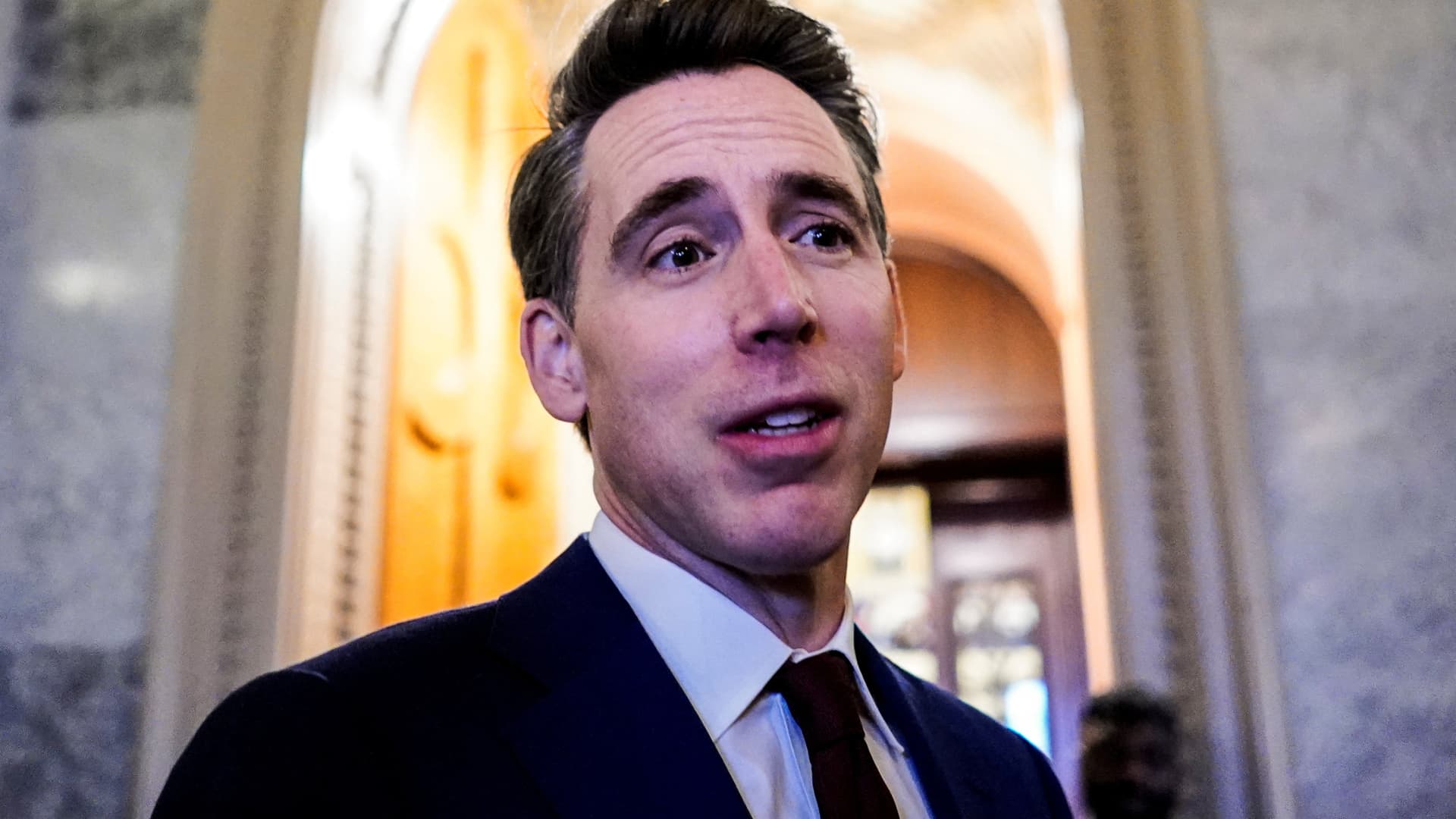
Senator Josh Hawley (R-MO) reacts, on the day where a potential government shutdown looms during the holidays, after a spending bill backed by U.S. President-elect Donald Trump failed in the U.S. House of Representatives, on Capitol Hill in Washington, U.S., December 20, 2024.
Nathan Howard | Reuters
Sen. Josh Hawley, R-Mo., on Monday introduced a bill to send tariff rebate checks to American families, which would be similar to the stimulus checks sent during the Covid-19 pandemic.
If enacted, the American Worker Rebate Act of 2025 would provide “at least” $600 per adult and dependent child, or $2,400 for a family of four, according to a statement from Hawley. The bill allows for a larger rebate if tariff revenue exceeds projections.
Whatever the final amount, the benefit would be reduced by 5% for joint filers with an adjusted gross income above $150,000 or single filers earning more than $75,000.
The Senate bill comes after President Donald Trump on Friday told reporters the administration was “thinking about a little rebate” for Americans from tariff revenue.
More from Personal Finance:
Trump’s tariffs could soon bring higher food prices for some Americans
Ahead of the Fed meeting, here’s where borrowing rates stand
Even many high-earning Americans don’t feel wealthy. Here’s why
“Like President Trump proposed, my legislation would allow hard-working Americans to benefit from the wealth that Trump’s tariffs are returning to this country,” Hawley said in a statement.
However, it’s unclear whether the proposal has broad Republican support, particularly among fiscally conservative lawmakers.
Earlier this year, Trump and Elon Musk floated a $5,000 dividend check for Americans, funded by savings from the Department of Government of Efficiency. However, that idea has not happened.
Tariff revenue surplus
The Treasury Department reported an unexpected surplus for June, with a boost from tariff revenue. Customs duties totaled roughly $27 billion for the month, compared to $23 billion in May. The duties reflect a 301% gain from June 2024.
I would prefer that the revenue was used for deficit reduction rather than just cutting checks to people.
Alex Durante
Tax Foundation senior economist
The tariff rebate check proposal comes as a chorus of lawmakers and policy experts voice concerns about the federal budget deficit.
“I don’t think [a rebate] would be particularly good policy,” Tax Foundation senior economist Alex Durante told CNBC on Friday. “I would prefer that the revenue was used for deficit reduction rather than just cutting checks to people.”
Enacted in early July, Trump’s “one big beautiful” tax-and-spending package could add an estimated $3.4 trillion to the deficit through 2034, according to a conventional score released by the Congressional Budget Office this week.
Rebates could ‘magnify inflationary effects’
The motivation for sending the direct payments would be different than they were during the Covid pandemic, when many households were losing income or unable to work, said Joseph Rosenberg, senior fellow at the Urban-Brookings Tax Policy Center’s tax and income supports division.
Now, the federal government is imposing tariffs that will cost U.S. households, and this would be a way of helping those individuals and families, Rosenberg said.
Tariffs are a tax imposed by foreign nations, paid by domestic companies that import goods or services. U.S. consumers are expected to pay higher prices via companies negatively impacted by the trade policy.
An analysis from The Budget Lab at Yale released Monday found Trump’s tariffs could cost U.S. households an average of $2,400 in 2025.

Because Congress just passed the very expensive “big beautiful” budget and tax legislation, rebates to individuals could exacerbate the effects on the federal budget deficit, he said.
The rebates would reinforce the inflationary effects of the tariffs that already exist, Rosenberg said.
“People will go out and spend some of that money, and that would further put upward pressure on prices and probably magnify inflationary effects,” Rosenberg said.
Pandemic-era fiscal stimulus contributed to an increase in inflation of about 2.6 percentage points in the U.S., according to 2023 research from the Federal Reserve Bank of St. Louis.


Personal Finance
Next-Generation Retirement Planning: Managing Longevity Risk and Variable Income Streams


U.S.- Canada Trade Talks Collapse; Carney Says Retaliatory Tariffs Begin September 8

Flock Cameras and the Future of Public Security

AI Infrastructure Boom Hits Physical Limits: Power, Financing, and Supply Chain Strain

Armanino adds Strategic Accounting Outsourced Solutions

New 2023 K-1 instructions stir the CAMT pot for partnerships and corporations

Tax Strategy: Employee Retention Credit update
-

 Stock News1 week ago
Nvidia Earnings Preview: What Wall Street Expects From the AI Bellwether’s Q2 Report
-

 Accounting1 week ago
SEC’s Semiannual Reporting Proposal Faces Investor Pushback: What CFOs Need to Know
-

 Stock News1 week ago
Nvidia Q2 FY2027 Earnings beats Wall Street Expectation with Record $96.2 Billion Revenue
-

 Finance1 week ago
Treasury Bond Volatility Forces Bessent to Double Debt Buyback Size as Yields Swing
-
 Technology5 days ago
AI Infrastructure Boom Hits Physical Limits: Power, Financing, and Supply Chain Strain
-
 Technology3 days ago
Flock Cameras and the Future of Public Security
-
 Economics3 days ago
U.S.- Canada Trade Talks Collapse; Carney Says Retaliatory Tariffs Begin September 8