Connect with us

Accounting

Senate leader pushes estate tax repeal in GOP bill talks

Published

on

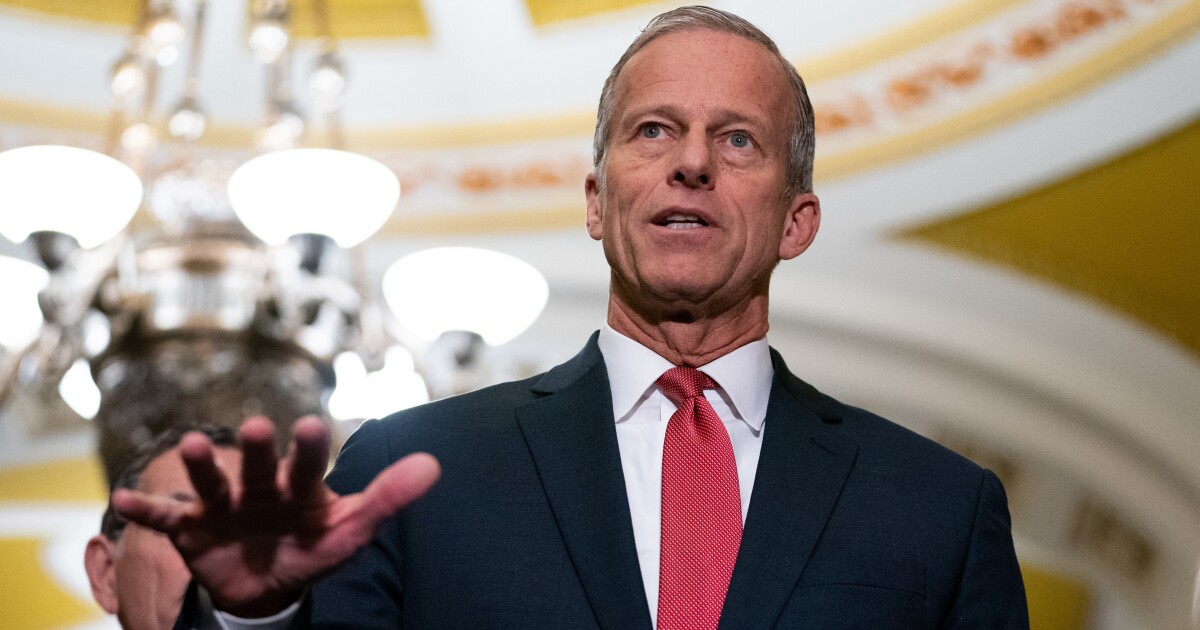
Senate Majority Leader John Thune pitched a full repeal of the estate tax Wednesday, setting as a priority the elimination of the levy on the fortunes of some of the wealthiest Americans as Republicans draft a massive economic package.

“I continue to advocate for eliminating the death tax once and for all, so no farmer or rancher has to worry about whether the family farm or ranch will be able to stay in the family after they pass,” the South Dakota Republican said on the Senate floor Wednesday. 

Thune’s push for repealing the 40% tax on the wealth of the richest U.S. individuals when they die puts the effort — a longtime goal of the Republican party — in the mix as Thune and other Republican leaders debate the size and scope of a massive tax cut bill.

Republicans are aiming to approve a multitrillion tax bill in the coming months that renews President Donald Trump’s 2017 cuts, along with a fresh round of levy reductions. House and Senate Republicans are currently negotiating the size of the tax package, which will determine how many new cuts can become law.

The party has a long and growing list of expensive tax changes, and constraints on the overall size of the bill mean they won’t be able to include every desired item. Trump has proposed a series of cuts, including eliminating taxes on tips, overtime pay and Social Security benefits. And a contingent of House lawmakers are advocating to expand the state and local tax deduction, in addition to Thune’s priorities.

The estate tax affects only a small segment of taxpayers, but has gained political significance with Republicans branding it a “death tax” and saying it inhibits farmers and other small business owners from passing on their assets to their children. In 2022, 3,170 estates — less than 0.1% of Americans — paid estate tax at death, according to Internal Revenue Service data. 

Current estate tax levels mean that an individual’s estate can pass up to $13.99 million tax-free on to their heirs, or twice that for a couple. The top tax rate is 40% on assets, though many billionaires and other wealthy people have long exploited legal loopholes to avoid paying it.

Political momentum

Estate tax repeal has strong support in the Senate. It’s backed by 46 senators so far, four shy of the 50 votes that will be needed to pass the broader tax bill. Similar legislation has the backing of Ways and Means Chair Jason Smith, most House Republicans and the National Federation of Independent Business.

Eliminating the estate tax would cost an additional $300 billion over a decade, according to Marc Goldwein of the Committee for a Responsible Federal Budget. That would be on top of the $4.5 trillion to extend the 2017 tax law envisioned in a House tax blueprint. The Senate is in the midst of negotiating their own plan for the bill.

In 2017, Trump backed a full repeal of the estate tax, but settled for increasing the exemption level so wealthy individuals could pass on more — but not all — of their fortune to their heirs tax-free. Those higher limits expire at the end of 2025 unless Congress acts.

Senator Chuck Grassley, an Iowa Republican, predicted that the GOP would ultimately extend the existing exemption, rather than repealing the estate tax outright.

Senate Finance Committee Chair Mike Crapo, who also supports eliminating the estate tax, declined to put odds on a repeal making it into the package in a brief interview this week after a meeting of House and Senate leaders and administration officials.

“Until the bill is drafted, everything is on the table and nothing’s on the table,” he said.

Vice President JD Vance, who has the power to break ties as president of the Senate, co-sponsored Thune’s bill to repeal the tax while a senator in 2023. Thune has also picked up the backing of four wealthy, Trump-backed Republican businessmen who last year won Senate seats previously held by Democrats, Dave McCormick of Pennsylvania, Bernie Moreno of Ohio, Jim Justice of West Virginia and Tim Sheehy of Montana.

The effort to repeal the estate tax comes as Democrats like Elizabeth Warren accuse the GOP of seeking to cut spending on government services and health care research to fund tax cuts for billionaires.


Continue Reading

Accounting

FASB Standardizes Carbon Offsets Accounting Rules

Published

on

FASB Standardizes Carbon Offsets Accounting Rules

In a decisive move toward standardized environmental financial reporting, accounting standards boards issued updated implementation guidance during the week ending July 25, 2026, regarding the formal recognition and valuation of corporate carbon offsets and environmental credits. The revised frameworks establish precise rules for how enterprises must measure, record, and disclose carbon credits on balance sheets, eliminating years of inconsistent reporting practices across public capital markets.

Under the finalized accounting standard, purchased carbon offsets can no longer be categorized under vague administrative expenses or unstandardized intangible asset accounts. Instead, organizations must classify environmental credits based on underlying operational intent—distinguishing between credits held for immediate compliance compliance obligations, long-term offset obligations, or active market trading. Furthermore, companies are required to evaluate carbon holdings for fair value impairment at the end of each reporting period, ensuring that depreciated or low-quality environmental credits do not distort corporate asset values.

The standardized rules carry significant implications for corporate audit committees and chief accounting officers. External audit firms are implementing rigorous verification protocols to validate the physical legitimacy, legal ownership, and scientific permanence of carbon credits claimed on balance sheets. Inaccurate or overstated carbon accounting claims now carry substantial financial litigation risk, alongside potential regulatory enforcement for misleading ESG disclosures.

To remain fully compliant, corporate accounting departments must establish centralized carbon tracking systems integrated into primary standard ERP ledgers. Accounting teams that proactively adopt standardized environmental reporting protocols will build investor credibility, streamline annual audit processes, and insulate their organizations against evolving regulatory scrutiny.

Continue Reading

Accounting

Automated Tax Compliance Tools Reduce Risk

Published

on

Automated Tax Compliance Tools Reduce Risk

Corporate tax departments reached a critical juncture in automated operational management. With nations worldwide rapidly enacting digital service taxes, localized value-added tax (VAT) mandates, and real-time electronic invoicing requirements, manual tax calculations have become obsolete. Modern corporate tax divisions are aggressively deploying AI-driven tax engine software to automate complex cross-border indirect tax calculations in real time.

The imperative for automated tax compliance stems from the sheer complexity of current trade policies and multi-jurisdictional commerce. E-commerce platforms, software vendors, and global manufacturers face constantly changing regional tax rates, statutory exemption rules, and cross-border tariff structures. Automated tax engines embed directly into enterprise enterprise resource planning (ERP) architectures, automatically applying correct tax codes at the point of sale, calculating real-time withholding amounts, and generating compliant e-invoices.

Automated audit trail generation represents another key advantage of modern tax tech integration. Advanced compliance platforms log every transactional tax determination on immutable digital ledgers, providing tax authorities with transparent, self-verifying audit trails. This capability drastically reduces the operational duration and administrative cost of corporate tax audits, protecting enterprises against severe penalties resulting from calculation errors or missed reporting deadlines.

For chief financial officers and tax directors, investing in automated tax compliance is a vital operational risk mitigation strategy. Automating routine tax calculations frees high-level accounting professionals to focus on strategic tax planning, transfer pricing optimization, and risk management in an increasingly complex global economic environment.

Continue Reading

Accounting

Continuous Auditing Transforms Corporate ERPs

Published

on

continuous auditing transforms corporate erps

As corporate accounting departments cross the threshold into late July 2026, the adoption of continuous, automated auditing systems has reached a definitive turning point. Driven by advances in artificial intelligence and deep integration with modern Enterprise Resource Planning (ERP) platforms, leading finance organizations are moving away from traditional, periodic post-hoc audits in favor of real-time, 100% transactional verification. This technological transition is redefining internal control environments, reducing compliance costs, and eliminating the structural delays inherent in legacy quarterly closing processes.

Unlike traditional auditing frameworks that rely on statistical sampling—a process that inevitably leaves operational blind spots—continuous auditing software monitors operational data feeds continuously. Every purchase order, electronic invoice, payroll disbursement, and cross-border wire transfer is automatically cross-referenced against established corporate governance parameters, regulatory tax schedules, and anti-fraud algorithms in real time. Anomalies or unauthorized ledger entries are flagged instantly, allowing internal audit teams to investigate and remediate compliance gaps immediately rather than months after the close of a financial period.

The implications for executive financial management are far-reaching. By embedding continuous verification directly into daily transaction workflows, chief financial officers gain uninterrupted visibility into the organization’s true financial standing. Real-time balance sheet auditing eliminates the severe operational bottlenecks associated with month-end and quarter-end financial reconciliations, freeing accounting professionals to focus on strategic financial modeling, tax planning, and capital allocation rather than manual data entry and spreadsheet consolidation.

However, implementing continuous auditing requires accounting leadership to invest heavily in data governance and technical upskilling. Internal audit teams must evolve from manual ledger reviewers into system architects capable of auditing complex algorithms and validating automated data pipelines. Accounting firms and corporate controllers that master continuous auditing will establish a resilient compliance framework capable of meeting stringent international regulatory standards with total transparency.

Continue Reading

Trending