
Personal Finance
SNAP benefits, food stamps face cuts under GOP tax bill

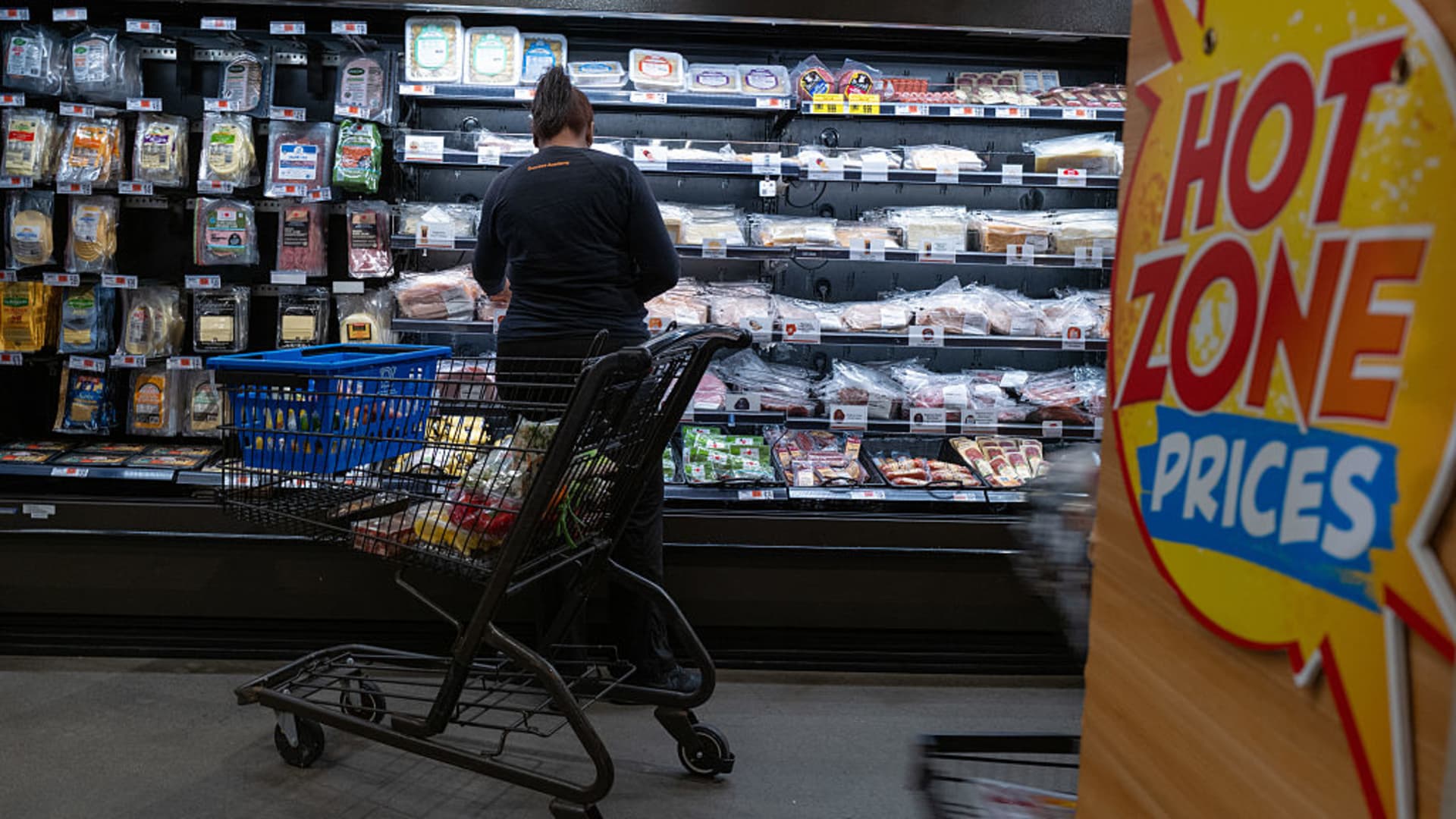
People shop at a grocery store in Brooklyn on May 13, 2025 in New York City.
Spencer Platt | Getty Images
As Republicans push forward with the “big, beautiful” tax bill, federal food assistance may see big cuts.
The Supplemental Nutrition Assistance Program, or SNAP, may be cut about 30% under the terms of the bill, which would be the “biggest cut in the program’s history,” according to Ty Jones Cox, vice president for food assistance policy at the Center on Budget and Policy Priorities.
SNAP, formerly known as food stamps, currently provides food assistance to more than 40 million individuals including children, seniors and adults with disabilities.
Yet cuts to the program proposed by the House — which would shrink the program’s funding by about $300 billion through 2034 — would put those benefits at risk.
“The House Republican plan would take away food assistance for millions who struggle to afford the high cost of groceries, including families with children and other vulnerable people with low incomes,” Cox said during a Tuesday webinar hosted by the CBPP, a progressive think tank.
The SNAP reform efforts come amid a broader effort to reduce waste and fraud in government programs. SNAP, like other government benefits, can be susceptible to improper or fraudulent payments.
The “one big, beautiful bill restores integrity to the Supplemental Nutrition Assistance Program,” House Agriculture Committee Chairman Glenn “GT” Thompson, R-Pa., said in a May 14 statement, through “long-overdue accountability incentives to control costs and end executive and state overreach.”
More from Personal Finance:
What the Senate’s ‘no tax on tips’ bill means for workers
Who would benefit from bigger child tax credit in House GOP bill
Medicaid work requirements kick hardworking people off health coverage: Senator
Many Americans cite high food costs as a top economic concern, according to an April Pew Research Center survey. If new tariff policies are put into effect, that could prompt food prices to go higher.
Moreover, the proposed SNAP cuts come as some experts say the U.S. is facing higher recession risks. In previous downturns, every additional dollar spent on SNAP generates about $1.54 in returns to the economy, according to Elaine Waxman, senior fellow at the Urban Institute’s tax and income support division.
“People spend SNAP dollars right away, and they spend them locally,” Waxman said.
The proposed SNAP cuts would largely happen by expanding work requirements to qualify for benefits and by cutting federal funding for food benefits and administration and leaving it up to states to make up the difference.
Federal cuts would leave states with tough choices
The largest cut to SNAP would come from federal funding cuts to basic SNAP benefits ranging from 5% to 25% starting in 2028, according to CBPP.
It would then be up to states to find ways to make up for that benefit shortfall, which could include making it more difficult to enroll in the program or finding other localized cuts to the program, according to CBPP.
“The change in the bill that is most dramatic is asking states to share part of the benefit cost,” Waxman said. “That’s new; since SNAP was originated, the federal government has always paid the full cost of the benefits.”
Notably, it would also mark the first time in the history of SNAP that the federal government would no longer ensure children in every state have access to food benefits, according to CBPP.

In addition, the proposal also seeks to make it so states pay a larger portion of the program’s administrative costs.
How states may react to the changes may vary. In worst-case scenarios, some states could even opt out of the program altogether, according to CBPP.
However, Waxman said most states will likely try to protect benefits because they’re “so critical,” even though they are not legally obligated to offer the program.
“The vast majority, if not all, will try to do something,” Waxman said.
In addition to the benefits SNAP provides to individuals and families, it also provides an “integral” part of economies, Waxman said. In lower-income rural areas, for example, rural grocery stores that rely on SNAP customers would see food spending go down.
“It has all these ripples that will hurt a lot of people other than just the people who are on the program,” Waxman said.
Work requirements may cost families $254 per month
House Minority Leader Hakeem Jeffries, D-N.Y., at the House Democrats’ news conference on Medicaid and SNAP cuts proposed by the Republicans’ reconciliation process.
Bill Clark | Cq-roll Call, Inc. | Getty Images
Work requirements for SNAP already make it so certain individuals must work at least 80 hours per month to qualify for the program’s benefits. That includes individuals ages 18 to 54 who are able to work and who have no dependents. Current policy also limits SNAP benefits for certain individuals to three months within a 36-month period unless work requirements are met.
The proposed legislation would expand that those work requirements, according to the Urban Institute, by:
- extending the requirements to households with children, unless they have a child under age seven;
- expanding the work requirements and time limits to individuals ages 55 through 64;
- limiting states’ flexibility to request waivers of the work requirement policies in high unemployment areas; and
- reducing discretionary exemptions from the time limits that states may provide.
Expanded work requirements would affect 2.7 million families and 5.4 million individuals, according to a new report from the Urban Institute.
That includes 1.5 million families who would lose benefits entirely and 1.2 million families who would receive lower benefits. It also includes 1.8 million people, including 48,000 children, who would lose benefits entirely; and 3.6 million people, including 1.5 million children, who would receive lower benefits, according to the Urban Institute.
Families that lose some or all their benefits would lose $254 per month on average, according to the research. Meanwhile, families with children would lose $229 per month on average, the Urban Institute found.


Personal Finance
Next-Generation Retirement Planning: Managing Longevity Risk and Variable Income Streams


U.S.- Canada Trade Talks Collapse; Carney Says Retaliatory Tariffs Begin September 8

Flock Cameras and the Future of Public Security

AI Infrastructure Boom Hits Physical Limits: Power, Financing, and Supply Chain Strain

Armanino adds Strategic Accounting Outsourced Solutions

New 2023 K-1 instructions stir the CAMT pot for partnerships and corporations

Tax Strategy: Employee Retention Credit update
-

 Stock News1 week ago
Nvidia Earnings Preview: What Wall Street Expects From the AI Bellwether’s Q2 Report
-

 Accounting1 week ago
SEC’s Semiannual Reporting Proposal Faces Investor Pushback: What CFOs Need to Know
-

 Stock News1 week ago
Nvidia Q2 FY2027 Earnings beats Wall Street Expectation with Record $96.2 Billion Revenue
-

 Finance1 week ago
Treasury Bond Volatility Forces Bessent to Double Debt Buyback Size as Yields Swing
-
 Technology5 days ago
AI Infrastructure Boom Hits Physical Limits: Power, Financing, and Supply Chain Strain
-
 Technology3 days ago
Flock Cameras and the Future of Public Security
-
 Economics3 days ago
U.S.- Canada Trade Talks Collapse; Carney Says Retaliatory Tariffs Begin September 8