
Personal Finance
Social Security turns to in-person office visits to curb identity fraud

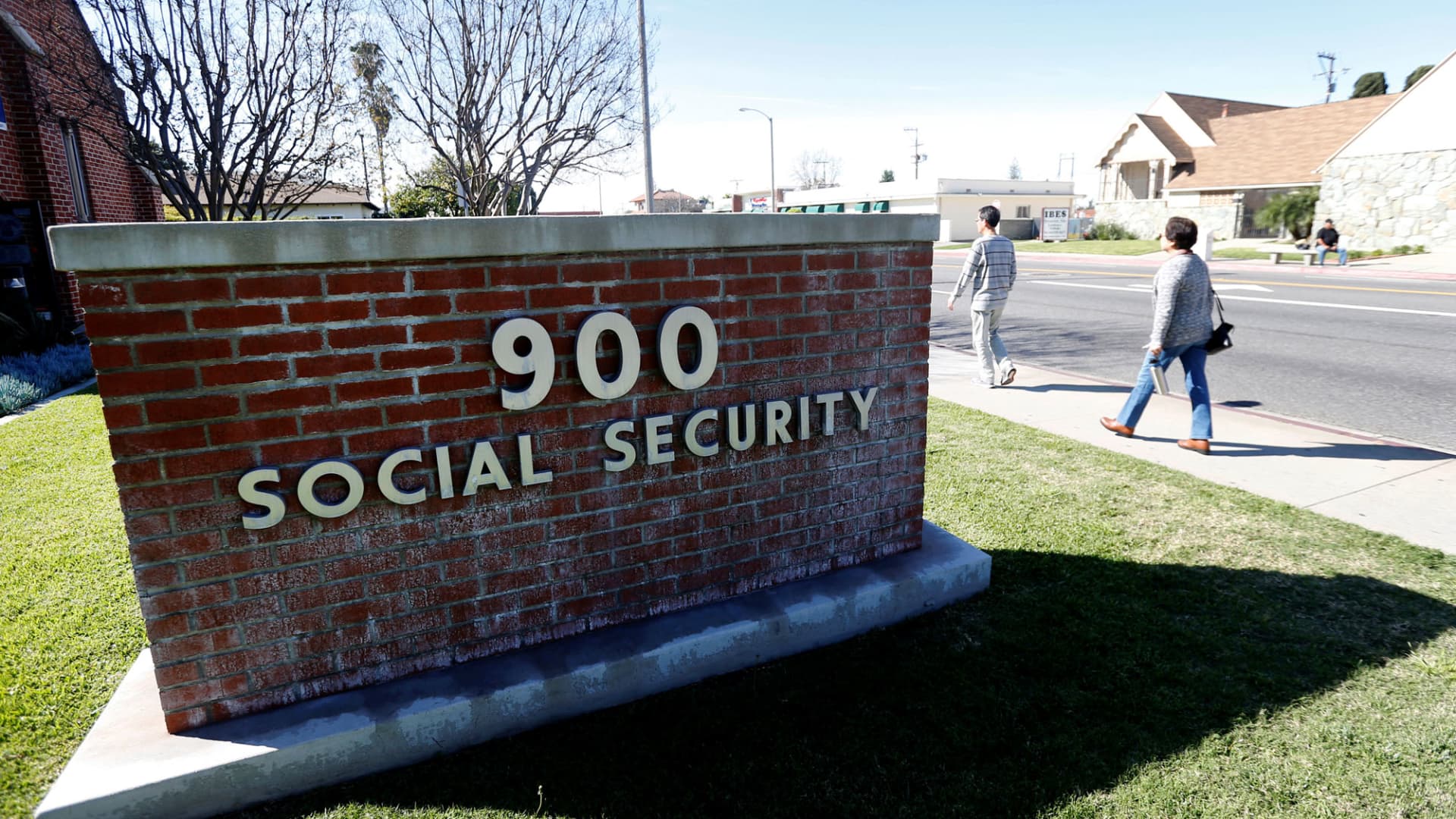
The Social Security Office in Alhambra, California.
Mario Anzuoni | Reuters
As the Social Security Administration seeks to curb identity fraud, more people will now be required to visit an office to prove their identity for new benefit claims and direct deposit changes.
In the next two weeks, the agency will transition to stronger identify proofing procedures, the Social Security Administration announced on Tuesday.
Individuals who cannot use an online My Social Security account for identity proofing will need to visit their local Social Security office, according to the agency.
As a result of the new proofing measures, the Social Security Administration also plans to accelerate the processing of both online and in-person direct deposit change requests to one business day, down from the 30 days those changes were typically held.
More from Personal Finance:
Americans lost $5.7 billion to investment fraud in 2024
Don’t hide cash at home — what you’re risking and what to do instead
How to manage your student loan payments after a layoff
The changes are aimed at helping to avoid the fraudulent redirection of benefit checks, which the agency has been warning about for years. Social Security Administration acting commissioner Lee Dudek said he witnessed the effects of the fraud firsthand while working in one of the agency’s field offices.
“It’s always heartbreaking,” Dudek said on a Tuesday press call, recalling the tears, anger and disbelief he saw from victims.
“The beneficiary always needs the money they depend on,” Dudek said. “Many times it’s their only source of income, and guys steal their information and redirect their check somewhere else.”
Ultimately, “it was up to SSA to make it right,” said Dudek, who estimates the agency is now losing more than $100 million per year due to direct deposit fraud.
Between January 2013 and May 2018, fraudsters redirected $33.5 million in benefits for 20,878 beneficiaries by making unauthorized direct deposit changes, audits from the Social Security Administration Office of the Inspector General found. Over that same period, the Social Security Administration was able to correct unauthorized direct deposit changes before checks were issued for an additional $23.9 million in payments to 19,662 beneficiaries.
How new identity proofing procedures will work
The agency plans to move away from knowledge-based authentication, which uses personal questions like asking for your mother’s maiden name or a previous address to verify identities. A spate of private company data breaches have made it so much of the same information the Social Security Administration asks for is available in the public domain, Dudek said.
The Social Security Administration plans to enforce the new online digital identity proofing and in-person identity proofing starting on March 31, following a two-week training period for management and frontline employees.
Individuals who want to start benefits claims may do so by phone if they cannot go online. However, they will have to verify their identify in person to complete their request.

“The agency therefore recommends calling to request an in-person appointment to begin and complete the claim in one interaction,” the agency stated in its March 18 announcement. “Individuals with and without an appointment will need to prove identity before starting a transaction.”
Individuals who want to change their direct deposit information and who cannot go online, can either visit a local office or call to schedule an in-person appointment.
The change may require foot traffic to Social Security offices nationwide to increase by about 75,000 to 85,000 more in-person visitors per week, according to reports on an internal Social Security Administration memo.
‘More headaches and longer wait times’ possible
The change comes as the Department of Government Efficiency, an unofficial government entity within the Trump administration, has disclosed it plans to close about 47 Social Security offices across the country out of approximately 1,230 locations.
Meanwhile, Social Security’s 800 number has struggled with long wait times.
The AARP, an interest group that represents Americans ages 50 and over, urged the Social Security Administration to reverse the decision. The changes will prompt “more headaches and longer wait times to resolve routine customer service needs,” Chief Advocacy and Engagement Officer Nancy LeaMond said in a March 19 statement.
The change not only “comes as a total surprise but is on an impractical fast-track,” LeaMond said.
“SSA needs to be transparent about its service changes and seek input from the older Americans who will be affected, because any delay in Social Security caused by this change can mean real economic hardship,” LeaMond said.
Advocacy groups also expressed concern that certain beneficiaries — particularly older, disabled or rural residents — may have difficulty accessing the necessary in-person services.
On Tuesday, Social Security acting commissioner Dudek said he is open to meeting with advocates and helping to figure out better ways to help their constituents.
“If it is to the detriment of our citizens that we serve, then we’re going to take necessary actions to improve those services,” Dudek said.


Personal Finance
Next-Generation Retirement Planning: Managing Longevity Risk and Variable Income Streams


U.S.- Canada Trade Talks Collapse; Carney Says Retaliatory Tariffs Begin September 8

Flock Cameras and the Future of Public Security

AI Infrastructure Boom Hits Physical Limits: Power, Financing, and Supply Chain Strain

Armanino adds Strategic Accounting Outsourced Solutions

New 2023 K-1 instructions stir the CAMT pot for partnerships and corporations

Tax Strategy: Employee Retention Credit update
-

 Stock News1 week ago
Nvidia Q2 FY2027 Earnings beats Wall Street Expectation with Record $96.2 Billion Revenue
-
 Technology5 days ago
AI Infrastructure Boom Hits Physical Limits: Power, Financing, and Supply Chain Strain
-
 Technology3 days ago
Flock Cameras and the Future of Public Security
-
 Economics3 days ago
U.S.- Canada Trade Talks Collapse; Carney Says Retaliatory Tariffs Begin September 8