Connect with us

Personal Finance

Student loan borrowers say bills make it harder to cover basic needs: Survey

Published

on

Maskot | Maskot | Getty Images

More than 4 in 10 – 42% – of federal student loan borrowers say their monthly payments for that debt make it harder to cover basic needs such as food and housing, according to a forthcoming survey.

Data for Progress and The Institute for College Access & Success gave CNBC an early look at the survey, set for release Tuesday, which gauges how federal student loan debt has affected borrowers’ finances.

More than a third of borrowers surveyed, or 37%, said it’s more challenging to meet health-care expenses because of their education debt, while 52% said it’s been more of a struggle to save for retirement, the survey found. Nearly a third of the borrowers, or 30%, said that the debt has had a negative impact on their plans to get married and start a family, the survey found.

“In exchange for trying to better their future, many now face a monthly choice between making their student loan payment or buying groceries, avoiding eviction or getting critical medical care,” said Michele Zampini, senior director of college affordability at The Institute for College Access & Success, or TICAS. Data for Progress is a left-leaning think tank and polling firm, and TICAS is a nonprofit that advocates for college affordability.

The groups polled more than 1,000 self-identified federal student loan borrowers in September.

More from Your Money:

Here’s a look at more stories on how to manage, grow and protect your money for the years ahead.

The findings are the latest indicator that a growing share of student loan borrowers are falling behind on their payments. More than 5 million borrowers are currently in default, and that total could swell to roughly 10 million borrowers soon, the Trump administration said earlier this year.

Experts say borrowers are reeling from a weakening labor market, as well as a barrage of changes to the student loan system and recent trouble accessing relief programs under the Trump administration.

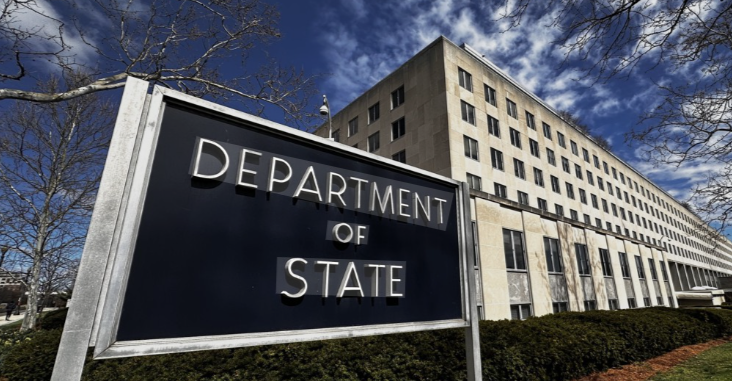
The U.S. Department of Education did not respond to a request for comment.

Over 42 million Americans hold student loans and the outstanding debt exceeds $1.6 trillion, according to the Congressional Research Service. 

‘Budgeting in ways they never imagined just to survive’

Carolina Rodriguez, director of the Education Debt Consumer Assistance Program in New York, said she often hears from student loan borrowers who are forced to cut back on essentials.

“Highly educated individuals are budgeting in ways they never imagined just to survive,” Rodriguez said. “The food line item is often reduced, but there’s only so much they can cut.”

The current average federal student loan balance is around $39,000, compared with roughly $29,000 in 2015 and $18,000 in 2007, according to an analysis by higher education expert Mark Kantrowitz.

71% of Americans say debt is high enough to limit saving or building wealth

Wage growth for new college graduates has sputtered. The median annual salary for new college graduates was $60,000 in 2024, compared with $60,595 in 2020, according to the Federal Reserve Bank of New York. As of June, more than 40% of recent college graduates were considered “underemployed,” or working in a job that doesn’t require a bachelor’s degree, the New York Fed found.

“Young job seekers are having an especially difficult time in the low-hire environment of 2025,” said Laura Ullrich, director of economic research at Indeed.

Trump’s changes will make repayment harder, experts say

Under the Trump administration, hundreds of thousands of borrowers have been stuck in application backlogs for a new repayment plan or loan forgiveness. Those delays prompted a lawsuit by the American Federation of Teachers earlier this year, which resulted in the Education Department agreeing in October to make progress on those requests.

Still, recent changes to the student loan system are likely to saddle many borrowers with larger payments, making competing bills for housing, health care and other expenses only harder to meet, experts say.

President Donald Trump’s One Big Beautiful Bill Act will phase out several longstanding affordable repayment plans and relief options. For example, many borrowers will eventually lose access to the unemployment deferment, a way to pause payments after a job loss.

“We expect to see an ongoing increase in defaults, especially as living costs rise at the same time that repayment protections are going away,” Zampini said.

Continue Reading

Personal Finance

Maximizing Returns in High Rate Climate and market uncertainty

Published

on

Maximizing Returns in High-Rate Climate

In the macroeconomic environment of late July 2026, personal cash management requires an active, structured approach to wealth preservation. With central bank benchmark rates remaining elevated to ensure long-term disinflation, conservative yield-bearing vehicles—such as short-term U.S. Treasury bills, money market funds, and high-yield savings accounts (HYSAs)—continue to offer reliable nominal returns between 4% and 5%. For individual investors, maximizing net returns requires moving beyond passive checking accounts and executing a disciplined cash laddering strategy.

Leaving substantial liquid capital in traditional bank deposits creates an invisible drag on personal net worth due to ongoing inflation. By implementing a tiered liquidity framework, individuals can split emergency cash reserves and short-term capital allocations across rolling maturities. Allocating cash into 4-week, 8-week, and 13-week Treasury bills creates a continuous cycle of maturing liquidity, allowing investors to continuously reinvest capital at prevailing market yields while maintaining immediate access to emergency funds.

Tax efficiency represents a critical dimension of high-yield cash optimization. For high-earning individuals residing in states with substantial local income taxes, direct holdings in short-term U.S. Treasury instruments often deliver superior net post-tax yields compared to standard commercial bank HYSAs. Because interest earned on federal Treasury bills is strictly exempt from state and local taxation, investors can retain a larger portion of their compounding interest gains without taking on additional credit or market risk.

Ultimately, personal wealth accumulation in mid-2026 relies on intentional capital deployment. Cash should be managed as a productive asset class that generates consistent, risk-free returns. Regularly auditing account yield terms, automating recurring transfers, and leveraging tax-advantaged fixed-income instruments ensures that personal liquidity remains fully optimized against macroeconomic fluctuations.

Continue Reading

Personal Finance

Algorithmic Wealth Management: Balancing Automated Financial Planning with Human Oversight

Published

on

Balancing Automated Financial Planning with Human Oversight

The personal finance industry in July 2026 is experiencing a technological evolution, driven by the wide deployment of next-generation algorithmic wealth management tools. Modern digital financial platforms have expanded far beyond basic automated index investing; today’s robo-advisors utilize real-time tax-loss harvesting, dynamic portfolio rebalancing, and hyper-personalized spending analysis to optimize retail investor outcomes. However, as these digital solutions become ubiquitous, investors face the crucial challenge of balancing automated execution with human strategic judgment.

The core advantage of automated financial planning platforms lies in their ability to remove emotional bias from investment execution. During periods of market volatility or localized sector realignments, automated algorithms systematically rebalance portfolios back to target asset allocations without falling victim to panic selling or speculative enthusiasm. Furthermore, integrated cash-flow monitoring algorithms analyze individual spending patterns in real time, automatically sweeping surplus income into designated retirement or debt-liquidation accounts to accelerate net worth accumulation.

Despite these operational advantages, algorithmic tools have inherent structural limitations when addressing complex, highly personalized financial life events. Decisions involving multi-generational estate planning, highly complex tax strategies, small business exits, or nuanced real estate transactions require contextual human judgment that software models cannot replicate. Relying solely on automated models without periodic human professional review can result in misaligned risk profiles or overlooked tax liabilities during major life transitions.

The optimal approach for personal financial planning in late 2026 is a hybrid advisory model. Individuals should utilize automated platforms for routine asset allocation, continuous tax optimization, and low-cost passive index tracking, while engaging qualified human financial advisors for periodic strategic planning, estate structuring, and qualitative risk evaluations. This dual approach ensures maximum cost efficiency and disciplined execution while retaining essential strategic guidance.

Continue Reading

Personal Finance

High-Yield Optimization: Structuring Personal Cash Reserves in a Sustained Rate Environment

Published

on

Structuring Personal Cash Reserves in a Sustained Rate Environment

In the financial environment of mid-2026, personal cash management has re-emerged as a vital component of holistic wealth building. With central bank policy rates holding firm to maintain long-term price stability, yield-bearing instruments such as money market funds, high-yield savings accounts (HYSAs), and short-term Treasury bills continue to offer compounding returns around 4% to 5%. For individual investors, effectively structuring cash reserves requires shifting away from passive bank deposits toward active yield optimization.

A frequent pitfall in personal asset management is leaving substantial liquid capital in traditional checking or low-yield savings accounts, where real returns are continuously eroded by baseline inflation. By implementing a disciplined ‘cash ladder’ strategy—allocating liquid funds across tiered maturities using ultra-short Treasury instruments and FDIC-insured high-yield accounts—individuals can secure maximal yields while retaining immediate liquidity for emergency expenses or tactical investment opportunities.

Simultaneously, investors must evaluate the tax efficiency of their cash holdings based on their tax bracket and geographic location. For high earners situated in states with high local income taxes, direct holdings in short-term U.S. Treasury bills often yield a higher net post-tax return than standard high-yield savings accounts, as Treasury interest is strictly exempt from state and local taxation. Understanding these nuanced tax distinctions allows individuals to capture significant incremental gains without taking on additional market risk.

Ultimately, personal financial health in late 2026 hinges on intentional liquidity management. Cash reserves should not be viewed merely as static emergency funds, but as a dynamic asset class that contributes positively to net worth growth. Regularly auditing yield terms, automating cash transfers, and optimizing for post-tax efficiency ensures that personal capital remains fully productive across all economic conditions.

Continue Reading

Trending