
Personal Finance
Summer is ‘high season’ for flight delays. What travelers need to know

Ironheart | Moment | Getty Images
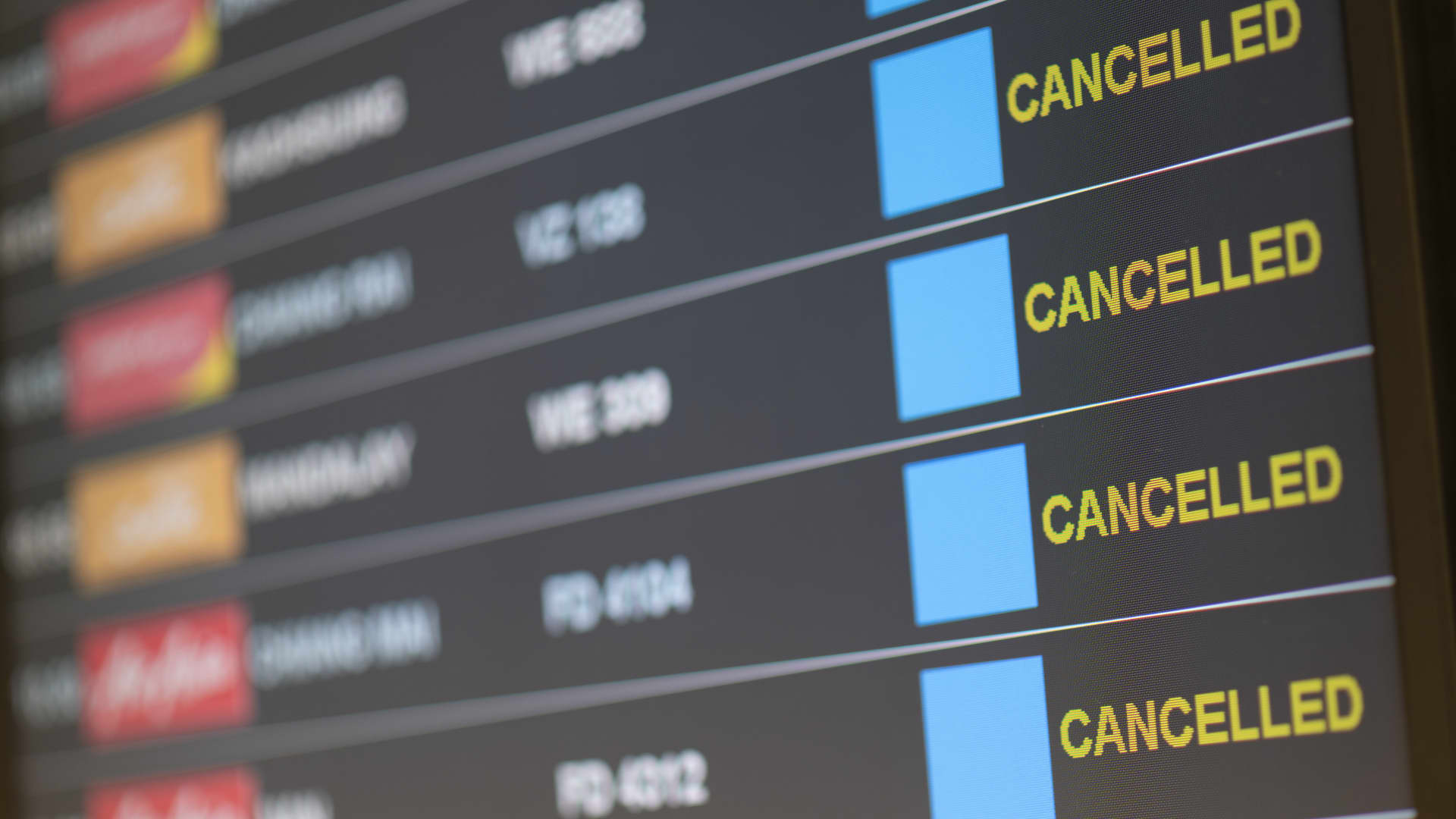
The summer travel season is in full swing, often bringing more flight delays and cancellations.
But travelers may be out of luck when it comes to reimbursement for such disruptions, depending on the root cause and specific airline policy, experts said.
“In general, in the U.S. airlines aren’t really obligated to pay you anything, anytime,” said Eric Napoli, chief legal officer at AirHelp, which helps fliers claim compensation for delayed or canceled flights.
‘High’ season for flight delays and cancellations
Mid-June to the end of August typically marks “high season” for flight disruptions, Napoli said.
“This summer will see more planes in the skies, frequent bad weather, and increased use of the nation’s airspace,” according to a Federal Aviation Administration webpage about summer travel.
Bad weather has accounted for 66% of total flight-delay minutes in 2024, according to FAA data through July 21. In 2023, the share was about 72%.
Such data presumably includes a global IT outage on July 19 that grounded thousands of flights.

“Volume” caused another 15% of delays this year, FAA said.
Summer generally brings a “higher volume of passengers and flights” since school is out and “millions of Americans head on vacation,” Hayley Berg, wrote in a recent analysis of travel disruptions.
Indeed, eight of the 10 busiest travel days of 2024 were in June, July and August, according to FAA data as of Sunday.
What you can expect from airlines
There’s generally one overarching duty for airlines relative to compensation for passengers: Carriers owe a refund of the ticket price and fees if they cancel a flight or make a “significant change” in the flight — regardless of the reason, according to the U.S. Department of Transportation.
Consumers are entitled to a refund only if they choose not to accept an alternative option from the airline, like rebooking on a different flight, the DOT said.
This obligation holds even for those who bought non-refundable tickets.
One caveat: The DOT doesn’t currently define what constitutes a “significant” change. That determination is based on factors like length of delay and flight and particular circumstances, the agency said.
Starting Oct. 28, airlines will have to “promptly” and automatically pay refunds to customers, due to a recently issued Biden administration rule. It will also define a “significant” change as a delay of three hours for domestic flights and six hours for international flights.
More from Personal Finance:
Rent a car for a road trip or drive your own?
What Taylor Swift’s The Eras Tour says about ‘passion tourism’
5 ways to maximize your vacation days
More broadly, airline compensation policies vary for delays and cancellations.
A Transportation Department dashboard outlines major carriers’ promises to customers in the event of cancellations or delays longer than three hours.
Airlines are “required to adhere” to these promises, the agency said.
For example, all airlines commit to rebooking passengers on the same airline for free and to providing a free meal if cancellation leads to waiting at least three hours for a new flight. Most offer a hotel stay for overnight delays. None offer cash compensation for a delay of three or more hours.
Importantly, these airline policies only apply to “controllable” delays and cancellations, meaning those attributable to airline operations. The same obligations may not apply to situations outside their control, like bad weather.
A recent spate of delays and cancellations related to a global IT outage was deemed a “controllable” event, for example. A failed tech update by cybersecurity firm CrowdStrike impacted Microsoft services used by several airlines.
Passengers flying abroad may have more rights depending on international rules, experts said.
For example, passengers flying to and from Europe generally have more rights to compensation due to European Union law, according to AirHelp.
Tips for passengers
Experts recommend a few ways to minimize the odds of a flight disruption, and to better cope with delays or cancelations if they occur:
- Book the first flight of the day. Flights departing after 9 a.m. are two times more likely to be delayed than those scheduled between 5 a.m. and 8 a.m., according to Berg.
- Avoid connecting flights to reduce odds of a disruption. This won’t always be possible, depending on factors like ticket cost, airport and destination. If you do have a connection, leave ample time for a layover, Napoli said. At minimum, travelers should leave a layover buffer of at least 45 minutes for domestic flights and 90 minutes for international trips, Berg said.
- Build in a buffer day. Leave “wiggle room” at your destination so you don’t miss “big” events or plans in the event of a delay or cancellation, Berg said.
- Fly on days that are less busy. Traveling during weekdays like Tuesday or Wednesday tends to bring less flight traffic, Napoli said. Travelers may be less likely to see certain kinds of delays, and have more open seats if they need to rebook. Tickets tend to be cheaper on these days, too.
- Pack smartly. Those with a carry-on bag or personal item should pack strategically in the event of a delay or cancellation, Napoli said. For example, it may make sense to have a change of clothes, snacks, electronics, valuables, and a toothbrush on hand if your checked bag isn’t available, he said.
- Multitask while waiting. In the event of a delay or cancellation, use your time wisely, experts said. “Get in line to speak with an airline representative at the same time you call the customer support center,” Berg said. This way, you maximize your odds of talking to a representative more quickly if multiple passengers are trying to get through simultaneously.


Personal Finance
Next-Generation Retirement Planning: Managing Longevity Risk and Variable Income Streams


S&P 500 September Outlook: Tech Rally Holds Index at 7,600

India Unveils ‘Saptadhara’ Reform Agenda Targeting Technology, Youth Skilling, and Growth

S&P 500 Outperforms Amid Strong Corporate Earnings as Treasury Yields Cap Equity Multiples

Armanino adds Strategic Accounting Outsourced Solutions

New 2023 K-1 instructions stir the CAMT pot for partnerships and corporations

Tax Strategy: Employee Retention Credit update
-

 Stock News1 week ago
Nvidia Q2 FY2027 Earnings beats Wall Street Expectation with Record $96.2 Billion Revenue
-

 Technology6 days ago
AI Infrastructure Boom Hits Physical Limits: Power, Financing, and Supply Chain Strain
-

 Economics4 days ago
U.S.- Canada Trade Talks Collapse; Carney Says Retaliatory Tariffs Begin September 8
-

 Technology4 days ago
Flock Cameras and the Future of Public Security
-
 Insights2 hours ago
Climate Resilience and Offshore Wind and Land Restoration Milestones
-
 Stock News31 minutes ago
S&P 500 September Outlook: Tech Rally Holds Index at 7,600
-

 Accounting2 hours ago
Mandatory ESG Reporting Standards Demand Standardized Non-Financial Audit Trails
-
 Finance1 hour ago
S&P 500 Outperforms Amid Strong Corporate Earnings as Treasury Yields Cap Equity Multiples