
Personal Finance
Supreme Court gives DOGE access to personal Social Security data

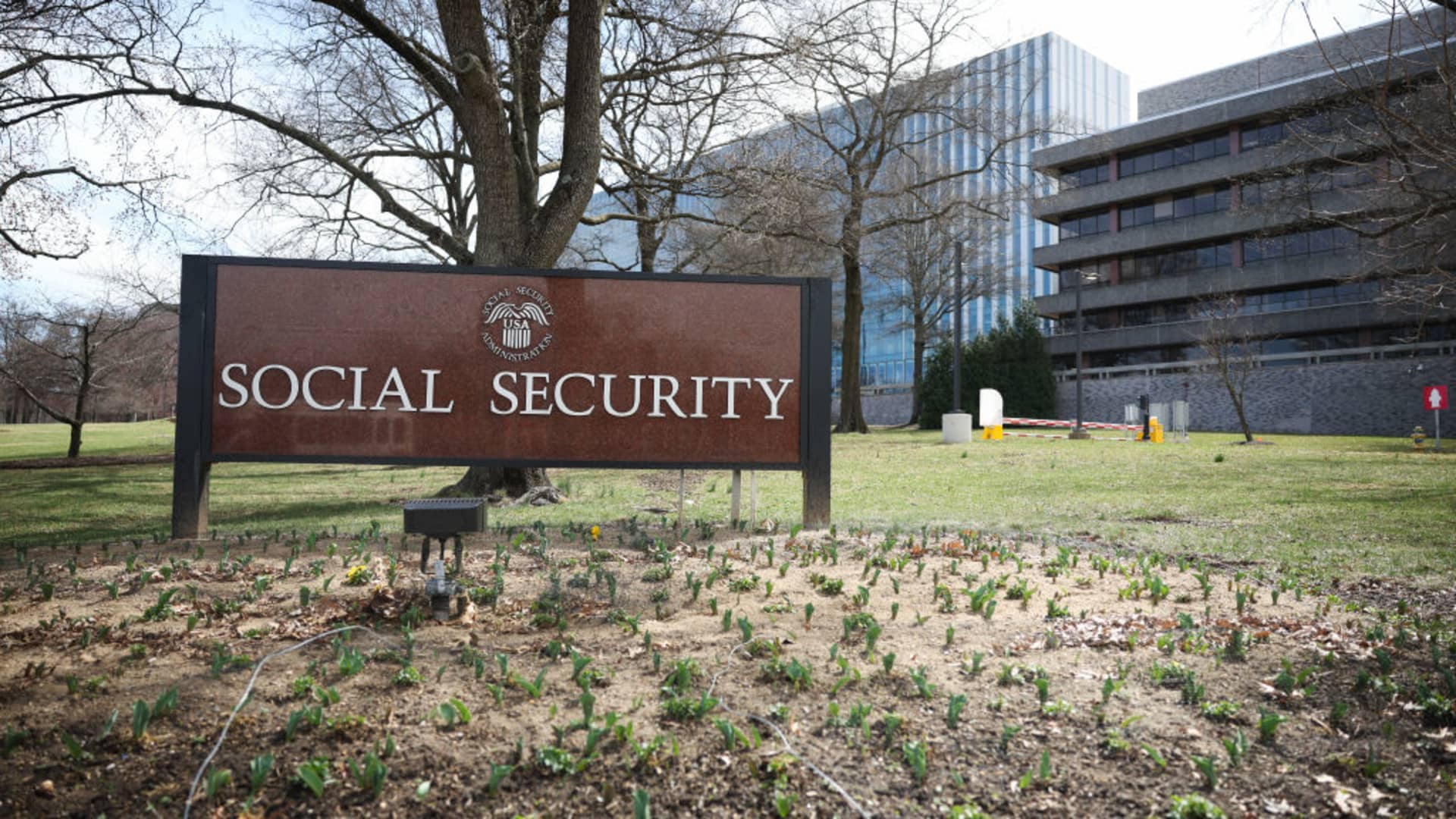
A sign in front of the entrance of the Security Administration’s main campus on March 19, 2025 in Woodlawn, Maryland.
Kayla Bartkowski | Getty Images
The Supreme Court on Friday granted the Department of Government Efficiency access to Social Security Administration data that includes sensitive personal information of millions of Americans.
The decision comes as the federal government sought a stay, or temporary suspension, after a federal judge blocked DOGE’s access to that data in April. The nation’s highest court granted an emergency application from the Trump administration to lift that injunction; the case is expected to proceed in lower courts.
In its decision, the Supreme Court concluded the Social Security Administration may give DOGE access to agency records while the case plays out “in order for those members to do their work.”
More from Personal Finance:
Millions would lose health insurance under GOP megabill
Average 401(k) balances drop 3% due to market volatility
Trump administration asks Supreme Court to lift ban on Education Dept. layoffs
Both the White House and the Social Security Administration called the Supreme Court decision a victory. In a statement, White House spokesperson Elizabeth Huston said it will allow the Trump administration to “carry out commonsense efforts to eliminate waste, fraud and abuse and modernize government information systems.”
Likewise, Social Security Commissioner Frank Bisignano in a statement said the agency “will continue driving forward modernization efforts, streamlining government systems, and ensuring improved service and outcomes for our beneficiaries.”
Yet others expressed grave concern in reaction to the decision, including Justice Ketanji Brown Jackson, advocacy groups and plaintiffs in the case against DOGE and the Social Security Administration.
“This is a sad day for our democracy and a scary day for millions of people,” said the coalition of plaintiffs including American Federation of State, County and Municipal Employees; the American Federation of Teachers; and the Alliance for Retired Americans, who are represented by Democracy Forward.
“This ruling will enable President Trump and DOGE’s affiliates to steal Americans’ private and personal data,” they said, while vowing to “use every legal tool at our disposal” to prevent the misuse of public data as the case moves forward.
Millions of Americans’ sensitive data at stake
The dispute focuses on how much access DOGE should have to Americans’ personal data.
The plaintiffs filed an initial complaint in early March, stating the Social Security Administration had “abandoned its commitment to maintaining the privacy” of the sensitive personal information of millions of Americans under DOGE’s influence.
The Social Security Administration collects and stores some of the “most sensitive” personally identifiable information of millions of Americans, ranging from seniors to adults to children, the complaint notes.
When applying for a Social Security number, the agency requires the disclosure of place and date of birth, citizenship, ethnicity, race, sex, phone number and mailing address. It also requires parents’ names and Social Security numbers.
But the agency is also privy to other personal data, including personal health information, the complaint notes. That includes:
- driver’s license and identification information
- bank and credit cards
- birth and marriage certificates
- pension information
- home and work addresses
- school records
- immigration and naturalization records
- family court records
- employment and employer records
- psychological and psychiatric health records
- hospitalization records
- addiction treatment records
- records for HIV/AIDS tests
The Social Security Administration also collects tax information, including total earnings, Social Security and Medicare wages and annual employee withholdings.

DOGE has not only accessed the agency’s sensitive and protected information; it has also publicly shared it, according to the complaint. The actions of the defendants, including the Social Security Administration, DOGE and leaders including former head Elon Musk, have deprived Americans of privacy protections guaranteed by federal law and made their personal information vulnerable, the complaint alleges.
In her dissent, Jackson, joined by Justice Sonia Sotomayor, notes that records show “DOGE received far broader data access” than the Social Security Administration usually allows in fraud, waste and abuse investigations. Typically, those investigations start with high level, anonymized data, with more access to more detailed information only granted as necessary.
Justice Elena Kagan also dissented in the 6-3 decision.
“The government wants to give DOGE unfettered access to this personal, non-anonymized information right now – before the courts have time to assess whether DOGE’s access is lawful,” Justice Jackson wrote.
While litigation is pending, the government has asked to temporarily suspend the lower court’s temporary limitations on DOGE’s access to Social Security data, she noted.
“But the government fails to substantiate its stay request by showing that it or the public will suffer irreparable harm absent the court’s intervention,” Justice Jackson wrote.

Personal Finance
Next-Generation Retirement Planning: Managing Longevity Risk and Variable Income Streams


U.S.- Canada Trade Talks Collapse; Carney Says Retaliatory Tariffs Begin September 8

Flock Cameras and the Future of Public Security

AI Infrastructure Boom Hits Physical Limits: Power, Financing, and Supply Chain Strain

Armanino adds Strategic Accounting Outsourced Solutions

New 2023 K-1 instructions stir the CAMT pot for partnerships and corporations

Tax Strategy: Employee Retention Credit update
-

 Stock News1 week ago
Nvidia Earnings Preview: What Wall Street Expects From the AI Bellwether’s Q2 Report
-

 Accounting1 week ago
SEC’s Semiannual Reporting Proposal Faces Investor Pushback: What CFOs Need to Know
-

 Stock News1 week ago
Nvidia Q2 FY2027 Earnings beats Wall Street Expectation with Record $96.2 Billion Revenue
-

 Finance1 week ago
Treasury Bond Volatility Forces Bessent to Double Debt Buyback Size as Yields Swing
-
 Technology5 days ago
AI Infrastructure Boom Hits Physical Limits: Power, Financing, and Supply Chain Strain
-
 Technology3 days ago
Flock Cameras and the Future of Public Security
-
 Economics3 days ago
U.S.- Canada Trade Talks Collapse; Carney Says Retaliatory Tariffs Begin September 8