
Personal Finance
Tariffs, trade war inflation impact to be ‘pretty ugly’ by summer

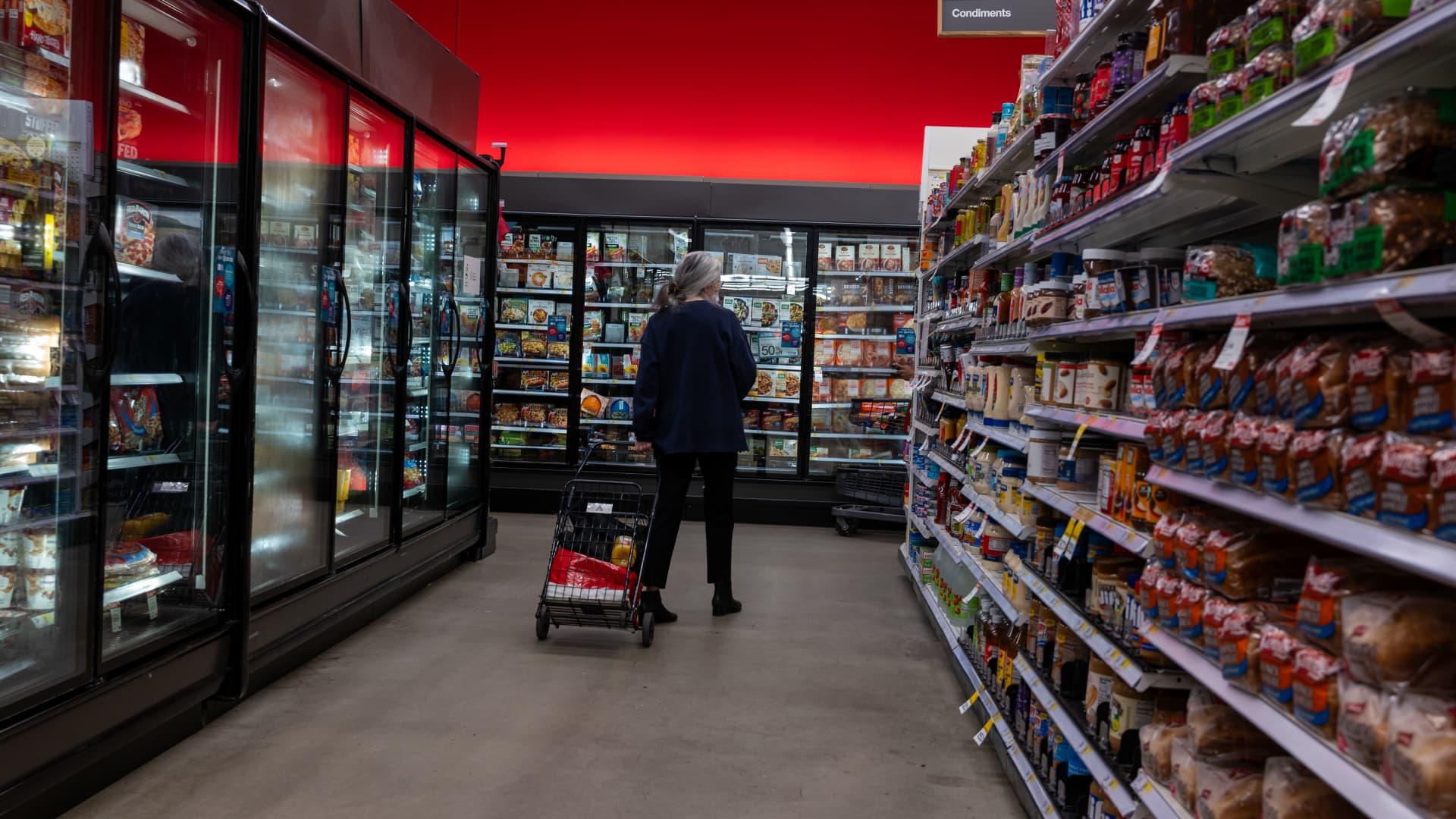
People shop at a grocery store in Manhattan on April 1, 2025, in New York City.
Spencer Platt | Getty Images
The impact of President Donald Trump’s tariff agenda and resulting trade war will translate to higher consumer prices by summer, economists said.
“I suspect by May — certainly by June, July — the inflation statistics will look pretty ugly,” said Mark Zandi, chief economist at Moody’s.
Tariffs are a tax on imports, paid by U.S. businesses. Importers pass on at least some of those higher costs to consumers, economists said.
While economists debate whether tariffs will be a one-time price shock or something more persistent, there’s little argument consumers’ wallets will take a hit.
Consumers will lose $4,400 of purchasing power in the “short run,” according to a Yale Budget Lab analysis of tariff policy announced through Wednesday. (It doesn’t specify a timeframe.)
‘Darkly ironic’ tariff impact
Federal inflation data doesn’t yet show much tariff impact, economists said.
In fact, in a “darkly ironic” way, the specter of a global trade war may have had a “positive” impact on inflation in March, Zandi said. Oil prices have throttled back amid fears of a global recession (and a resulting dip in oil demand), a dynamic that has filtered through to lower energy prices, he said.
“I think it’ll take some time for the inflationary shock to work its way into the system,” said Preston Caldwell, chief U.S. economist at Morningstar. “At first, [inflation data] might look better than it will be eventually.”

But consumers will start to see noticeably higher prices by May, if the president keeps tariff policy in place, said Thomas Ryan, an economist at Capital Economics.
“Price increases take time to filter through the supply chain (starting with producers, then retailers/wholesalers, and finally consumers),” Ryan wrote in an e-mail.
Capital Economics expects the consumer price index to peak around 4% in 2025, up from 2.4% in March. That peak would be roughly double what the Federal Reserve aims for over the long term.
Food is first, then physical goods
Food will likely be among the first categories to see prices rise, Zandi said.
Because many food products are perishable, grocers can’t hold on to supply for very long. That speeds up the pass-through of higher costs to consumers, he said.
By comparison, other retailers can sell old inventory sitting in their warehouses that hadn’t been subject to tariffs, economists said. That dynamic would delay the price impact for consumers, economists said.
More from Personal Finance:
Here’s the inflation breakdown for March 2025 — in one chart
This tax strategy is a ‘silver lining’ amid tariff volatility
Why the stock market hates tariffs and trade wars
Most physical goods, such as vehicles, consumer electronics, clothing and furniture, are expected to be pricier by Memorial Day, Zandi said.
Additionally, retailers and wholesalers “won’t want to do this all at once,” Ryan said.
They’ll likely sprinkle in higher prices over time to blunt backlash from consumers, Ryan said. Consumer prices “will reflect more of the true impact of tariffs” in May and beyond, he said.

There’s also the possibility that some companies may try to front-run the impact of tariffs by raising prices now, in anticipation of higher costs, Ryan said.
It would be a gamble for companies to do that, though, Caldwell said.
“Any company that kind of sticks its neck out first and increases prices will probably be subject to political boycotts and unfavorable attention,” he said. “I think companies will move pretty slowly at first.”
Trump may change course
There’s ample uncertainty regarding the ultimate scope of President Trump’s tariff policy, however, economists said.
Trump on Wednesday backed down from imposing steep tariffs on dozens of trading partners. Kevin Hassett, director of the National Economic Council, said Thursday that 15 countries had made trade deal offers.
For now, all U.S. trading partners still face a 10% universal tariff on imports. The exceptions — Canada, China and Mexico — face separate levies. Trump put a total 145% levy on goods from China, for example, which constitutes a “de facto embargo,” said Caldwell.
Trump has also imposed product-specific tariffs on aluminum, steel, and automobiles and car parts.
There’s the possibility that prices for services like travel and entertainment could fall if other nations retaliate with their own trade restrictions or if there’s less foreign demand, Zandi said.
There was some evidence of that in March: “Steep” declines in hotel prices and airline fares in the March CPI data partly reflect the recent drop in tourist visits to the U.S., particularly from Canada, according to a Thursday note from Capital Economics.

Personal Finance
Next-Generation Retirement Planning: Managing Longevity Risk and Variable Income Streams


U.S.- Canada Trade Talks Collapse; Carney Says Retaliatory Tariffs Begin September 8

Flock Cameras and the Future of Public Security

AI Infrastructure Boom Hits Physical Limits: Power, Financing, and Supply Chain Strain

Armanino adds Strategic Accounting Outsourced Solutions

New 2023 K-1 instructions stir the CAMT pot for partnerships and corporations

Tax Strategy: Employee Retention Credit update
-

 Stock News1 week ago
Nvidia Earnings Preview: What Wall Street Expects From the AI Bellwether’s Q2 Report
-

 Accounting1 week ago
SEC’s Semiannual Reporting Proposal Faces Investor Pushback: What CFOs Need to Know
-

 Stock News1 week ago
Nvidia Q2 FY2027 Earnings beats Wall Street Expectation with Record $96.2 Billion Revenue
-

 Finance1 week ago
Treasury Bond Volatility Forces Bessent to Double Debt Buyback Size as Yields Swing
-
 Technology5 days ago
AI Infrastructure Boom Hits Physical Limits: Power, Financing, and Supply Chain Strain
-
 Technology3 days ago
Flock Cameras and the Future of Public Security
-
 Economics3 days ago
U.S.- Canada Trade Talks Collapse; Carney Says Retaliatory Tariffs Begin September 8