
Personal Finance
Thanksgiving meals may be cheaper in 2024 as turkey prices drop

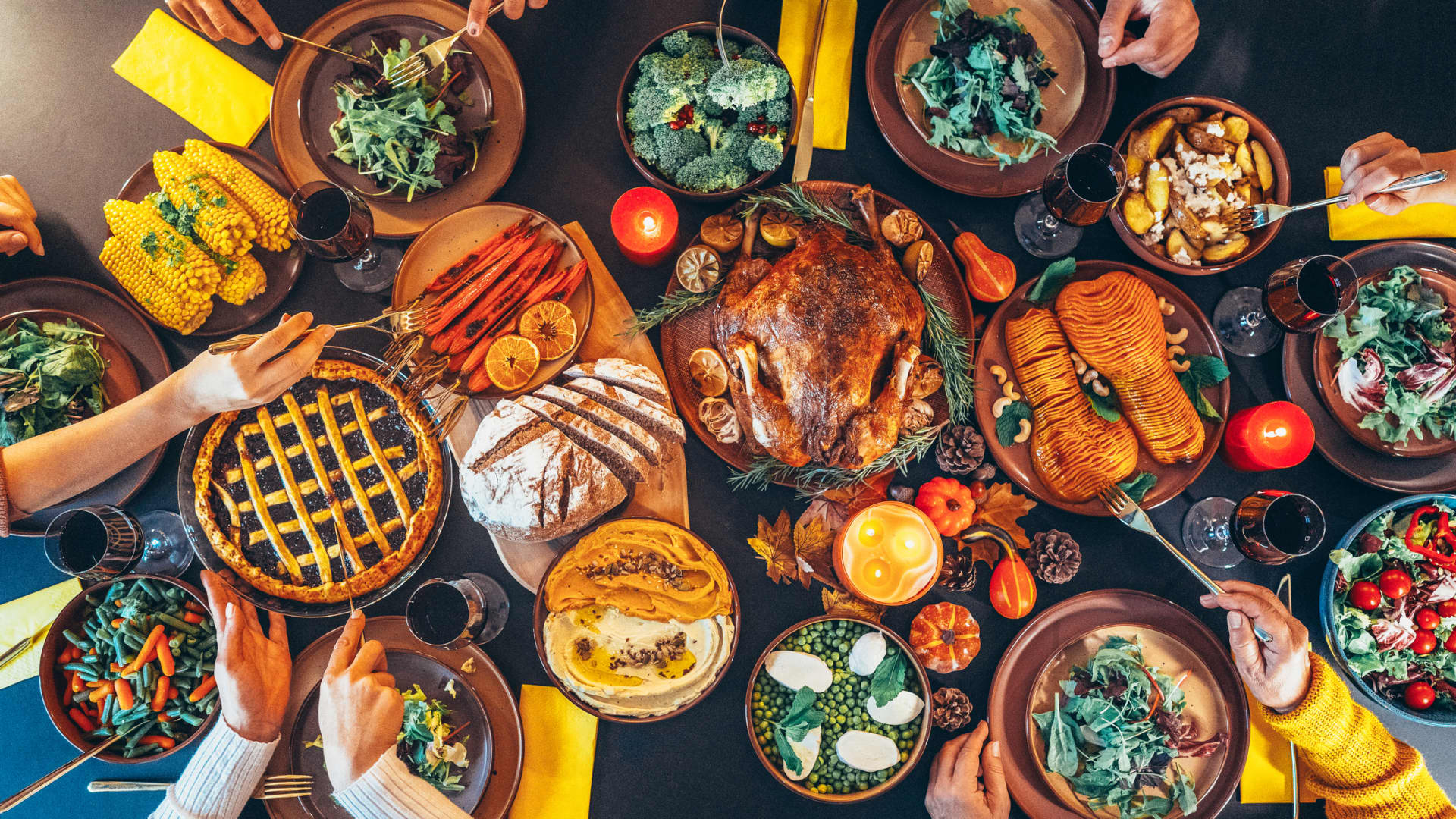
Filadendron | E+ | Getty Images
Thanksgiving is a time to gather with loved ones, to show gratitude for life’s abundance — and, of course, to eat.
And when it comes to Thanksgiving food, it seems Americans are getting relief on their grocery bills this year following a few years of escalating costs.
A “classic” Thanksgiving feast for a party of 10 will cost $58.08 in 2024, on average — down 5% from 2023 and down 9% from 2022, according to the American Farm Bureau Federation, a trade group for farmers and ranchers.
Its analysis includes turkey, cubed stuffing, sweet potatoes, dinner rolls, frozen peas, fresh cranberries, celery, carrots, pumpkin pie mix and crusts, whipping cream and whole milk.

Prices for this food basket were at a record high in 2022, at $64.05, the Farm Bureau said.
Households that add ham, russet potatoes and frozen green beans into the mix would pay $77.34 in 2024, on average — an 8% decrease from 2023, the Farm Bureau said.
The annual decline in prices will be welcome news to many households: Nearly half, 44%, of people hosting Thanksgiving this year are concerned about the cost of the event, according to a recent Deloitte survey.
The decrease is largely due to various supply-and-demand dynamics driving down prices for key staples — turkey, most importantly — and an overarching decline in U.S. food inflation, according to economists.
More from Personal Finance:
Act now for $7,500 EV tax credit
How Trump’s win could change your health care
Remote work is helping Americans take longer trips
“Food inflation has been pretty tame,” said Robin Wenzel, head of the Wells Fargo Agri-Food Institute. “You’re seeing some good relief there.”
That said, a classic Thanksgiving meal is still 19% pricier than it was in 2019, according to the Farm Bureau.
“Declines don’t really erase the dramatic increases we had,” said Bernt Nelson, a Farm Bureau economist.
Turkey has been a ‘curious item’
Turkey price movements had “definitely the biggest impact” on the overall cost of a Thanksgiving meal this year, Nelson said. That’s because a 16-pound bird accounts for 44% of the overall Thanksgiving grocery bill, he said.
The national average cost for a 16-pound turkey is down 6% from 2023, according to the Farm Bureau. Overall turkey prices have decreased about 4% in the past year, according to the consumer price index.
Turkey has been a “curious item this year,” Nelson said.
On one hand, turkey supply is down “significantly,” he said. Farmers raised about 205 million turkeys in 2024, down 6% from 2023, according to the U.S. Department of Agriculture. That’s the lowest figure since 1985, Nelson said.
Monty Rakusen | Digitalvision | Getty Images
Largely, that’s because of the impact of bird flu, a lethal and contagious disease among birds that has contributed to the deaths of about 14 million turkeys since 2022, he said.
Lower supply would tend to raise prices, all else equal. But consumer demand has decreased as well. To that point, turkey consumption per capita has fallen by about one pound this year, he said.
The aggregate impact has been lower turkey prices.
Weather and labor impacts
Meanwhile, prices fell notably — by 14% — for whole milk, a staple ingredient in pie and other recipes, Nelson said.
That’s largely attributable to “favorable” weather conditions in the U.S. for dairy cattle — both in terms of their overall wellbeing and for crops they eat — thereby helping boost milk production, Nelson said.
Of course, not everything is cheaper.
Prices for processed products like dinner rolls and cubed stuffing increased more than 8% from 2023, for example, the Farm Bureau said. That’s primarily attributable to non-food-related inflation such as labor costs, pushing up prices “for partners across the food supply chain,” the group said in its analysis.
Food inflation has been pretty tame. You’re seeing some good relief there.
Robin Wenzel
Wells Fargo Agri-Food Institute
Aside from labor costs, there were many contributors to fast-rising grocery prices during the pandemic era.
For example, in 2022, food prices grew faster than any year since 1979, partly due to a bird-flu outbreak that affected egg and poultry prices, while Russia’s invasion of Ukraine “compounded other economy-wide inflationary pressures such as high energy costs,” according to the USDA.
Higher costs for energy such as gasoline and diesel fuel translate into higher prices across the food supply chain, such as to distribute groceries to store shelves, experts said.
“Food price growth slowed in 2023 as wholesale food prices and these other inflationary factors eased from 2022,” the USDA said, and it has declined further in 2024.
How to trim Thanksgiving costs
Consumers looking to save money on their Thanksgiving meal in 2024 can do so by toggling between store brands and name brands for certain grocery items, according to Wenzel of the Wells Fargo Agri-Food Institute.
A menu of completely store-brand items to feed 10 friends and family members would yield a total savings of $17, according to a Wells Fargo analysis.
Consumers often pay a premium for name-brand items, but that’s not true in all cases this year.
For example, name-brand cranberries are cheaper than the store brand, on average, Wenzel said.
“When shopping this year, it really comes back to doing a little bit of research,” Wenzel said.


Personal Finance
Next-Generation Retirement Planning: Managing Longevity Risk and Variable Income Streams


U.S.- Canada Trade Talks Collapse; Carney Says Retaliatory Tariffs Begin September 8

Flock Cameras and the Future of Public Security

AI Infrastructure Boom Hits Physical Limits: Power, Financing, and Supply Chain Strain

Armanino adds Strategic Accounting Outsourced Solutions

New 2023 K-1 instructions stir the CAMT pot for partnerships and corporations

Tax Strategy: Employee Retention Credit update
-

 Stock News1 week ago
Nvidia Q2 FY2027 Earnings beats Wall Street Expectation with Record $96.2 Billion Revenue
-
 Technology6 days ago
AI Infrastructure Boom Hits Physical Limits: Power, Financing, and Supply Chain Strain
-
 Technology3 days ago
Flock Cameras and the Future of Public Security
-
 Economics3 days ago
U.S.- Canada Trade Talks Collapse; Carney Says Retaliatory Tariffs Begin September 8