
Accounting
The 2024 Best Firms for Women: Freedom of choice

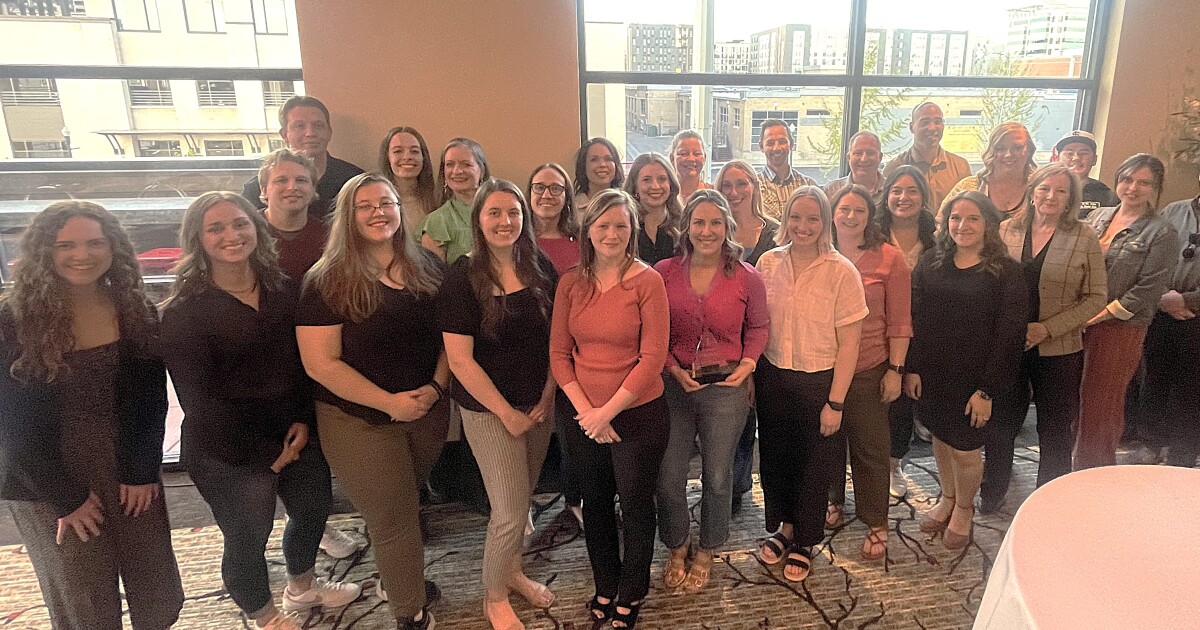
There are many different ways Accounting Today’s 2024 Best Firms for Women earned the honor of being among the top 10 most female-forward workplaces, but while the individual policies and programs they employ to effectively recruit, retain and advance women vary by practice, two stand out as critical for the highest-ranked firms: flexibility and mentorship.
Both strategies also empower female employees to make critical choices for their personal and professional success.
“Mentorship is so important — it’s just the be-all, end-all these days,” said April Miller, principal at Laurel, Maryland-based Bormel, Grice & Huyett PA, a Best Firm for Women for the third consecutive year, this year ranking No. 3. “So much more focus is on mentorship and training than ever before. It has a lot to do with retaining people and a lot to do with attracting people. Most people want to grow and advance, and we really want to foster that here. It’s more important than anything else.”
(See the
Bormel, Grice & Huyett offers two types of mentors, Miller explained: “a mentor for learning, your work-side policies, procedures, technical help, as people advance and get more experience in the industry, and also a mentor whose primary focus is on career guidance.”
San Francisco-based Realize CPA, No. 5 among this year’s Best Firms for Women but also the highest ranked midsized firm on the list, shares those priorities, with managing partner Minerva Tottie crediting her female staff’s satisfaction to its strong mentorship program and flexible work culture.
All the Best Firms for Women are chosen from the members of Accounting Today’s annual Best Firms to Work For list, which is based on in-depth employee surveys. The Best Firms for Women, among other criteria, garnered positive survey responses from their female employees.
“Providing flexibility for women,” Tottie identified as one of Realize’s strengths. “We have a really strong mentorship program at Realize. Mentorship and flexibility. We usually get women fresh out of college, super eager and ambitious and ready to work. And then life happens: marriage, kids. Having mentors who can help guide them along the work side of things and different changes of life is really important, and we continue to provide that. We don’t want to get them discouraged. Accounting is a hard profession, with the hour requirements, especially on the tax side.”

The Best Firms for Women recognize that the profession’s current talent shortage makes these two principles more vital than ever. To combat the pipeline problem, they have also adjusted for the needs of younger candidates.
“Based on experience, education, and how they are brought in, we have a dedicated coaching and staff development plan that details expectations at each level,” shared Kayla Perry, firm administrator at Boise, Idaho-based B.A. Harris, No. 2 on this year’s list. “We make it clear to staff. This generation asks for complete clarity. They’re not a gray generation but black and white. We provide as much information as possible; the expectations of the next level up and so on. All expectations are provided to them even at an associate level, to see what it takes for a promotion to senior, to manager.”
At the Best Firms for Women, employees also have a choice in mentors and coaches.
“Good mentors, leaders who are also women, who have also been there, can provide guidance,” explained Tottie. “Oftentimes, myself as a partner, I’ll team up with another woman at a supervisor, manager level just so they can feel comfortable bringing up the types of issues they might not otherwise feel comfortable bringing up with men. Some women don’t care, and can be paired up with men or women. We are sensitive to what people need to get far in their career.”
“Any of the partners are always welcoming,” shared Miller. “Sometimes people don’t want to talk to partners, but have [a talk with] managers, principals or peers. There are different groups with different comfort levels of what they want to speak about.”
Bormel, Grice & Huyett also finds value in connecting female new hires with more senior women in the firm.
“We are respectful of the challenges some women face,” Miller said. “Not all women struggle with work-life balance but that is a thing, responsibility in the office plus family … We try to be respectful of women and men having the work-life balance everyone is talking about. Among new hires, we encourage setting up a meeting with a woman at the firm to talk about their experiences. We’ve found that to be really helpful to put candidates at ease.”
Flexibility at the forefront
Staff at all levels continue to value flexibility, both in work hours and location, and in career paths.
“We try to be very flexible to all staff,” said Megan Sunthimer, partner at No. 4-ranked firm C&D, based in Solvang, California. “We see that a lot with women who have kids, trying to be flexible with needs that parents in general have with young kids.”

All the Best Firms for Women stressed that their flexible work policies apply to men and women, with or without children, to maintain the ever-important work-life balance. But many firm leaders also acknowledge the extra burden that can fall on women.
“From personal experience, for quite a few really great female employees, different life things come up, particularly in the accounting industry, that can be pretty stressful at times with other commitments,” said Sunthimer. “They have decided, based off family dynamics and needs, the accounting industry in general: Is that where I want to be, in public accounting? That’s been a struggle in retention, specifically. Recruiting has been a tough few years with COVID and a lot less people entering the accounting industry.”
“Females are typically the default parent when it comes to children,” said Perry. “Whenever there are sick kids, the ability to work remotely at a moment’s notice, they need everyone to be super understanding. The leadership here is two-thirds women, and it really sets a good example for the rest of the staff, that there’s a place in leadership for women. And I think the partners here really empower women and hear them out. A great maternity leave policy also contributes to the satisfaction for women.”
The Best Firms for Women offer hybrid and remote work options, with C&D and Realize both calling for core hours for staff when everyone must be available, with flexibility outside those time frames.
B.A. Harris has also adjusted its mindset around long hours. “As a firm, over the past two years, we have reduced that expectation of hours worked,” said Perry. “It’s more about workload, the projects assigned to you, if you get them done … We allow everyone to set their own schedule, even during busy season. A lot work more, but that’s their decision. If they come in on a Saturday, we buy lunch, and it’s a casual environment with no dress code.”
B.A. Harris also closes the office on Fridays from May 1 through Labor Day to give staff three-day weekends to look forward to during the longer hours of busy season.
Realize recently “beefed up the head count so there is enough people to spread the work around, which is really helpful,” shared Tottie. “A new woman joined not too long ago, from out of state. She said, ‘That’s the best busy season I’ve ever had.’ It breeds loyalty, when you feel rested and good at work.”
Carving new paths
Employees also value choice in career paths, especially women juggling family commitments.
“Each family dynamic is different, each woman’s responsibilities are different,” said Sunthimer. “They might have kids, might be married, might not have a partner. Those hour commitments sometimes can be overwhelming, stressful. It’s OK to have different tracks available. Sometimes you get into public accounting and envision one track of how to move forward, but start to develop other paths. Maybe you have a staff person that can only work 40 hours a week and can’t do overtime. That doesn’t mean you can’t get to the next level. Have different paths available — do not stick to this is how it has always been done.”
Sunthimer and the female leaders at the other Best Firms for Women all have personal experience with these varied trajectories.
“My goal, ever since starting at C&D, was to eventually become partner,” Sunthimer shared. “When I moved to Indiana, I thought that might permanently derail that; we never had a remote partner before. It was a big step for them to take. They really value the experience I bring to the team. Two other employees, both employees working remotely before COVID, both female, they did want to retain them because they valued them so much. The retention of the other female employees is because the firm values everything they bring to the table. When you work for a firm that shows appreciation and values you, genuinely cares about you, as this firm does, it makes you want to stick around.”
Tottie can also relate, having worked at Realize since 2016.
“I absolutely did have mentors,” she recalled. “I have two kids. At one point [I thought] I don’t think I’m going to be able to do it. They allowed me to scale back my workload for a couple of years, which was hugely beneficial. They also reduced pay, and I’m OK with that if it meant I could stay in the game. When the kids were a little bit older, I came back little by little and was able to stay in it. I’m a partner now, and it’s an amazing career.”
“We’re just in general really focused on giving everyone the right guidance,” Tottie continued. “It’s such a great career if you can have, early on, someone to navigate through the challenges, to allow you to stay in the business, allow you to grow, allow you to have empathy skills for other women coming in and growing through the same challenges.”
One of Tottie’s colleagues benefited directly from Realize’s determination to retain the best talent.
“One woman had a baby and felt very strongly — she’s one of our superstars — that she wanted to take half a year off to be with the baby,” Tottie shared. “She’s so good we said, ‘OK. We’re here, we don’t want you to go anywhere, you’re on the partner track.’ It presents a challenge for us to allow that flexibility, but we know long term it’s the right thing to do, we’re in it for the long haul with them. They know that, and it helps a lot.”
(See the





Treasury Bond Volatility Forces Bessent to Double Debt Buyback Size as Yields Swing

Nvidia Earnings Preview: What Wall Street Expects From the AI Bellwether’s Q2 Report

SEC’s Semiannual Reporting Proposal Faces Investor Pushback: What CFOs Need to Know

Armanino adds Strategic Accounting Outsourced Solutions

New 2023 K-1 instructions stir the CAMT pot for partnerships and corporations

Tax Strategy: Employee Retention Credit update
-

 Economics1 week ago
U.S. Retail Sales Fall for the First Time in Nine Months as Consumer Spending Slows
-

 Economics1 week ago
Nvidia’s Potential $3 Billion SB Energy Investment Could Reshape AI Infrastructure
-

 Economics4 days ago
Top 10 Largest Economies by 2030: IMF & World Bank GDP Projections for Global Powerhouses
-

 Stock News4 days ago
How to understand Intel $15B Stock Offering
-

 Technology1 week ago
U.S.-China AI Competition Intensifies as Washington Pushes Allies to Choose Sides
-

 Economics4 days ago
Economic Profile of the United States of America (2026–2030 Horizon)
-

 Leaders3 days ago
Jackson Hole 2026: What the First Symposium Under Fed Chair Kevin Warsh Means for Markets
-

 Economics3 days ago
U.S. National Debt Surpasses $40 Trillion for the First Time: What It Means for the Economy