While I instantly loved the intrigue and challenge of investing, having grown up in a financially volatile family, aggressive financial risk-taking made me extremely queasy. In 2001, when I inadvertently stumbled into dividend investing, I found a strategy that resonated deep in my core—the comfort, clarity and consistency of a dividend income stream gave me the confidence that I required to be a successful investor. I found it empowering to know that whatever was happening in the mercurial stock market, the income stream that dividends offered would be there chugging along, plunking into investment accounts, providing a reliable source of income month after month.
Only by managing a dividend income portfolio, where the dependability of dividends offered the extraordinary benefit of investment return and emotional comfort, could I find the confidence to manage money for other people—money that they had worked so hard to save and that they could either use as a source of income or simply count on as a dependable portion of their total portfolio return.
The individuals that invest in dividend-oriented strategies can be divided into two main categories: those who need income and those who want income.
- Those who fall into the “need it” category tend to be focused on a very specific objective—typically the generation of income for retirement or as a supplemental source of funds to support their lifestyle. Perhaps more interesting are the many investors who simply like to see income hitting their portfolios. In the land of unpredictable stock market returns, the monthly deposits of cash from dividends bring tremendous comfort in a frequently discomfiting landscape.
Even though the equity income strategy was off to a successful start, and I had left Neuberger Berman in 2006 to move to Gilman Hill Asset Management and essentially go out on my own with the strategy, I did not fully comprehend its unique value until March 5, 2009—just four short days before the S&P 500 hit the diabolical low of 666. I was nine months pregnant at the time and was calling clients to check in and make sure that they were as okay as possible given the market turbulence.
When times are tough, you do not hide from your clients.’ I was not quite three years into having gone out on my own and I felt an overwhelming debt of obligation and responsibility to the handful of people who had taken a gamble on me and entrusted their life savings to a 30-something-year-old. What would later become known as the bear market of the Great Financial Crisis had started over a year before and the only thing I knew I could do that was guaranteed to be smart was to communicate frequently, openly and honestly.
Dividend income provides emotional comfort, emotional comfort encourages good investment behavior and good investment behavior creates superior long-term returns.
Twenty-two years later, this strategy sounds as utterly unremarkable as it did then: invest in a portfolio of stocks that produces a 5% or better aggregate dividend yield. The primary difference between then and now is that back then, almost no one else was doing it. While there are income oriented strategies aplenty today (many are perfectly sound, but others come with hidden risks in the form of leverage or the excessive use of derivatives to drive the income stream), if you wanted significant dividend income from equities in 2001, you could buy a real estate investment trust (REIT) or utility fund, or you could buy a handful of master limited partnerships (MLPs); but there were very few funds that focused on dividends. Of course, back in 2001, the ten-year Treasury bond offered an average yield of between 4.5% and 5.5% and the need for income was usually easily satisfied through fixed income—and most individual investors defaulted to that approach.
I see portfolio management as the pursuit of utilitarian outcomes—be they tangible and/or psychological—for real people. As I often ask my clients, “What is the point of having money if it cannot bring you comfort?” Why else would one save their whole life other than to have a comfortable retirement and/or make their kids’ lives a bit more comfortable? An investment portfolio is worth nothing but the paper that the monthly statements are printed on if it cannot meaningfully improve your life, and hopefully the lives of others. That life improvement can take two primary forms: financial and psychological relief.
You will notice that I start each chapter with one of my favorite quotes from some of the investment world’s greatest investors…Despite coming from different types of investors and wealth creators, and from all eras and centuries, these quotes have one thing in common: they are all about behavior. I find it interesting that the world’s best investment advice from the world’s best investors is all about behavior—not about how to find a great investment; not about the research process; not about valuation. It seems to be a fair conclusion, then, that excellent investing is very closely correlated with excellent behavior.
1. What is a Dividend?
“‘Dividends are like plants: Both grow. But dividends can grow forever, while the size of plants is limited.’—Ed Yardeni”
A dividend is a payment, usually made in cash on a regular quarterly basis, to a shareholder. If a stock is trading at $100 per share and has a 5% dividend yield, it means that shareholders will receive $5 per share annually, or $1.25 every three months. So, if you own $1,000 worth of that stock, you will receive $50 per year, or $12.50 each quarter.
If a company has said that it will pay you a $5 dividend, it is likely to do so whether the stock price is $100, $75 or $125. The dividends for most US-based companies are considered fixed and are paid out regularly, and are not affected by the share price. (Later, we will discuss variable dividends.)
If a stock was purchased for $100 with a $5 dividend, then at the time of purchase the dividend yield was 5%. If the market tanks and the shares trade down to $75, but the company is still executing well and continues to pay the $5 dividend, the yield is now 6.7% (5 divided by 75). The opposite is also true: if the market takes off and carries the share price along with it, up to $125 per share, and the company is still happy to pay a $5 dividend, then the dividend yield will now have become 4% (5 divided by 125).
So why do companies pay dividends instead of just keeping all the cash? One reason is that in order to entice people to buy its stock, a company needs to offer potential shareholders something in return. For some companies, that enticement is the prospect of enormous future growth in earnings and, hopefully, in share price. For others, it is the promise of a regular return on the money that a shareholder has invested in that company.
Companies may also pay and regularly increase dividends as a way to signal their confidence in the future, as well as their control of the business’s financial prospects and balance sheet. Paying stable and growing dividends is a way to advertise to potential shareholders, “Come invest with us—we know what we’re doing and know how to return money to our investors. In a sea of knuckleheads, we’re the mature grownup who can actually run a significantly profitable company.”
Today, we are seeing a renewed focus on dividend return to shareholders. In 2022, the total dividends paid out by S&P 500 companies was $565 billion, the highest figure on record. For the first time in decades, interest rates are structurally higher and near-zero borrowing costs seem to be a phenomenon of yesteryear. Also, in the four years from 2018 to 2022, investors experienced three bear markets (as defined by a 20% or more market decline). As their revenues and market capitalizations have reached gargantuan scale, the Apples and Microsofts of the world have become so mature and so profitable that their future growth rate prospects have significantly diminished (much like what happened to Chevron decades earlier). Meanwhile, they are enormously profitable and generate more cash than they can possibly reinvest in their businesses. So, what are they doing? They are paying dividends. In fact, in 2023, Microsoft was the world’s single-largest dividend payer, returning approximately $19 billion to shareholders. (However, because of the high valuation of the share price, the dividend yield on Microsoft shares is still under 1%.
“As we move into the coming decades, it is most likely that collectively, US companies will continue to pay out enormous sums of their income in the form of dividends. However, the leadership of the biggest dividend payers and the amounts they pay will always fluctuate and evolve.” (29)
2. Emotional Comfort
“The investor’s chief problem—and his worst enemy—is likely to be himself. In the end, how your investments behave is much less important than how you behave.” —Benjamin Graham
Investing for dividend income can provide an investor with the warm, cozy blanket of reliable cash in their pockets through thick and thin. The comfort of knowing that you do not need to make an active decision to sell stocks for cash to be deposited in your investment account—regardless of a bull or bear market; regardless of if you are hard at work at the office, relaxing at home or on a cruise in the middle of the ocean—can be immensely useful and, I believe, encourages the type of superior investment behavior that correlates to excellent long-term investment returns.
When choosing between plain yogurt with granola and a chocolate croissant or custard-filled, chocolate-frosted doughnut, the less healthy option usually gets the better of me. The stock market holds these same temptations. Think back to March 2009 or March 2020, when the S&P 500 bottomed out at the respective bear market lows. Try to remember (or imagine) how you felt at those times. In my career, those were the only times that I have been truly scared. In both instances, I was no longer able to rely on market history as a guide. Both were terrifying and unprecedented in modern history.
The point of reminding you of this fear is to think back to how hard it was to see your investment account plunging in an environment with extremely little visibility. While we all know that we should try to avoid panic selling when the market is going down, and that we should, according to Warren Buffett, ‘Be fearful when others are greedy and greedy when others are fearful,’ acting on that logic and not acting on the emotional fear instinct is very difficult.
In my 25-plus years of managing a dividend income strategy, I have found that the reliability of dividend income is remarkably useful in supporting good investment behavior in exactly these worst-case scenario situations. Because it means that you do not need to sell into the teeth of a bear market to generate the cash on which you depend, dividend income keeps you invested—which is the correct thing to do at times when the market and your emotional state are telling you to do the opposite.
Without a doubt, the most important element of an individual’s investment success is behavior. Professional investors are trained to control their behavior and may succeed using a variety of different investment strategies. Individuals, while highly trained in their unique professions, are likely to be less comfortable seeing their investment dollars flung about by the whims of the stock market and may find that a strategy where the cash just rolls in regularly—very much like their bi-weekly paychecks—brings them the comfort that they need to stick it out through a variety of market environments.
3. What Types of Companies Choose to Pay Dividends and Why?
“I think you have to learn that there’s a company behind every stock, and that there’s only one real reason why stocks go up. Companies go from doing poorly to doing well or small companies grow to large companies.”—Peter Lynch
Just because a company pays a dividend does not mean that it intends to have the dividend income be a major component of shareholders’ total return. Some companies, like Realty Income Trust, focus on creating significant income for their shareholders and maintain dividend yields that are well above the market average, and are thus considered dividend income stocks. However, most of the Dividend Aristocrats are more like Procter & Gamble (P&G) and Walmart: they have much lower dividend yields, but still focus on growing their earnings significantly and maintaining growth in their dividends. These are considered dividend growth companies. For investors looking for their portfolios to produce a meaningful stream of income, dividend income stocks are where it’s at.
In addition to knowing that their shareholders require some part of their return to be predictable, companies like P&G (as well as Exxon, IBM, etc.) have a precedent problem. Even if their management teams and boards of directors begin to consider that it is a poor capital allocation decision to pay out such a substantial amount of cash as a dividend, rather than investing it back in their own business, if they decided to stop paying a dividend or even just to reduce the dividend, they would have a shareholder revolt and an investor relations nightmare on their hands.
To help us better understand why some companies choose to pay out large dividends, while others do not, let’s move away from the generally low-yielding Dividend Aristocrats list and examine two companies that my clients have owned over the years and are in the same business of equipment leasing: growth-focused United Rentals and dividend income-focused H&E Equipment (H&E).
So, here we have two companies that essentially have the same business: construction equipment rentals. The geographies are different, but as each has grown, there has been more and more overlap and geographic contingency. Thankfully, the need for construction equipment has boomed and both businesses have remained extremely profitable…
From an investment perspective, there is one key area where the companies diverge dramatically: capital allocation. United Rentals, which was founded to essentially roll up a fragmented and inefficient industry, believed that the best use of its enormous free cash flow generation was to buy up competitors to drive growth through acquisition. H&E, meanwhile, was created to supply rental equipment to construction projects and to generate income for the original Head and Enquist families. In its early years, the company was essentially a family-run business and believed that returning a large dividend to shareholders (the two families and other employees of the company were significant shareholders) was a critical element of the value proposition that it was able to offer investors.
The comparison of H&E and United Rentals offers a valuable reminder that any type of company can pay dividends, and that each decision-making process is unique and complex. Frequently, people assume that certain companies either do or do not pay a strong dividend based on nothing more than the industry in which the company operates. It is true that REITs and midstream energy companies, due to their tax structures, generally fit the stereotype and tend to pay out significant dividend income. As a result of their high cash flow generation and low growth prospects, utilities have also correctly fallen into the high dividend payer stereotype. However, outside of those groups, paying a dividend is a choice, not a presumption, and the decision is often made very strategically by the board of directors and management. Sometimes, offering a large dividend can be used as a tool to attract a shareholder base that shares the same values of consistent cash flow generation and is supportive of a management team that will consistently try to hit singles and doubles, and not swing for the fences with the aspiration of a rare grand slam. Coincidentally, shareholders that value dividends are frequently more long-term focused and less rabblerouser-activist in nature, and in many cases make for a better shareholder partnership with a company’s leadership team.
Theoretically, issuing dividends and buying back stock are both ways to return cash to shareholders. However, one method is direct and the other is indirect. In the case of dividends, the cash literally is deposited into a shareholder’s brokerage account each quarter. In the case of share buybacks, the number of a company’s shares are reduced, which directly increases the earnings per share. Theoretically, the shares should then trade higher, since there are now more earnings per share than there were when there was a greater number of shares outstanding. Whether or not the shares respond accordingly, however, is largely down to the whims of the market.
In the United States, the regularity of expected dividend payments is viewed as sacrosanct. Once a company starts paying a dividend, unless it was originally announced as a “special” one-time dividend, it is presumed that dividends will be paid quarterly and will show regular growth. Share buybacks, on the other hand, are expected to be more ad hoc in nature, whereby a company buys back shares when it is flush with cash and does not when cash is scarcer. Theoretically, share buybacks are a better use of capital allocation in that they increase the per-share profitability of a company. Practically, however, investors love seeing cash dropped into their brokerage accounts and value the immediate return of a dividend versus the more indirect return of a share buyback. Psychologically, companies that pay dividends are also thought of as safety plays, based on the idea that if a company is generating so much excess cash that it can confidently expect to pay a consistent dividend well into the future, then it must have a secure future. So, in addition to being a practical way to offer compelling shareholder return, a dividend acts as a signal of corporate strength and stability.
As was mentioned previously, for companies in the United States, dividend payments are expected to be regular and once a company starts paying a dividend, it is on the hook to keep paying a dividend. Interestingly, however, overseas, dividends do not have the same presumption of regularity and consistency. In fact, many foreign companies pay dividends with less consistency and less regularity. Elsewhere, dividends are often viewed in the way that share buybacks are in the United States—as bonuses when there is plenty of extra cash, not as a guaranteed, eternal promise. Since they were never established as something regular or guaranteed, cutting and raising dividends for overseas companies does not raise eyebrows the way they would in the United States.
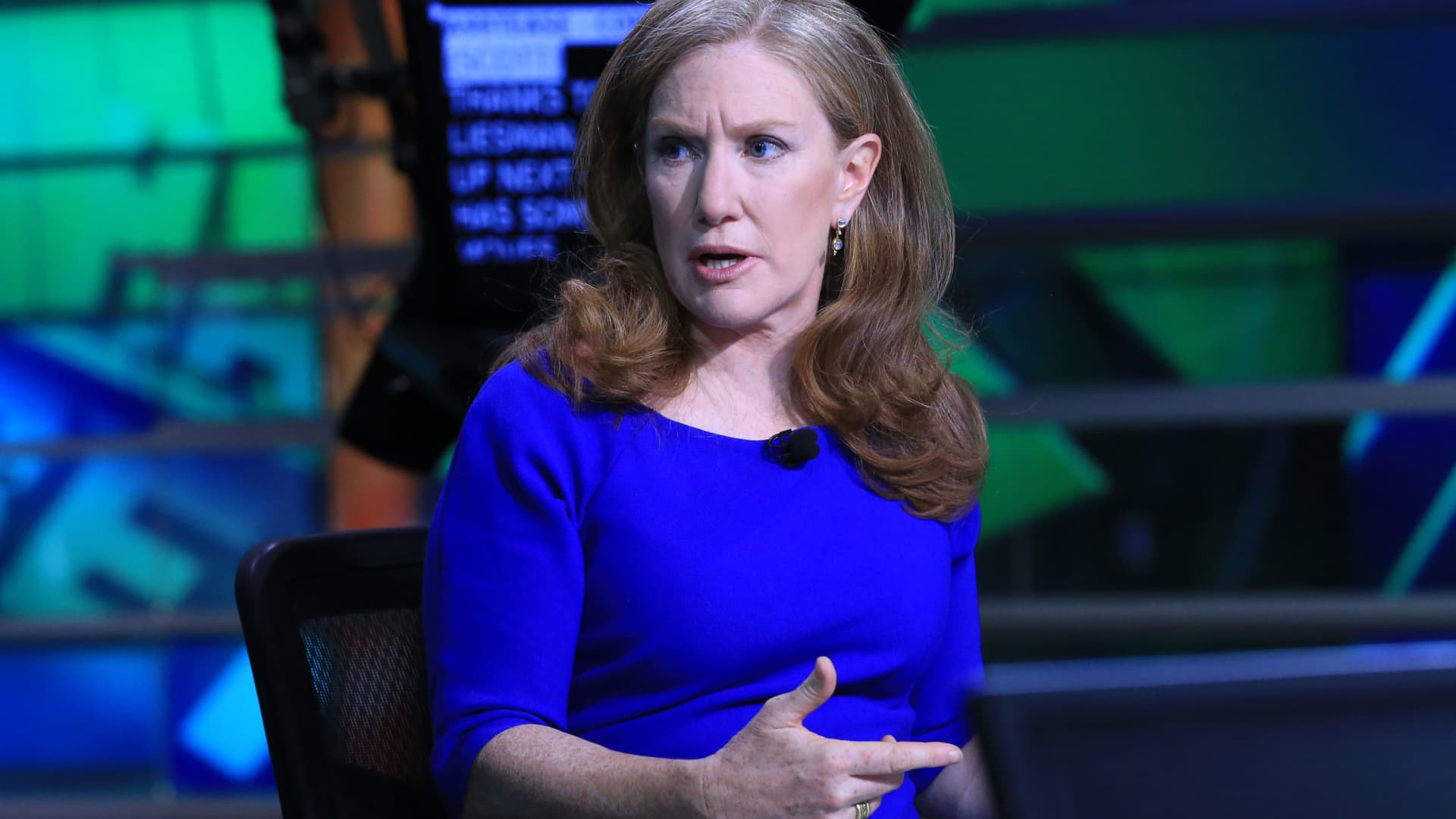
Jenny Van Leeuwen Harrington is the Chief Executive Officer of Gilman Hill Asset Management, LLC, an income-focused, boutique investment management firm located in New Canaan, CT. Ms. Harrington also serves as Portfolio Manager of the firm’s flagship Equity Income strategy, which she created and has managed since its inception. In this capacity, she is responsible for a portfolio of 30 to 40 stocks with a mandate of generating a 5% or higher aggregate annual dividend yield, with additional potential for capital appreciation, while minimizing downside risk relative to the broad equity market. Ms. Harrington has over twenty-five years’ investment experience. Prior to joining Gilman Hill in 2006, she was a Vice President at Neuberger Berman, and an Associate and Analyst in the Equities and Investment Management divisions at Goldman Sachs.









 Economics1 week ago
 Economics4 days ago
 Stock News4 days ago
 Technology1 week ago

 Economics4 days ago
 Leaders3 days ago
 Economics3 days ago