
Finance
‘The time has come for policy to adjust’

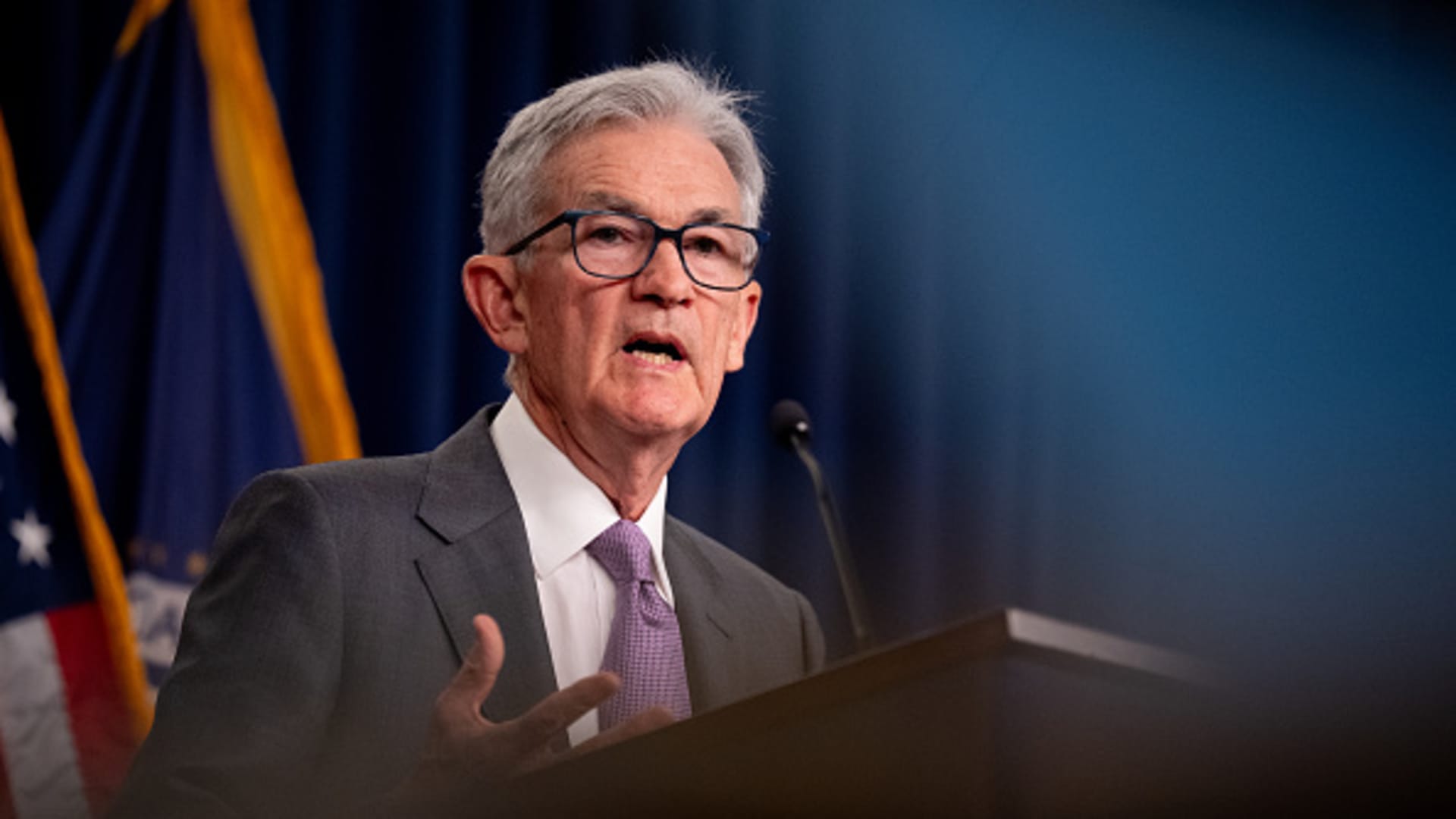

Federal Reserve Chair Jerome Powell laid the groundwork Friday for interest rate cuts ahead, though he declined to provide exact indications on timing or extent.
“The time has come for policy to adjust,” the central bank leader said in his much-awaited keynote address at the Fed’s annual retreat in Jackson Hole, Wyoming. “The direction of travel is clear, and the timing and pace of rate cuts will depend on incoming data, the evolving outlook, and the balance of risks.”
Watch live: Fed Chair Jerome Powell speaks from Jackson Hole conference
With markets awaiting direction on where monetary policy is headed, Powell focused as much on a look back at what caused the inflation that led to an aggressive series of 13 rate hikes from March 2022 through July 2023.
However, he did note the progress on inflation and said the Fed can now turn its focus equally to other side of its dual mandate, namely to make sure the economy stays around full employment.
“Inflation has declined significantly. The labor market is no longer overheated, and conditions are now less tight than those that prevailed before the pandemic,” Powell said. “Supply constraints have normalized. And the balance of the risks to our two mandates has changed.”
He vowed that “we will do everything we can” to make sure the labor market says strong and progress on inflation continues.
Stocks added to gains as Powell began to speak while Treasury yields dropped sharply . Traders maintained a 100% chance of at least a quarter percentage point rate cut in September and raised the odds of a potential half-point reduction to about 1-in-3, according to the CME Group’s FedWatch.
“This was a valedictory of essentially Chair Powell turning the page, saying the mission, which has been focused on inflation for the last two years, has been successful,” economist Paul McCulley, the former Pimco managing director, said on CNBC’s “Squawk on the Street.”
Sees progress towards goals
The speech comes with the inflation rate consistently drifting back to the Fed’s 2% target though still not there yet. A gauge the Fed prefers to measure inflation most recently showed the rate at 2.5%, down from 3.2% a year ago and well off its peak above 7% in June 2022.
At the same time, the unemployment rate has slowly but consistently climbed higher, most recently at 4.3% and in an area that otherwise would trigger a time-tested indicator of a recession. However, Powell attributed the rise in unemployment to more individuals entering the workforce and a slower pace of hiring, rather than a rise in layoffs or a general deterioration in the labor market.
“Our objective has been to restore price stability while maintaining a strong labor market, avoiding the sharp increases in unemployment that characterized earlier disinflationary episodes when inflation expectations were less well anchored,” he said. “While the task is not complete, we have made a good deal of progress toward that outcome.”
Markets are expecting the Fed to start cutting in September, though Powell made no mention of when he thinks policy easing will begin. Minutes from the July open market committee meeting, released Wednesday, noted that a “vast majority” of officials believe a September cut will be appropriate so long as there are no data surprises.
“He’s pretty dovish. He bought the option to do whatever he needs to do next month, which is clearly an ease,” said Joseph LaVorgna, chief economist at SMBC Nikko Securities. “I don’t think the bar for 50 [basis points] is particularly high.”
In addition to assessing the current state of play, Powell took considerable time in the speech to evaluate what led to the surge in inflation — hitting its highest level in more than 40 years — as well as the Fed’s policy response and why price pressures have eased without a recession.
‘Good ship Transitory’
When inflation first began to rise in early 2021, he and his colleagues — as well as many Wall Street economists — dismissed it as “transitory” and caused by Covid-related factors that would abate.
“The good ship Transitory was a crowded one,” Powell quipped to laughter form attendees, “with most mainstream analysts and advanced-economy central bankers on board. I think I see some former shipmates out there today.”
When it became clear that inflation was spreading from goods to services, the Fed pivoted and began hiking, ultimately adding 5.25 percentage points to its benchmark overnight rate that had been around zero following emergency cuts in the early pandemic days.
The rise in inflation, Powell said, was “a global phenomenon,” the result of “rapid increases in the demand for goods, strained supply chains, tight labor markets, and sharp hikes in commodity prices.”
He attributed confidence in the Fed and well-anchored expectations that inflation ultimately would ease to the economy avoiding a sharp downturn during the hiking cycle.
“The FOMC did not flinch from carrying out our responsibilities, and our actions forcefully demonstrated our commitment to restoring price stability,” he said. “An important takeaway from recent experience is that anchored inflation expectations, reinforced by vigorous central bank actions, can facilitate disinflation without the need for slack.”
Powell added that there is still “much to be learned” from the experience.
“That is my assessment of events. Your mileage may differ,” he said.




S&P 500 September Outlook: Tech Rally Holds Index at 7,600

India Unveils ‘Saptadhara’ Reform Agenda Targeting Technology, Youth Skilling, and Growth

S&P 500 Outperforms Amid Strong Corporate Earnings as Treasury Yields Cap Equity Multiples

Armanino adds Strategic Accounting Outsourced Solutions

New 2023 K-1 instructions stir the CAMT pot for partnerships and corporations

Tax Strategy: Employee Retention Credit update
-

 Technology7 days ago
AI Infrastructure Boom Hits Physical Limits: Power, Financing, and Supply Chain Strain
-

 Economics4 days ago
U.S.- Canada Trade Talks Collapse; Carney Says Retaliatory Tariffs Begin September 8
-
 Stock News17 hours ago
S&P 500 September Outlook: Tech Rally Holds Index at 7,600
-

 Technology5 days ago
Flock Cameras and the Future of Public Security
-
 Finance18 hours ago
S&P 500 Outperforms Amid Strong Corporate Earnings as Treasury Yields Cap Equity Multiples
-

 Insights18 hours ago
Climate Resilience and Offshore Wind and Land Restoration Milestones
-
 Accounting18 hours ago
Mandatory ESG Reporting Standards Demand Standardized Non-Financial Audit Trails
-
 Leaders17 hours ago
India Unveils ‘Saptadhara’ Reform Agenda Targeting Technology, Youth Skilling, and Growth