
Personal Finance
Top 10 S&P 500 stock winners since Election Day

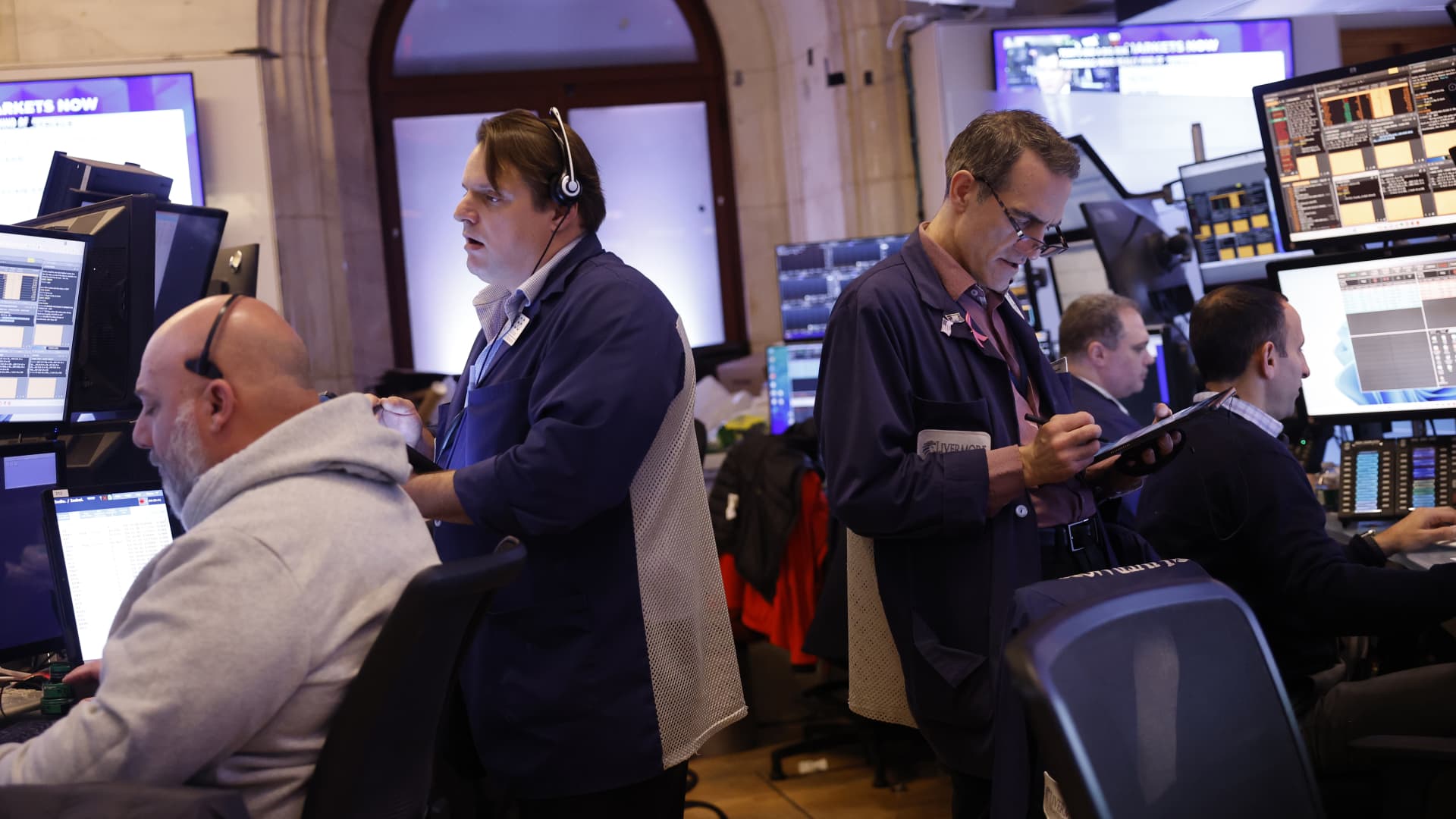
Stock traders on the floor of the New York Stock Exchange.
Michael M. Santiago | Getty Images News | Getty Images
Many large U.S. companies have seen their stocks swell since the presidential election.
The top 10 performing stocks in the S&P 500 index saw returns of 18% or more since Election Day, according to data provided by S&P Global Market Intelligence, which analyzed returns based on closing prices from Nov. 5 to Nov. 20.
Two companies — Axon Enterprise (AXON), which provides law-enforcement technology, and Tesla (TSLA), the electric-vehicle maker led by Elon Musk, an advisor to President-elect Donald Trump — saw their stocks gain more than 35%, according to S&P Global Market Intelligence.
By contrast, the S&P 500 gained about 2% over the same period.
‘Usually a bad idea’ to buy on short-term gain
Investors should be cautious about buying individual stocks based on short-term boosts, said Jeremy Goldberg, a certified financial planner, portfolio manager and research analyst at Professional Advisory Services, Inc., which ranked No. 37 on CNBC’s annual Financial Advisor 100 list.
“It’s usually a bad idea,” Goldberg said. “Momentum is a powerful force in the market, but relying solely on short-term price moves as an investment strategy is risky.”
Investors should understand what’s driving the movement and whether the factors pushing up a stock price are sustainable, Goldberg said.
Why did these stocks outperform?
Lofty stock returns were partly driven by Trump administration policy stances expected to benefit certain companies and industries, investment experts said.
Deregulation and a softer view toward mergers and acquisitions are two “key” themes driving bullish sentiment after Trump’s win, said Jacob Manoukian, head of U.S. investment strategy at J.P. Morgan Private Bank.

Relying solely on short-term price moves as an investment strategy is risky.
Jeremy Goldberg
portfolio manager and research analyst at Professional Advisory Services, Inc.
Additionally, U.S. regulators will likely be much less stringent about allowing potential mergers during Trump’s second term, experts said.
Companies in the streaming ecosystem — like Warner Bros. Discovery (WBD), which owns the Max streaming service, and Disney+ owner The Walt Disney Co. (DIS) — may be benefactors of looser rules around consolidation, they said.
Rosy earnings and AI
For some stocks, outperformance was tied to rosy quarterly earnings results or guidance that some companies reported around or after Election Day, experts said.
Many such businesses cited artificial intelligence as a growth driver.
For example, Palantir Technologies (PLTR), cited “unprecedented” demand for its AI platform in the third quarter, helping deliver “exceptionally strong” earnings, Treasurer and CFO David Glazer told investors Nov. 4.
Likewise, Axon beat analysts’ estimates in its Nov. 7 earnings results, with officials touting its “AI era plan” and raising earnings guidance, Goldberg said.
Axon and Palantir stocks were up 38% and 22%, respectively, from Nov. 5 to Nov. 20, according to S&P Global Market Intelligence.
Some companies benefited from a combination of policy and earnings, experts said.
Rows of servers fill Data Hall B at Facebook’s Fort Worth Data Center in Texas.
Paul Moseley/Fort Worth Star-Telegram/Tribune News Service via Getty Images
Take Vistra Corp. (VST), an energy provider, for example. The company’s stock jumped 27% after Election Day.
Vistra is in talks with large data centers — or “hyperscalers” — in Texas, Pennsylvania and Ohio to build or upgrade gas and nuclear plants, Stacey Doré, Vistra’s chief strategy and sustainability officer, said on the company’s Q3 earnings call Nov. 7.
Tech companies are building more and more such data centers to fuel the AI revolution — and need to source increasing amounts of energy to run them.
The ‘Elon Musk premium’
And then there’s the Elon Musk factor.
Tesla’s stock got an “Elon Musk premium” from Trump’s victory, said Goldberg of Professional Advisory Services.
Musk, Tesla’s CEO, was one of Trump’s top campaign backers. Trump tapped him to co-lead a new Department of Government Efficiency. Shares of the electric-vehicle maker soared 14% the day after the election and almost 30% by week’s end.
President-elect Donald Trump and Elon Musk talk ring side during the UFC 309 event at Madison Square Garden on Nov. 16, 2024 in New York.
Chris Unger | Ufc | Getty Images
But Tesla stock has additional tailwinds, experts said.
For one, Trump wants to end a $7,500 federal tax credit for EVs. Scrapping that policy is expected to hurt Tesla’s EV rivals.
Tesla has also been developing technology for driverless vehicles. In Tesla’s recent earnings call, Musk said he’d use his influence in Trump’s administration to establish a “federal approval process for autonomous vehicles.”


Personal Finance
Next-Generation Retirement Planning: Managing Longevity Risk and Variable Income Streams


U.S.- Canada Trade Talks Collapse; Carney Says Retaliatory Tariffs Begin September 8

Flock Cameras and the Future of Public Security

AI Infrastructure Boom Hits Physical Limits: Power, Financing, and Supply Chain Strain

Armanino adds Strategic Accounting Outsourced Solutions

New 2023 K-1 instructions stir the CAMT pot for partnerships and corporations

Tax Strategy: Employee Retention Credit update
-

 Stock News1 week ago
Nvidia Q2 FY2027 Earnings beats Wall Street Expectation with Record $96.2 Billion Revenue
-
 Technology6 days ago
AI Infrastructure Boom Hits Physical Limits: Power, Financing, and Supply Chain Strain
-
 Technology3 days ago
Flock Cameras and the Future of Public Security
-
 Economics3 days ago
U.S.- Canada Trade Talks Collapse; Carney Says Retaliatory Tariffs Begin September 8