
Finance
Trade tensions not stopping Chinese companies from pushing into U.S.

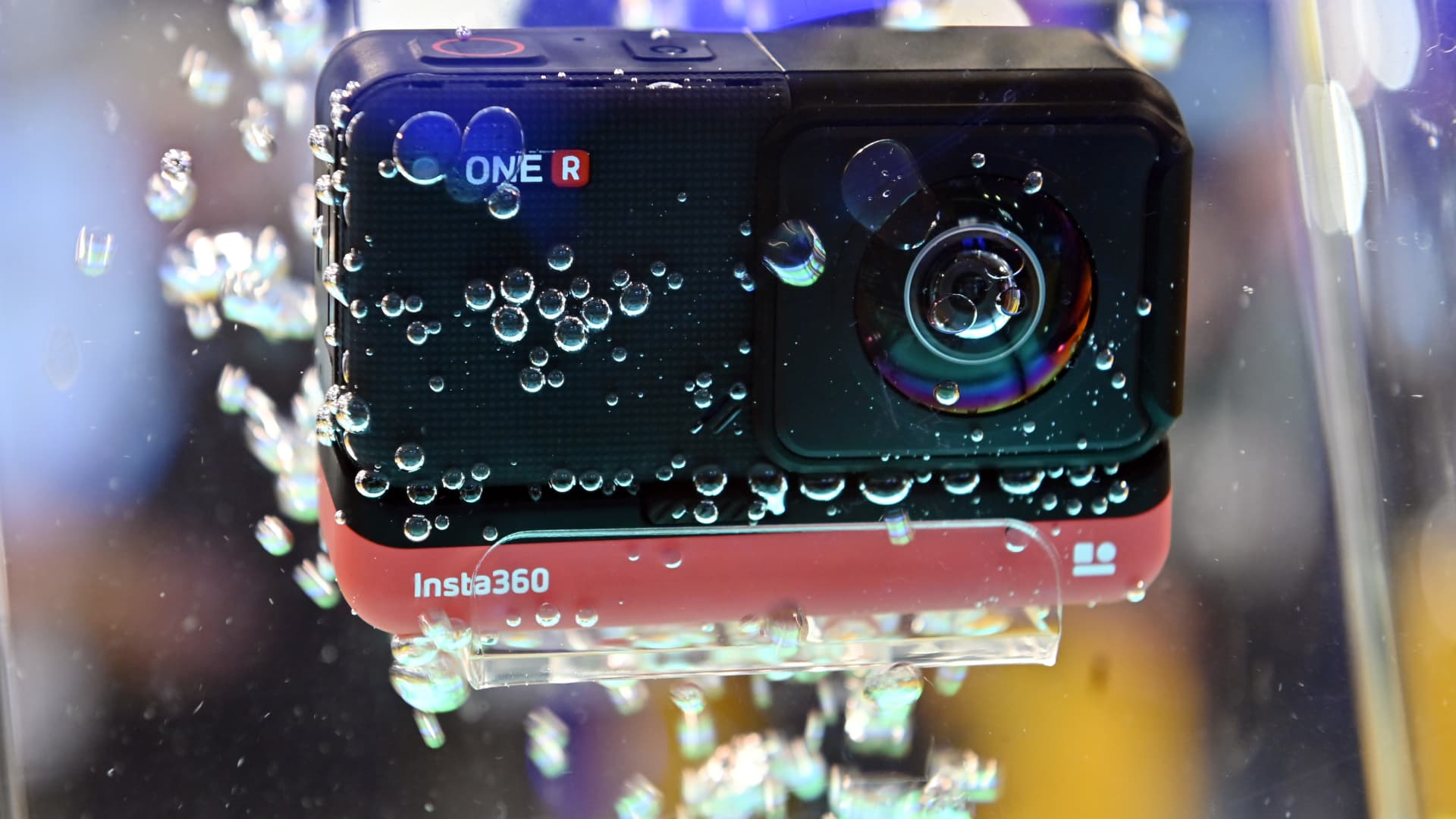
The Insta360 One R displayed in a container of water at the Insta360 booth during CES 2020 at the Las Vegas Convention Center on Jan. 8, 2020.
David Becker | Getty Images News | Getty Images
BEIJING — Chinese companies are so intent on global expansion that even the biggest stock offering to date on Shanghai’s tech-heavy STAR board counts the U.S. as one of its biggest markets, on par with China.
Shenzhen-based camera company Insta360, a rival to GoPro, raised 1.938 billion yuan ($270 million) in a Shanghai listing Wednesday under the name Arashi Vision. Shares soared by 274%, giving the company a market value of 71 billion yuan ($9.88 billion).
The United States, Europe and mainland China each accounted for just over 23% of revenue last year, according to Insta360, whose 360-degree cameras officially started Apple Store sales in 2018. The company sells a variety of cameras — priced at several hundred dollars — coupled with video-editing software.
Co-founder Max Richter said in an interview Tuesday that he expects U.S. demand to remain strong and dismissed concerns about geopolitical risks.
“We are staying ahead just by investing into user-centric research and development, and monitoring market trends that ultimately meet the consumer[‘s] needs,” he told CNBC ahead of the STAR board listing.
China launched the Shanghai STAR Market in July 2019 just months after Chinese President Xi Jinping announced plans for the board. The Nasdaq-style tech board was established to support high-growth tech companies while raising requirements for the investor base to limit speculative activity.

In 2019, only 12% of companies on the STAR board said at least half of their revenue came from outside China, according to CNBC analysis of data accessed via Wind Information. In 2024, with hundreds more companies listed, that share had climbed to more than 14%, the data showed.
“We are just seeing the tip of the iceberg. More and more capable Chinese firms are going global,” said King Leung, global head of financial services, fintech and sustainability at InvestHK.
Leung pointed to the growing global business of Chinese companies such as battery giant CATL, which listed in Hong Kong last month. “There are a lot of more tier-two and tier-three companies that are equally capable,” he said.
InvestHK is a Hong Kong government department that promotes investment in the region. It has organized trips to help connect mainland Chinese businesses with overseas opportunities, including one to the Middle East last month.
Roborock, a robotic vacuum cleaner company also listed on the STAR board, announced this month it plans to list in Hong Kong. More than half of the company’s revenue last year came from overseas markets.
At the Consumer Electronics Show in Las Vegas this year, Roborock showed off a vacuum with a robotic arm for automatically removing obstacles while cleaning floors. The device was subsequently launched in the U.S. for $2,600.
Other consumer-focused Chinese companies also remain unfazed by heighted tensions between China and the U.S.
In November, Chinese home appliance company Hisense said it aimed to become the top seller of television sets in the U.S. in two years. And last month, China-based Bc Babycare announced its official expansion into the U.S. and touted its global supply chain as a way to offset tariff risks.
New phase of expansion
Chinese companies have been pushing overseas in the last several years, partly because growth at home has slowed. Consumer demand has remained lackluster since the Covid-19 pandemic.
But the expansion trend is now evolving into a third stage in which the businesses look to build international brands on their own with offices in different regions hiring local employees, said Charlie Chen, managing director and head of Asia research at China Renaissance Securities.
He said that’s a change from the earliest years when Chinese companies primarily manufactured products for foreign brands to sell, and a subsequent phase in which Chinese companies had joint ventures with foreign companies.

Subscribe now
Insta360 primarily manufactures out of Shenzhen, but has offices in Berlin, Tokyo and Los Angeles, Richter said. He said the Los Angeles office focuses on services and marketing — the company held its first big offline product launch in New York’s Grand Central Terminal in April.
Chen also expects the next phase of Chinese companies going global will sell different kinds of products. He pointed out that those that had gone global primarily sold home appliances and electronics, but are now likely to expand significantly into toys.
Already, Beijing-based Pop Mart has become a global toy player, with its Labubu figurine series gaining popularity worldwide.
Pop Mart’s total sales, primarily domestic, were 4.49 billion yuan in 2021. In 2024, overseas sales alone surpassed that to hit 5.1 billion yuan, up 373% from a year ago, while mainland China sales climbed to 7.97 billion yuan.
“It established another Pop Mart versus domestic sales in 2021,” said Chris Gao, head of China discretionary consumer at CLSA.
The Hong Kong-listed retailer doesn’t publicly share much about its global store expansion plans or existing locations, but an independent blogger compiled a list of at least 17 U.S. store locations as of mid-May, most of which opened in the last two years.
The toy company has been “very good” at developing or acquiring the rights to characters, Gao said. She expects its global growth to continue as Pop Mart plans to open more stores worldwide, and as consumers turn more to such character-driven products during times of stress and macroeconomic uncertainty.





Treasury Bond Volatility Forces Bessent to Double Debt Buyback Size as Yields Swing

Nvidia Earnings Preview: What Wall Street Expects From the AI Bellwether’s Q2 Report

SEC’s Semiannual Reporting Proposal Faces Investor Pushback: What CFOs Need to Know

Armanino adds Strategic Accounting Outsourced Solutions

New 2023 K-1 instructions stir the CAMT pot for partnerships and corporations

Tax Strategy: Employee Retention Credit update
-

 Economics1 week ago
U.S. Retail Sales Fall for the First Time in Nine Months as Consumer Spending Slows
-
 Economics1 week ago
Nvidia’s Potential $3 Billion SB Energy Investment Could Reshape AI Infrastructure
-

 Economics4 days ago
Top 10 Largest Economies by 2030: IMF & World Bank GDP Projections for Global Powerhouses
-

 Stock News4 days ago
How to understand Intel $15B Stock Offering
-
 Technology1 week ago
U.S.-China AI Competition Intensifies as Washington Pushes Allies to Choose Sides
-

 Economics4 days ago
Economic Profile of the United States of America (2026–2030 Horizon)
-

 Leaders3 days ago
Jackson Hole 2026: What the First Symposium Under Fed Chair Kevin Warsh Means for Markets
-
 Stock News19 hours ago
Nvidia Earnings Preview: What Wall Street Expects From the AI Bellwether’s Q2 Report